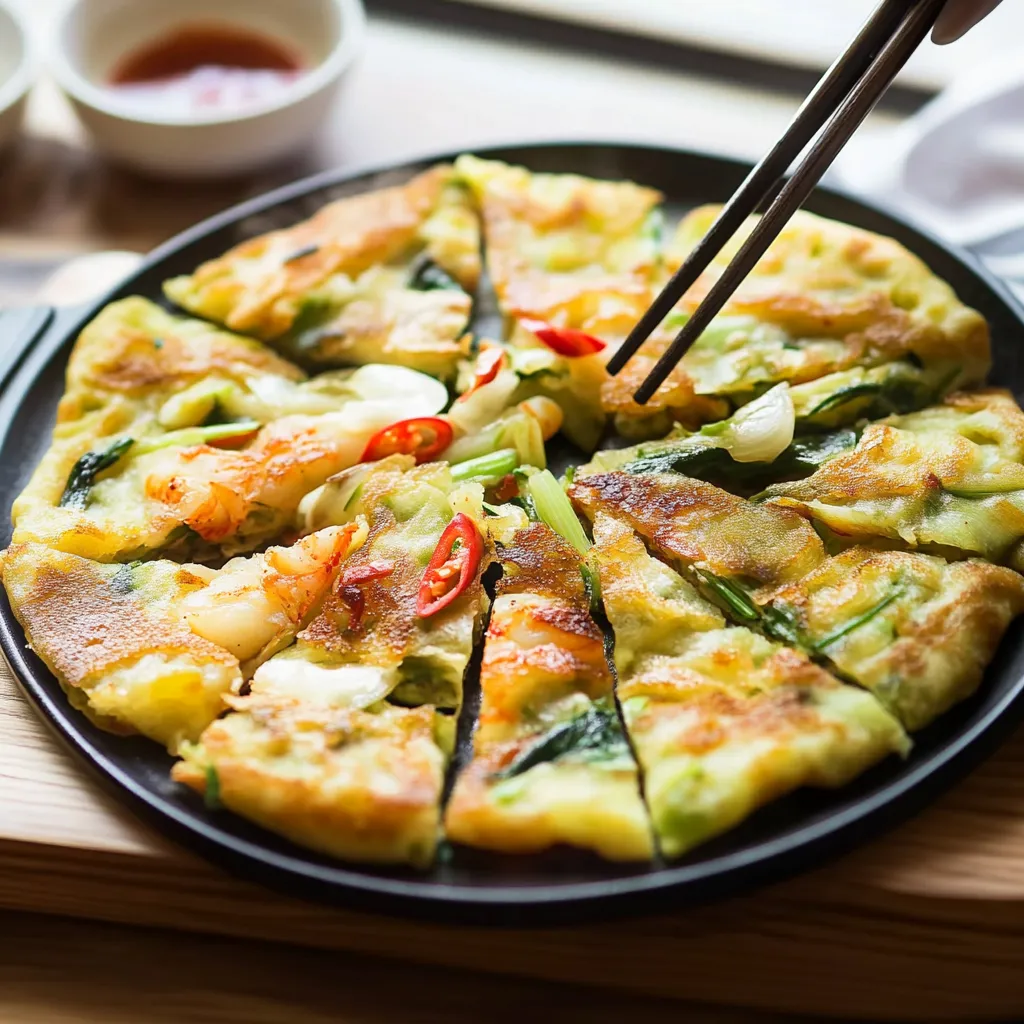
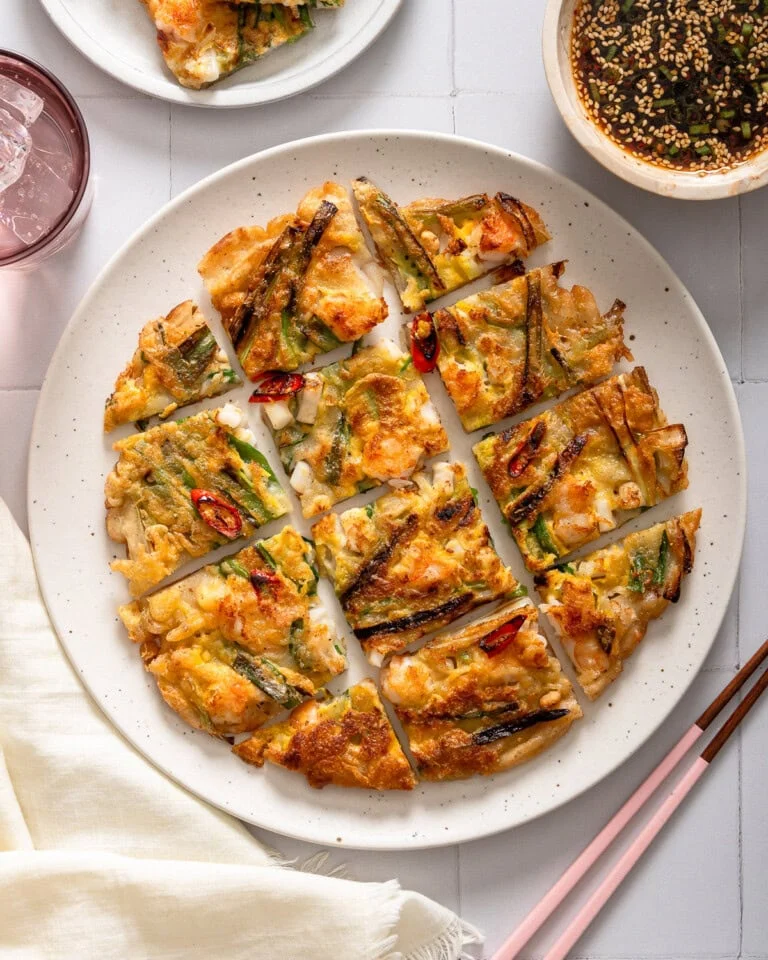

Haemul Pajeon, literally translating to "seafood scallion pancake," is a testament to the Korean love for fresh ingredients and bold flavors. The dish typically features a batter made from wheat flour and water (or sometimes rice flour for extra crispiness), generously studded with green onions (pajeon) and an assortment of seafood. The resulting pancake is pan-fried to golden perfection, offering a delightful contrast of textures and tastes.
Before diving into the recipe, let’s explore the key components that make Haemul Pajeon so irresistible. Understanding the ingredients and their roles is crucial for achieving the authentic flavor and texture.
- Scallions (Pajeon): The heart and soul of the pancake. Use plenty of fresh, green scallions, both the white and green parts, to impart a subtle oniony flavor and vibrant color.
- Seafood: A variety of seafood is typically used, including shrimp, squid, mussels, and oysters. Fresh or frozen seafood can be used, but ensure it’s properly cleaned and prepared.
- Flour: All-purpose flour is the most common choice, but a mixture of all-purpose and rice flour can create an even crispier texture.
- Water: Ice-cold water helps to keep the batter light and prevents the gluten from developing too much, resulting in a crispier pancake.
- Eggs (Optional): Some recipes include eggs in the batter for added richness and binding.
- Vegetable Oil: For pan-frying. Choose a neutral-flavored oil with a high smoke point, such as canola or peanut oil.
- Dipping Sauce (Optional but Recommended): A simple dipping sauce elevates the flavor. Soy sauce, rice vinegar, sesame oil, and chili flakes are common ingredients.
Now, let’s gather the ingredients and begin the journey of creating your own Haemul Pajeon masterpiece. This recipe is designed to be approachable, even for those new to Korean cooking.
- 1 cup all-purpose flour (or a mix of all-purpose and rice flour)
- 1/2 cup ice-cold water
- 1 large egg (optional)
- 1/2 teaspoon salt
- 1/4 teaspoon black pepper
- 1 bunch scallions, trimmed and cut into 2-inch lengths
- 1/2 cup shrimp, peeled and deveined
- 1/2 cup squid, cleaned and sliced (or other seafood of your choice)
- Vegetable oil, for frying
- For the dipping sauce (optional):
- 3 tablespoons soy sauce
- 1 tablespoon rice vinegar
- 1 teaspoon sesame oil
- 1/2 teaspoon red pepper flakes (gochugaru) or to taste
1. Prepare the Batter: In a large bowl, whisk together the flour, ice-cold water, egg (if using), salt, and pepper until just combined. Be careful not to overmix, as this can develop the gluten and make the pancake tough. The batter should be slightly thick but pourable. If you’re using rice flour, the batter might be a bit thicker.
2. Prepare the Seafood: Ensure your seafood is cleaned and prepared. If using frozen seafood, thaw it completely and pat it dry with paper towels to remove excess moisture. This will help the pancake crisp up during frying.
3. Assemble the Pancake: Heat a generous amount of vegetable oil in a large non-stick skillet or frying pan over medium-high heat. The oil should be shimmering but not smoking. Place a layer of scallions in the hot oil, arranging them in a circular or overlapping pattern. This will form the base of your pancake.
4. Add the Seafood: Arrange the seafood pieces evenly over the scallions. You can gently press them into the scallions to help them adhere to the batter.
5. Pour the Batter: Carefully pour the batter over the scallions and seafood, ensuring it coats everything evenly. Use a spatula to spread the batter if necessary, but don’t overwork it.
6. Fry the Pancake: Fry the pancake for about 3-4 minutes per side, or until golden brown and crispy. Use a spatula to gently lift the edges and check for doneness. If the bottom is browning too quickly, reduce the heat slightly.
7. Flip and Fry the Other Side: Carefully flip the pancake using a spatula or by sliding it onto a plate and then inverting it back into the pan. Fry the other side for another 3-4 minutes, or until golden brown and crispy.
8. Drain and Serve: Remove the Haemul Pajeon from the skillet and place it on a plate lined with paper towels to drain excess oil. Cut the pancake into wedges or squares using a knife or kitchen shears. Serve immediately with the dipping sauce, if desired.
9. Make the Dipping Sauce (Optional): In a small bowl, whisk together the soy sauce, rice vinegar, sesame oil, and red pepper flakes. Adjust the ingredients to your taste. This dipping sauce adds a delightful salty, savory, and slightly spicy element to the pancake.
- Use Ice-Cold Water: The cold water helps to keep the batter light and prevents the gluten from developing too much, which is crucial for a crispy pancake.
- Don’t Overmix the Batter: Overmixing can develop the gluten and result in a tough pancake. Mix the batter just until the ingredients are combined.
- Control the Heat: Adjust the heat as needed to ensure the pancake cooks evenly and doesn’t burn. Medium-high heat is generally ideal, but monitor the cooking process.
- Don’t Overcrowd the Pan: If your pan is too small, cook the pancake in batches to avoid overcrowding. Overcrowding can lower the temperature of the oil and result in a soggy pancake.
- Use Enough Oil: Don’t be shy with the oil. A generous amount of oil is essential for achieving a crispy exterior.
- Experiment with Seafood: Feel free to experiment with different types of seafood, such as oysters, mussels, or even a mix of your favorites.
- Add Other Vegetables: You can add other vegetables to the pancake, such as thinly sliced onions, carrots, or bell peppers.
- Serve Immediately: Haemul Pajeon is best served immediately after cooking, while it’s still hot and crispy.
- Kimchi Pajeon: Add kimchi to the batter or incorporate it into the filling for a spicy and tangy kick.
- Meat Pajeon: Substitute the seafood with thinly sliced beef, pork, or chicken.
- Vegetarian Pajeon: Omit the seafood and use a variety of vegetables, such as mushrooms, onions, carrots, and bell peppers.
- Spicy Pajeon: Increase the amount of red pepper flakes in the batter or dipping sauce for extra heat.
- Cheese Pajeon: Sprinkle some shredded mozzarella or other cheese on top of the pancake during the last few minutes of frying.
- Soggy Pancake: This is often due to too much moisture. Make sure to pat the seafood dry before adding it to the batter. Also, ensure the oil is hot enough and don’t overcrowd the pan.
- Tough Pancake: Overmixing the batter can lead to a tough pancake. Mix the batter just until the ingredients are combined.
- Burnt Pancake: Reduce the heat if the pancake is browning too quickly. Monitor the cooking process closely.
- Lack of Flavor: Make sure to season the batter with salt and pepper. The dipping sauce is also crucial for adding flavor.
- As an Appetizer: Serve it as a delicious appetizer before a Korean meal.
- As a Side Dish: Pair it with other Korean dishes, such as kimchi jjigae (kimchi stew), bulgogi (grilled marinated beef), or japchae (glass noodles).
- As a Snack: Enjoy it as a satisfying snack on its own.
- With Rice: Serve it with a bowl of steamed rice for a complete meal.
- With Makgeolli: It’s a classic pairing with makgeolli, a traditional Korean rice wine.
Haemul Pajeon is more than just a delicious dish; it’s a part of Korean culinary heritage. It’s often associated with rainy days, as the sound of the sizzling pancake in the pan is said to mimic the sound of rain. It’s a dish enjoyed during gatherings, celebrations, and everyday meals, representing the Korean appreciation for fresh ingredients, shared meals, and bold flavors.
If you’re not in the mood to cook, you can find Haemul Pajeon at most Korean restaurants. It’s a popular menu item, and you’ll often find variations depending on the restaurant’s specialties. You can also find pre-made Haemul Pajeon in some Korean grocery stores, although the homemade version is always the best.
Creating Haemul Pajeon at home is a rewarding experience. With this comprehensive guide, you have the knowledge and tools to master this iconic Korean dish. Experiment with different ingredients, variations, and dipping sauces to find your perfect Haemul Pajeon recipe. Enjoy the process of cooking, and savor the delicious flavors of this beloved Korean pancake. So, gather your ingredients, fire up your stove, and get ready to enjoy the crispy, savory, and utterly delicious world of Haemul Pajeon!
Bon appétit! (mas-issge deuseyo!)