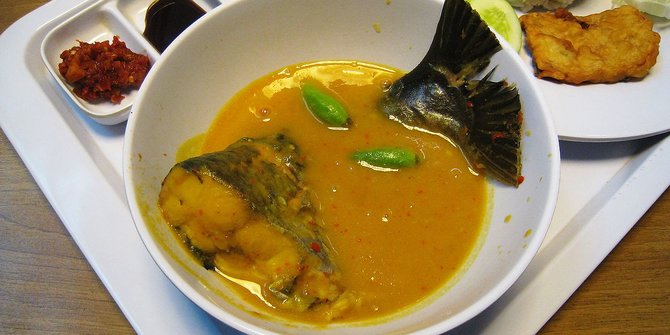
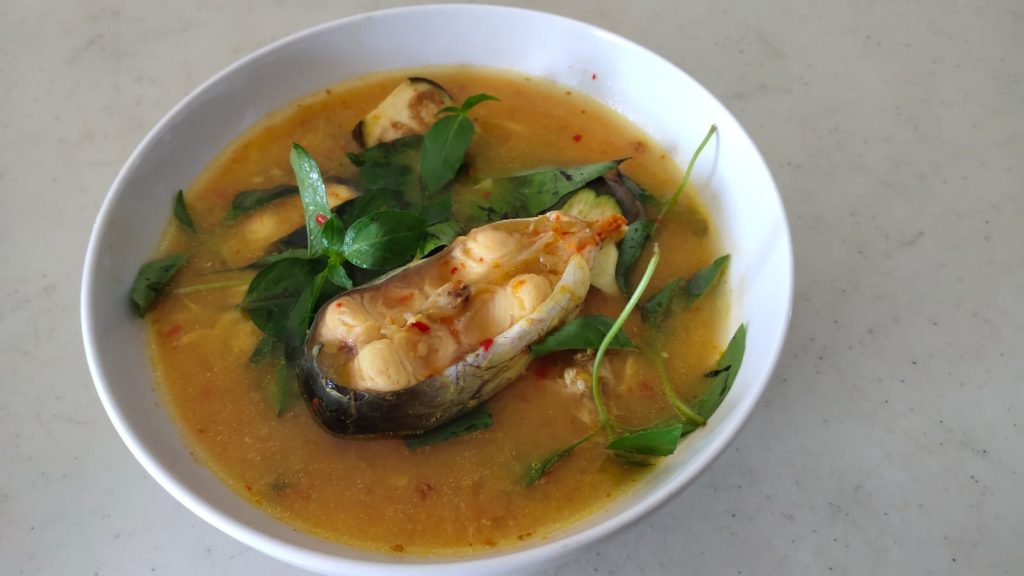

At its core, Pindang Patin Tempoyak represents a harmonious fusion of fresh river fish, a distinctive sour and spicy broth, and the unmistakable, pungent sweetness of fermented durian. The combination might sound unconventional to the uninitiated, but it results in an incredibly complex, deeply satisfying, and utterly addictive flavor profile that is both refreshing and profoundly umami. It’s a dish that commands attention, leaving a lasting impression long after the last spoonful.
To truly appreciate Pindang Patin Tempoyak, one must first understand its foundational components. The term ‘Pindang’ refers not just to a specific dish, but to a cooking method prevalent in various parts of Indonesia, particularly Sumatra. It involves simmering fish or meat in a broth enriched with an array of aromatic spices, herbs, and often a souring agent. The hallmark of a good Pindang is its bright, clear, and intensely flavorful broth, characterized by a delicate balance of sourness, spiciness, and savory notes.
Traditional Pindang recipes often utilize tamarind, star fruit, or other local sour fruits to achieve their characteristic tang. However, Pindang Patin Tempoyak elevates this concept by introducing tempoyak, a unique ingredient that sets it apart. The broth of a Pindang dish is typically light, allowing the natural sweetness and texture of the fish to shine through, while the spices infuse it with warmth and depth.
Now, let’s delve into the star of this dish: Tempoyak. For those unfamiliar, tempoyak is fermented durian, a beloved fruit in Southeast Asia known for its strong aroma and creamy, custard-like flesh. The fermentation process transforms the durian, mellowing its intense sweetness and amplifying its umami qualities, while introducing a distinct sour tang and a rich, complex aroma that is less overpowering than fresh durian but equally captivating.
The origins of Pindang Patin Tempoyak are deeply rooted in the culinary traditions of Palembang, South Sumatra. This region, abundant with rivers and freshwater fish, naturally developed dishes that highlight these resources. The fertile lands also provide the perfect conditions for growing durian, making tempoyak a readily available and cherished ingredient. Over generations, the combination of fresh Patin fish with the distinctive tempoyak-infused Pindang broth became a signature dish, a source of regional pride and a staple in many households.
This dish is more than just food; it’s a reflection of Palembang’s culture, its connection to the land and rivers, and its ingenious use of local produce. It embodies the spirit of Sumatran cuisine: bold, flavorful, and profoundly comforting. Visitors to Palembang often seek out authentic Pindang Patin Tempoyak, recognizing it as an essential part of the local experience.
The choice of Patin fish (Pangasius hypophthalmus), also known as Iridescent Sharkcatfish, is crucial for this particular Pindang. Patin is a freshwater fish abundant in the rivers of Sumatra. It is highly valued for its tender, flaky white flesh, mild flavor, and relatively low bone count, making it exceptionally pleasant to eat. Its subtle taste allows the robust flavors of the tempoyak and spices to truly shine, absorbing the broth’s essence without being overwhelmed.
The firm yet delicate texture of Patin holds up well during the simmering process, preventing it from disintegrating while fully absorbing the complex flavors of the broth. Other freshwater fish can be used, but Patin is traditionally preferred for its ideal characteristics that complement the rich and tangy tempoyak broth so perfectly. Selecting fresh Patin is paramount, identifiable by clear eyes, firm flesh, and a clean, non-fishy smell.
Key Ingredients for Pindang Patin Tempoyak:
- 1 whole Patin fish (approx. 800g-1kg), cleaned and cut into 4-5 pieces
- 200g Tempoyak (fermented durian)
- 1.5 liters water or thin coconut milk
- 2-3 stalks lemongrass, bruised
- 4-5 kaffir lime leaves, torn
- 1-2 turmeric leaves (optional, but highly recommended for aroma)
- 1-2 tomatoes, quartered
- 2-3 bird’s eye chilies (whole, for subtle heat, or sliced for more spice)
- Salt and sugar to taste
- Cooking oil for sautéing
For the Bumbu Halus (Fine Spice Paste):
- 8-10 shallots
- 4-5 cloves garlic
- 3-4 cm fresh turmeric, peeled
- 3-4 cm fresh ginger, peeled
- 2-3 cm galangal, peeled
- 5-7 red chilies (adjust to desired spiciness)
- 2-3 bird’s eye chilies (for extra kick, optional)
- 1 tsp shrimp paste (terasi), roasted (optional, for umami depth)
The preparation begins with creating the bumbu halus. This involves grinding all the listed spice paste ingredients into a smooth consistency. Traditionally, this is done using a mortar and pestle, which releases the essential oils and aromas more effectively, contributing to a richer flavor. However, a food processor or blender can be used for convenience, ensuring the paste is as fine as possible.
Once the bumbu halus is ready, heat a generous amount of cooking oil in a pot or deep pan over medium heat. Sauté the spice paste until fragrant and the oil separates, indicating that the spices are fully cooked. This step is crucial for developing the foundational flavors of the dish, preventing any raw spice taste.
Next, add the bruised lemongrass, torn kaffir lime leaves, and turmeric leaves (if using) to the sautéed spice paste. Stir-fry for another minute until their aromas are released, infusing the paste with their distinct fragrant notes. This aromatic base is what gives Pindang its signature perfume.
Now, incorporate the tempoyak into the pot. Stir it well with the spice paste and aromatics, ensuring it blends thoroughly. Sauté for a few minutes, allowing the tempoyak to cook slightly and meld with the other flavors. This step is important for mellowing some of the tempoyak’s raw pungency and integrating its unique acidity.
Pour in the water or thin coconut milk. Bring the mixture to a boil, then reduce the heat to a simmer. Season the broth with salt and sugar to taste. At this stage, it’s important to achieve a good balance of sour, spicy, and savory. The sweetness from the tempoyak and sugar should complement the acidity and heat.
Carefully add the pieces of Patin fish to the simmering broth. Ensure the fish is submerged. Avoid stirring too vigorously once the fish is in, as Patin is delicate and can break apart easily. Let the fish simmer gently for about 10-15 minutes, or until it is cooked through and flaky. The cooking time will depend on the thickness of the fish pieces.
Just a few minutes before the fish is fully cooked, add the quartered tomatoes and whole bird’s eye chilies. These add a burst of freshness, color, and a subtle additional layer of heat without overwhelming the dish. Continue to simmer until the tomatoes are slightly softened but still retain their shape. Taste and adjust seasoning one last time if necessary.
Serving Pindang Patin Tempoyak is an experience in itself. It is best enjoyed hot, immediately after cooking, to savor its fresh flavors and aromas. Traditionally, it is served with a generous portion of steaming white rice, which acts as a perfect canvas for the rich and tangy broth. Some prefer to pair it with a side of crispy fried salted fish (ikan asin) or fresh raw vegetables (lalapan) to complement the intensity of the Pindang.
For those who appreciate extra heat, a dollop of sambal terasi or sambal belacan can be served alongside, allowing diners to customize their level of spiciness. The combination of the hot, sour, and spicy Pindang with plain rice and a fiery sambal creates a truly authentic Indonesian meal that is deeply satisfying and incredibly flavorful.
Selecting the freshest ingredients is paramount to the success of Pindang Patin Tempoyak. When choosing Patin fish, look for clear, bulging eyes, bright red gills, and firm, springy flesh that bounces back when gently pressed. The fish should have a fresh, clean scent, not an overly ‘fishy’ odor. Opt for whole fish if possible, as it allows you to verify freshness more easily.
For the tempoyak, if you’re not making it yourself, source it from a reputable vendor. Good quality tempoyak should have a pleasant, slightly sour and sweet aroma, without any off-putting, overly fermented smells. Its color should be a light creamy yellow to brownish, and the texture should be smooth and paste-like. If making your own, select ripe, sweet durian varieties for the best results, as the fermentation process will enhance these natural flavors.
The balance of flavors – sourness from the tempoyak, spiciness from the chilies, and savory notes from the fish and spices – is the hallmark of a perfectly executed Pindang Patin Tempoyak. Don’t be afraid to taste and adjust as you go. A little sugar can balance excessive sourness, while a squeeze of lime juice at the end can brighten the flavors further if needed.
To customize the spiciness, you can adjust the number of chilies in the bumbu halus. For a milder version, remove the seeds from the red chilies or use fewer bird’s eye chilies. For an extra kick, add more whole bird’s eye chilies to the simmering broth, allowing them to gently release their heat.
While Patin is traditional, this Pindang recipe can be adapted to other types of freshwater fish like Gourami (Ikan Gurame) or Tilapia (Ikan Nila). Some adventurous cooks even experiment with seafood like prawns or squid, though the cooking times will need to be adjusted accordingly to prevent overcooking. The key is to choose a protein that can absorb the rich flavors of the broth.
Enhance your Pindang with additional vegetables. Common additions include slices of young eggplant, okra, or even green beans, added during the last few minutes of simmering. These vegetables absorb the flavorful broth beautifully and add textural variety, making the dish even more wholesome and appealing.
Pindang Patin Tempoyak, beyond its delightful taste, offers several nutritional benefits. Patin fish is an excellent source of lean protein and essential Omega-3 fatty acids, which are crucial for heart health and brain function. The various spices like turmeric, ginger, and galangal are known for their anti-inflammatory and antioxidant properties.
Furthermore, tempoyak, as a fermented food, can contribute to gut health by introducing beneficial probiotics. While consumed in smaller quantities, the cumulative effect of these natural ingredients makes Pindang Patin Tempoyak a flavorful yet relatively healthy meal choice, especially when prepared with fresh, quality ingredients.
Common mistakes when preparing Pindang Patin Tempoyak include overcooking the fish, which can result in dry, rubbery flesh. Patin cooks relatively quickly, so monitor it closely. Another pitfall is an unbalanced flavor profile; ensure the sour, sweet, and spicy elements are in harmony, without one flavor dominating excessively. Undercooked spices can also lead to a raw, unpleasant aftertaste, so always sauté the bumbu halus until truly fragrant.
For storage, any leftover Pindang Patin Tempoyak can be refrigerated in an airtight container for up to 2-3 days. Reheat gently on the stovetop over low heat to prevent the fish from breaking apart. The flavors often deepen and meld further upon reheating, making it arguably even more delicious the next day. However, it’s generally best enjoyed fresh.
The evolution of Pindang as a dish is fascinating. While its core principles remain, regional variations abound. Some Pindang recipes might incorporate different souring agents, like tamarind paste or green mangoes, while others might feature a richer, thicker broth. Pindang Patin Tempoyak, however, holds a special place due to the unique character imparted by fermented durian, making it distinct and highly sought after.
This dish is often a centerpiece at family gatherings and celebrations in Sumatra, symbolizing warmth, hospitality, and culinary tradition. Its preparation is often a communal effort, with family members contributing to the grinding of spices or the selection of fish, fostering a sense of togetherness and shared heritage.
The robust and aromatic nature of Pindang Patin Tempoyak makes it a perfect pairing with simple, cooling beverages. Iced tea, fresh coconut water, or even a glass of plain cold water can help cleanse the palate and provide a refreshing contrast to the dish’s intense flavors.
In a world where culinary trends rapidly change, Pindang Patin Tempoyak stands as a timeless classic, a testament to the enduring appeal of traditional flavors and ingenious ingredient combinations. It’s a dish that challenges preconceived notions of taste, inviting diners to embrace new and exciting sensory experiences.
Whether you are an experienced cook looking to expand your repertoire or an adventurous food enthusiast eager to explore the depths of Indonesian cuisine, preparing Pindang Patin Tempoyak is a rewarding endeavor. The process, while requiring attention to detail, yields a dish that is truly extraordinary and deeply satisfying.
Embrace the opportunity to create this masterpiece in your own kitchen. The aroma alone will transport you to the bustling markets and serene riversides of Sumatra, offering a glimpse into a culture rich in flavor and tradition. Pindang Patin Tempoyak is more than just a recipe; it’s an invitation to savor a piece of Indonesia’s soul, one delicious, complex bite at a time. Its unique blend of sour, spicy, and savory notes, underpinned by the creamy, pungent sweetness of tempoyak, ensures its place as a truly unforgettable culinary gem.