
For food enthusiasts and home cooks alike, mastering this dish is a rewarding challenge. Unlike the sour, tamarind-based Assam Laksa found in Penang, the Singaporean variant is defined by its lemak (rich and creamy) texture. The complexity of the dish lies in the layering of flavors: the initial hit of spice, the underlying sweetness of the seafood stock, the creaminess of the coconut milk, and the pungent kick of sambal belacan. This guide will walk you through every step of creating this gastronomic masterpiece in your own kitchen.
The Heart of the Dish: The Rempah (Spice Paste). The soul of any good laksa lies in its spice paste, known locally as the rempah. You cannot achieve the authentic depth of flavor using store-bought jars; it must be made from scratch. The base ingredients include dried chilies for heat and color, fresh red chilies for brightness, and shallots for sweetness. However, the true secret weapon in a Singapore Laksa rempah is ‘Hae Bee’, or dried shrimp.
Dried shrimp provides a savory, briny depth that fresh seafood simply cannot replicate. To prepare them, they must be soaked in hot water until soft and then drained. When blended into the paste and sautéed, the dried shrimp caramelizes, releasing an intense aroma that forms the backbone of the laksa gravy. Without a generous amount of high-quality dried shrimp, your laksa will lack the signature savory punch that defines the dish.
Aromatics and Roots: In addition to chilies and shrimp, the rempah requires a specific blend of rhizomes. Galangal (blue ginger) is essential for its floral, pine-like scent, which cuts through the richness of the coconut milk. Turmeric, preferably fresh, adds an earthy note and the iconic golden-yellow hue. Lemongrass stalks, specifically the tender white bottom parts, contribute a citrusy brightness that lifts the heavy flavors.
Another crucial ingredient often overlooked by novices is the candlenut (buah keras). These waxy, cream-colored nuts are used as a thickening agent. When ground into the paste, they add body and oiliness to the gravy, ensuring that the broth clings lovingly to every strand of noodle. Finally, toasted belacan (fermented shrimp paste) is added to amplify the umami profile, grounding the spices with its pungent, savory character.
The Technique: Pecah Minyak. Having the right ingredients is only half the battle; how you cook them matters immensely. The process of frying the spice paste is called ‘pecah minyak’, which translates to ‘breaking the oil’. You must sauté the blended rempah in oil over medium heat, stirring constantly. This process can take anywhere from 15 to 30 minutes. You are looking for the moment the oil separates from the solids and rises to the surface, and the color deepens to a dark, glistening red. This indicates that the raw smell of the chilies has evaporated and the flavors have fully matured.
Building the Broth: While the spice paste provides the flavor, the stock provides the body. A truly ‘kaya rasa’ laksa uses a stock made from prawn heads and shells. Never discard the shells when peeling prawns for the dish. Sauté the shells in a little oil until they turn orange and fragrant, then crush them to release their juices before adding water. Simmer this for at least 45 minutes to extract every bit of sweetness. This prawn stock is then strained and combined with the fried rempah.
The Coconut Milk Factor: The texture of Singapore Laksa is heavily dependent on coconut milk (santan). Traditionally, two types are used: thin coconut milk and thick coconut cream. The thin milk is added earlier in the cooking process to simmer with the broth and spices, allowing the flavors to meld. The thick coconut cream is added at the very end, just before serving, to preserve its rich, velvety texture and prevent it from curdling or splitting (breaking) under high heat.
The Noodles: The standard noodle for this dish is thick rice vermicelli, often called ‘Chu Bee’. These noodles have a pleasant, chewy bounce that stands up well to the heavy gravy. In the famous Katong style of serving laksa, the noodles are cut into short strands, allowing the diner to eat the entire dish with just a soup spoon—no chopsticks required. This unique eating style ensures that every mouthful includes noodles, broth, and toppings simultaneously.
Seafood Selection: As the name implies, seafood is the star protein. Fresh, medium-sized prawns are mandatory. They should be poached gently in the broth or blanched separately to ensure they remain snappy and sweet. Overcooked prawns become rubbery and lose their delicate flavor. Fish cake, sliced into thin strips or chunks, provides a different texture and a mild fish flavor that complements the intense gravy.
The Cockle Controversy: For purists, a bowl of Singapore Laksa is incomplete without ‘See Hum’, or blood cockles. These small shellfish are briefly blanched (remaining bloody inside) and added to the bowl right before serving. Their metallic, oceanic taste creates a stark, delicious contrast to the creamy coconut soup. While optional for those who dislike them, they are highly recommended for an authentic experience.
Tofu Puffs (Tau Pok): Tofu puffs are the sponges of the laksa world. These airy, deep-fried cubes of bean curd absorb the gravy like nothing else. When you bite into a piece of tau pok, it should burst with the hot, spicy coconut broth. To maximize absorption, cut the puffs in half diagonally or tear them slightly before adding them to the simmering soup.
Step-by-Step Cooking Guide – Preparation: Begin by soaking your dried chilies and dried shrimp in hot water until soft. Peel your shallots, garlic, galangal, turmeric, and lemongrass. Toast your belacan either in a dry pan or over an open flame until it crumbles easily. Blend all these spice paste ingredients (including candlenuts) in a food processor with a little oil until you achieve a fine, smooth texture.
Cooking the Base: Heat a generous amount of vegetable oil in a heavy-bottomed pot or wok. Add your blended rempah. Fry this patiently over medium-low heat. Do not rush this step. If the heat is too high, the paste will burn; if it is too low or brief, the chilies will taste raw. Stir continuously to prevent sticking. Once the oil separates and the color transforms into a deep crimson, you are ready for the liquid.
Simmering the Soup: Pour in your prepared prawn stock. Add a knot of pandan leaves and a few stalks of bruised lemongrass for extra fragrance. Bring the mixture to a boil, then reduce the heat to a simmer. Add the thin coconut milk at this stage. Season with salt and a small piece of rock sugar (or regular sugar) to balance the heat. Let this simmer for 15-20 minutes.
Finishing the Gravy: Taste the broth. It should be savory, spicy, and slightly sweet from the seafood. Once you are satisfied with the base flavor, lower the heat to the absolute minimum. Gently stir in the thick coconut cream. Stir constantly for a minute to incorporate, ensuring the soup does not boil vigorously, which would cause the coconut fat to separate unpleasantly. Add the tofu puffs now so they can soak up the liquid.
Assembly – The Blanching Station: Set up a pot of boiling water. Blanch your rice noodles for about 10-20 seconds (fresh noodles) or until cooked (dried noodles). Drain and place into serving bowls. Blanch the bean sprouts (taugeh) for just a few seconds to keep them crunchy, and place them atop the noodles. Briefly blanch your prawns, fish cake slices, and cockles.
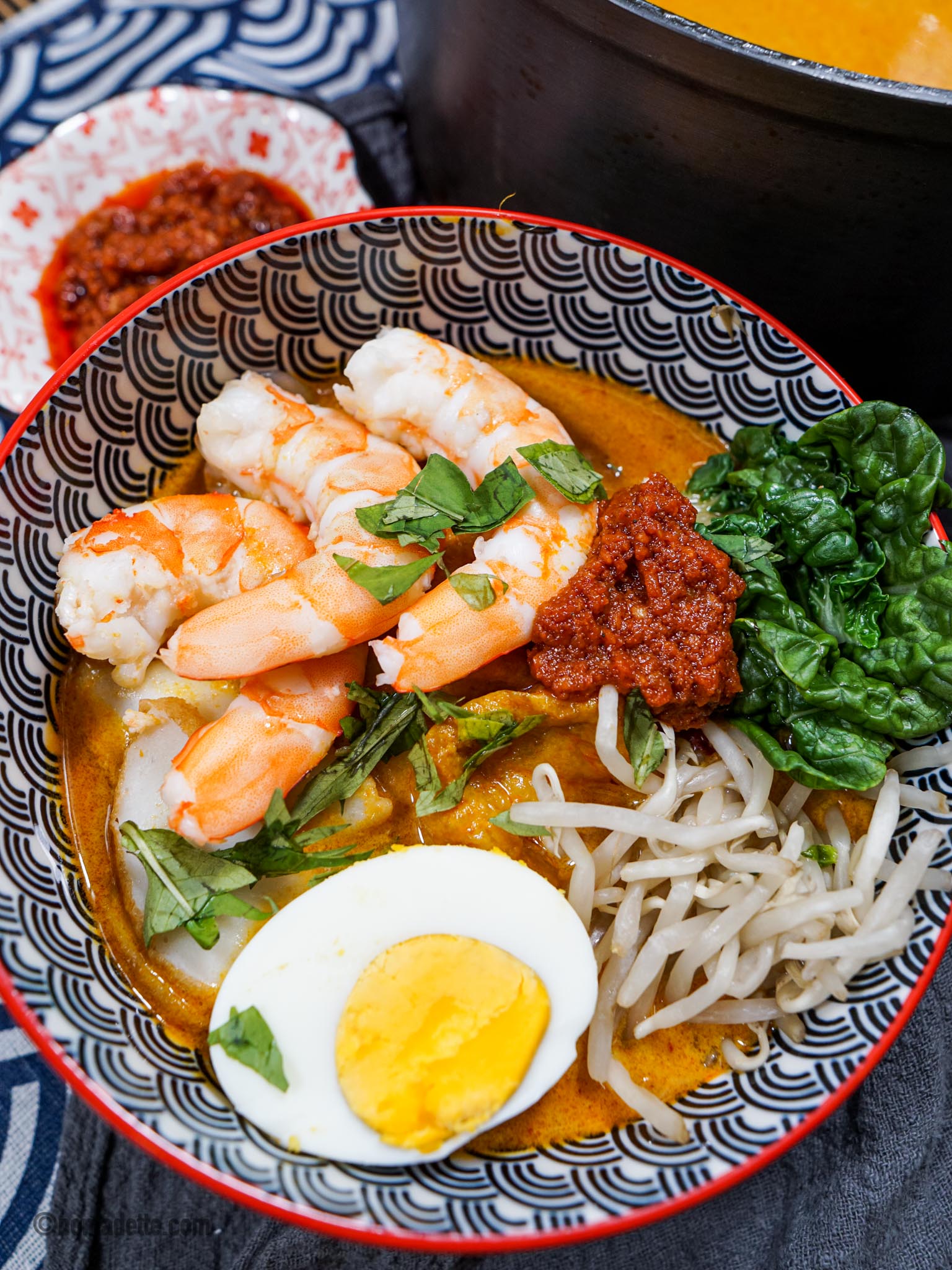
Plating the Dish: Arrange the prawns, fish cake, and cockles over the noodles. Ladle the hot, rich coconut gravy over the ingredients, ensuring the tofu puffs are distributed evenly. The gravy should cover the noodles completely. The vibrant orange color should look inviting and appetizing.
Garnishing: The final touches are crucial for visual appeal and flavor complexity. Sprinkle a generous amount of finely chopped laksa leaves over the center. If you like extra heat, add a spoonful of sambal belacan on the side or on a soup spoon. Some variations also include a hard-boiled egg or a quail egg, though this is less common in the strict Katong style.
Serving Etiquette: Serve the laksa immediately while piping hot. In Singapore, it is common to serve this with a side of Otah (grilled fish cake wrapped in banana leaf) to dip into the gravy. Provide a ceramic soup spoon and chopsticks, unless you have cut the noodles short, in which case only a spoon is needed.
Troubleshooting Flavor Balance: If your laksa tastes too flat, it likely lacks salt or umami. Try adding a splash of fish sauce. If it is too spicy, add a bit more sugar or coconut cream to mellow the heat. If it lacks depth, you may not have fried the rempah long enough; unfortunately, this is hard to fix after the liquid is added, emphasizing the importance of the initial sautéing step.
Dietary Adjustments: While traditional laksa is heavy on seafood, you can adapt it. Chicken slices can be used instead of prawns for a non-seafood version, though the stock will lack the sweetness of prawn shells. For a healthier version, you can reduce the coconut milk and substitute it with evaporated milk or soy milk, though the texture and fragrance will differ significantly from the original.
Storage and Reheating: Laksa gravy actually tastes better the next day as the flavors have more time to meld. Store the gravy separately from the noodles and seafood. When reheating, bring the gravy to a gentle simmer. Do not boil it aggressively to protect the coconut milk emulsion. Blanch fresh noodles and seafood for the best texture upon serving leftovers.
The Role of Sambal: The accompanying sambal is not just for heat; it adds a fermented, salty dimension that cuts through the fat of the coconut milk. A good laksa sambal is made with fresh chilies, toasted belacan, lime juice, and a pinch of sugar. It allows each diner to customize the spice level of their bowl.
Conclusion: Cooking Singapore Seafood Laksa at home is a labor of love. It requires patience, particularly in the preparation of the rempah and the stock. However, the result is a bowl of comfort that rivals any hawker stall. The interplay of textures—soft noodles, crunchy beansprouts, chewy prawns, and spongy tofu puffs—combined with the complex, spicy, coconut-infused broth, creates a sensory experience that defines the ‘rich taste’ of Singaporean heritage.
By following this guide, you bring a piece of Singapore’s hawker culture into your home. Whether for a family dinner or a special occasion, this dish serves as a testament to the sophistication of Southeast Asian flavors. Enjoy the process, savor the aromas, and delight in the creamy, spicy goodness of your homemade laksa.