
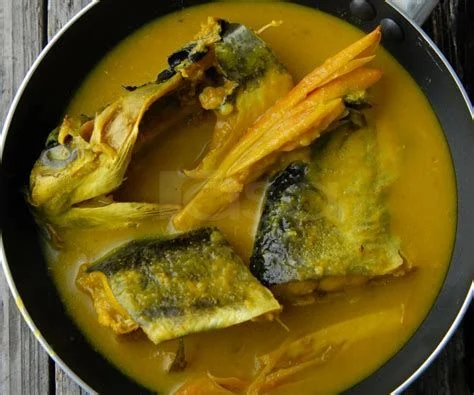

At its heart, this dish is a celebration of fermented durian, known as ‘tempoyak’. Tempoyak is made by fermenting the flesh of the durian fruit, the ‘king of fruits’, typically for a few days to a week. This process transforms the sweet, pungent aroma of fresh durian into a savory, tangy, and slightly sour paste that forms the distinctive base of many Malay dishes, particularly in the interior regions of Malaysia and parts of Indonesia.
The choice of fish, ‘Ikan Jelawat’ (Asian Catfish or River Catfish), is also significant. Ikan Jelawat is a freshwater fish prized for its firm, flaky white flesh and relatively mild flavor, which makes it an excellent canvas for the robust flavors of the tempoyak and the aromatic yellow broth.
The ‘Kuah Kuning’ (Yellow Broth) refers to the characteristic color and flavor profile of the sauce, typically achieved through the liberal use of turmeric, ginger, galangal, and other warming spices. This combination creates a fragrant, slightly spicy, and deeply savory broth that perfectly complements the fish and the tempoyak.
While ‘Resep Seafood Tempoyak Ikan Jelawat Kuah Kuning’ might sound like a single, specific recipe, it’s more accurately a template for a beloved style of cooking. Variations exist, with different types of fish, seafood, or even vegetables being used, but the core elements of tempoyak and kuah kuning remain consistent.
Understanding the role of tempoyak is crucial to appreciating this dish. The fermentation process breaks down some of the sugars in the durian and develops complex amino acids, resulting in an umami-rich flavor profile. For those unfamiliar with durian, the smell of tempoyak can be intense, but its taste in cooked dishes is usually far more nuanced and appealing, adding a unique depth that is hard to replicate.
The preparation of Ikan Jelawat for this dish typically involves cleaning the fish thoroughly and often cutting it into manageable pieces. Some recipes may call for marinating the fish briefly to enhance its flavor, but the strong flavors of the broth and tempoyak usually suffice.
The ‘Kuah Kuning’ is where the magic of Malay spices truly shines. Common ingredients include fresh turmeric (for color and earthy flavor), ginger (for warmth and pungency), galangal (a more citrusy, pine-like cousin of ginger), lemongrass (for a bright, citrusy note), garlic, and shallots. These aromatics are usually pounded or blended into a paste and then sautéed until fragrant.
Chilies, both fresh and dried, are indispensable in Malay cooking, adding a crucial layer of heat. The type and quantity of chilies used will determine the spiciness of the final dish. For this recipe, a balance is key to complement, not overpower, the other flavors.
Coconut milk is another common component in Kuah Kuning, adding richness and a creamy texture to the broth. It helps to mellow out the spices and provides a luxurious mouthfeel, making the dish both comforting and satisfying.
The cooking process usually involves sautéing the spice paste until the oil separates, a sign that the flavors have developed. Then, the tempoyak is added and cooked briefly to meld its unique tanginess with the spices. The fish is then introduced into the simmering broth, along with perhaps some tamarind paste for added sourness, and cooked until tender.
The dish is often finished with fresh herbs like Vietnamese mint (daun kesum) or laksa leaves, which add a burst of freshness and a subtle peppery note. Some variations might include tomatoes for a touch of acidity and color, or okra for added texture.
Serving ‘Resep Seafood Tempoyak Ikan Jelawat Kuah Kuning’ is typically done with steamed white rice. The rice acts as a neutral base, allowing the complex flavors of the dish to take center stage. A sprinkle of fresh herbs or a side of sambal can further enhance the dining experience.
This dish is more than just a meal; it’s a cultural artifact. Tempoyak itself has a long history, originating from the need to preserve the abundant durian harvest. Its use in cooking reflects the resourcefulness and ingenuity of Malay communities.
The specific inclusion of Ikan Jelawat might be regional, tied to the availability of this fish in freshwater rivers. However, the principle of using a firm, white fish in a flavorful broth is universal in Malay cuisine.
Let’s delve into a comprehensive recipe to recreate this authentic Malay delicacy. This will provide a practical guide for home cooks wishing to explore these unique flavors.
For the Fish:
- 1 kg Ikan Jelawat (or other firm white fish like seabass, snapper, or catfish), cut into thick steaks or pieces
- 1 teaspoon salt
- 1/2 teaspoon turmeric powder
For the Spice Paste (Bumbu Halus):
- 150g shallots, peeled
- 5-7 cloves garlic, peeled
- 2-inch piece ginger, peeled and sliced
- 2-inch piece galangal, peeled and sliced
- 2-3 stalks lemongrass (white part only), sliced
- 5-10 dried chilies (soaked in hot water and seeds removed if less heat is desired), or 5-10 fresh red chilies
- 1 teaspoon fresh turmeric, or 1/2 teaspoon turmeric powder
- 1 tablespoon belacan (shrimp paste), toasted (optional, but highly recommended for authentic flavor)
For the Broth:
- 3-4 tablespoons cooking oil
- 150g tempoyak (fermented durian paste)
- 1 stalk lemongrass, bruised
- 2-3 kaffir lime leaves, torn (optional)
- 1-2 tablespoons tamarind paste (mixed with 1/4 cup water, strained)
- 800ml water or fish stock
- 200ml thick coconut milk
- Salt to taste
- Sugar to taste (a pinch to balance flavors)
- Optional additions: 2-3 tomatoes, quartered; 100g okra, trimmed
For Garnish:
- Fresh coriander leaves or Vietnamese mint (daun kesum), roughly chopped
- Sliced red chilies (optional)
1. Prepare the Fish:
- Rinse the Ikan Jelawat pieces thoroughly. Pat them dry with paper towels.
- Season the fish with salt and turmeric powder. Set aside.
2. Prepare the Spice Paste:
- Combine all the spice paste ingredients (shallots, garlic, ginger, galangal, lemongrass, chilies, turmeric, belacan) in a food processor or blender. Add a little water or oil if needed to help it blend into a smooth paste.
- Alternatively, pound the ingredients using a mortar and pestle for a more traditional texture and flavor.
3. Sauté the Aromatics:
- Heat the cooking oil in a large pot or wok over medium heat.
- Add the blended spice paste and sauté, stirring constantly, until it is fragrant and the oil starts to separate from the paste. This process can take about 5-10 minutes and is crucial for developing the flavors.
- Add the bruised lemongrass stalk and kaffir lime leaves (if using) and sauté for another minute until fragrant.
4. Incorporate Tempoyak:
- Add the tempoyak to the pot and stir well with the spice paste. Cook for about 2-3 minutes, allowing the tempoyak to cook slightly and meld with the other flavors.
5. Build the Broth:
- Pour in the water or fish stock and bring to a simmer.
- Add the strained tamarind water.
- Season with salt and a pinch of sugar. Taste and adjust the seasoning as needed. The flavor should be a balance of savory, sour, and slightly spicy.
6. Cook the Fish:
- Gently add the seasoned fish pieces into the simmering broth. Ensure the fish is submerged.
- If using tomatoes and okra, add them now.
- Cover the pot and let the fish cook for about 8-12 minutes, or until the fish is cooked through and flakes easily. Be careful not to overcook the fish, as it can become dry.
7. Finish with Coconut Milk:
- Reduce the heat to low. Pour in the thick coconut milk and stir gently.
- Simmer for another 2-3 minutes, but do not boil vigorously after adding the coconut milk, as it can curdle.
8. Serve:
- Ladle the ‘Resep Seafood Tempoyak Ikan Jelawat Kuah Kuning’ into serving bowls.
- Garnish generously with fresh coriander leaves or Vietnamese mint and sliced red chilies, if desired.
- Serve hot with steamed white rice.
The key to a successful tempoyak dish lies in the quality of the fermented durian. Good tempoyak should have a pungent aroma but a balanced, savory-sour taste. If your tempoyak is too strong or overly sour, you might need to adjust the other seasonings, perhaps adding a little more sugar or coconut milk to soften the intensity.
The spice paste is the soul of the Kuah Kuning. Taking the time to properly sauté this paste until the oil separates is a fundamental step in Malay cooking. This process, known as ‘pecah minyak’, unlocks the full aromatic potential of the spices and creates a rich, deeply flavored base for the broth.
Ikan Jelawat, with its firm texture, holds up well in the simmering broth. If you cannot find Ikan Jelawat, don’t hesitate to substitute. Other firm, white-fleshed fish will work beautifully, ensuring you get a delicious result. The goal is a fish that won’t disintegrate during the cooking process.
The addition of tamarind paste provides a crucial layer of acidity that cuts through the richness of the coconut milk and balances the pungency of the tempoyak. It adds a bright, tangy counterpoint that makes the dish incredibly moreish.
Coconut milk is not just for richness; it also helps to emulsify the flavors, creating a harmonious and creamy broth. The type of coconut milk used can influence the final texture; full-fat coconut milk will yield a richer result.
The optional additions like tomatoes and okra can add further complexity. Tomatoes contribute a slight sweetness and acidity, while okra adds a unique, slightly gelatinous texture that can thicken the broth slightly.
Fresh herbs are essential for finishing. Vietnamese mint, with its distinctive peppery and slightly anise-like flavor, is a classic pairing with tempoyak dishes. If unavailable, fresh coriander or even Thai basil can offer a refreshing contrast.
This dish is a testament to the power of fermentation in creating complex flavors. Tempoyak, born from the humble durian, transforms into a culinary cornerstone, demonstrating how seasonal abundance can be ingeniously preserved and transformed into something extraordinary.
The ‘Kuah Kuning’ style of broth is versatile and found in many Malay dishes, from curries to soups. Its vibrant color and aromatic profile are instantly recognizable and deeply comforting.
Exploring ‘Resep Seafood Tempoyak Ikan Jelawat Kuah Kuning’ is an invitation to experience the authentic tastes of Malay heritage. It’s a dish that rewards patience and experimentation, offering a unique gastronomic adventure.
The balance of flavors is paramount. The savory notes from the fish and spices, the pungent tang from the tempoyak, the richness of the coconut milk, and the brightness of the tamarind and herbs must all work in harmony.
Consider this recipe a starting point. Feel free to adjust the spice levels, the sourness, and the richness to suit your personal preferences. The beauty of home cooking lies in its adaptability.
This dish is best enjoyed fresh, when the flavors are at their peak and the fish is perfectly cooked. Reheating can sometimes alter the texture of the fish and the broth.
Embrace the unique aroma and flavor of durian in its fermented form. Tempoyak is an acquired taste for some, but its culinary significance in Malay cuisine is undeniable, and it is the soul of this particular dish.
The combination of Ikan Jelawat and tempoyak in a yellow, spicy broth is a classic for a reason. It represents a harmonious marriage of ingredients that are deeply rooted in Malay culinary traditions.
Enjoy the process of creating this dish. The aroma that fills your kitchen as the spices sauté and the broth simmers is part of the authentic experience.
This culinary exploration is not just about following a recipe; it’s about understanding the cultural context and the history behind the ingredients and the cooking methods.
The ‘Resep Seafood Tempoyak Ikan Jelawat Kuah Kuning’ is a dish that speaks volumes about the richness and diversity of Southeast Asian flavors, offering a truly memorable dining experience.
Ultimately, this recipe is a gateway to a deeper appreciation of Malay cuisine, a cuisine characterized by its bold flavors, aromatic spices, and unique ingredients like tempoyak.