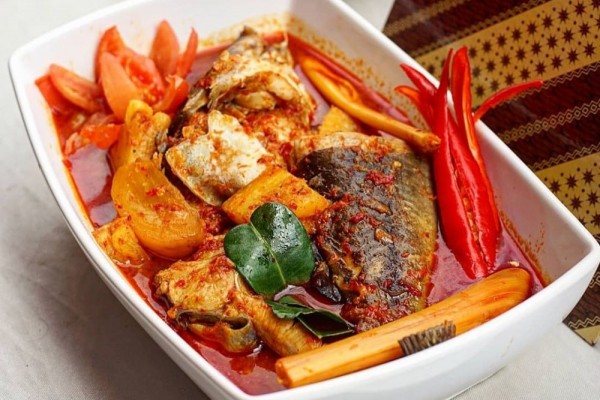
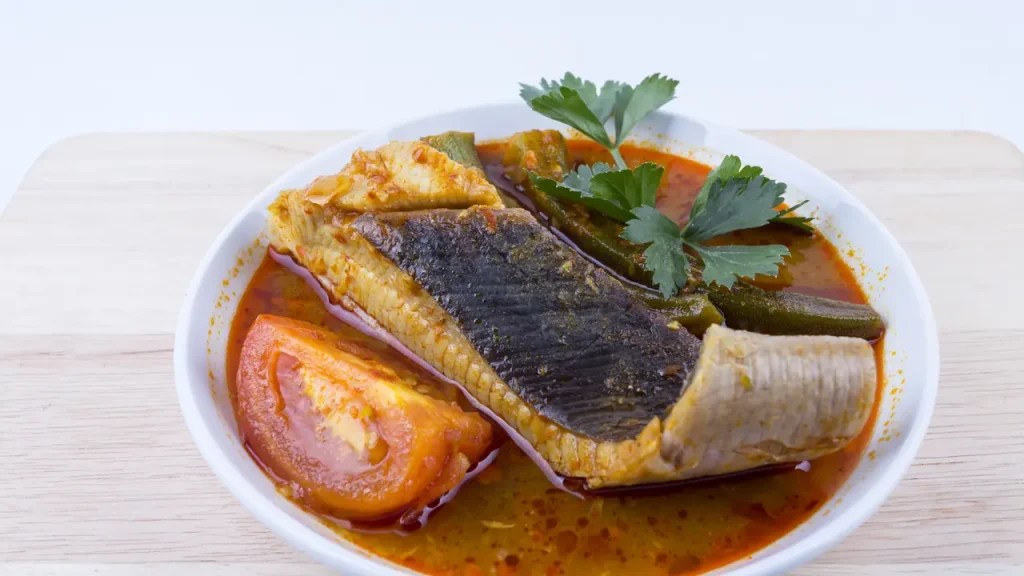

Baung Asam Pedas is not merely a meal; it’s an experience. The star ingredient, the baung fish (a type of catfish, often large and prized for its tender, flaky flesh), is simmered in a broth that is a harmonious symphony of sourness from tamarind, heat from chilies, and a depth of flavor from an array of aromatic herbs and spices. The ‘pedas’ (spicy) element is crucial, providing a delightful kick that awakens the palate, while the ‘asam’ (sour) component cuts through the richness of the fish, creating a perfectly balanced and utterly addictive dish.
The origin of Baung Asam Pedas is deeply rooted in the Riau region, particularly among the Malay communities. Historically, Riau’s geography, with its extensive river systems and proximity to the Strait of Malacca, made fish a staple protein. The need for preservation and the availability of local spices led to the development of dishes like Asam Pedas, which uses souring agents and spices not only for flavor but also to help extend the shelf life of the fish. The use of baung fish specifically is a testament to its local abundance and desirability in the region.
Making authentic Baung Asam Pedas requires a thoughtful selection of ingredients, each playing a vital role in the final flavor profile. The foundation of the dish lies in the spice paste, known as ‘bumbu halus’. This paste is typically made from a blend of fresh ingredients, pounded or blended until smooth, releasing their aromatic oils and intense flavors.
The key components of the ‘bumbu halus’ usually include: red chilies (for heat), bird’s eye chilies (for an extra spicy kick, adjust to your preference), shallots (for sweetness and pungency), garlic (for savory depth), turmeric (for color and a subtle earthy note), ginger (for warmth and aroma), and galangal (for a distinct zesty and peppery flavor). Some variations might also include candlenuts for a richer texture.
Beyond the spice paste, other essential aromatics and flavorings are added to the simmering broth. These often include lemongrass (bruised to release its citrusy fragrance), Kaffir lime leaves (for a distinctive citrusy aroma), bay leaves (for a subtle herbaceous note), and asam kandis (a dried sour fruit, similar to Garcinia Cambogia, that provides a unique tangy flavor). Tamarind paste, derived from the pulp of the tamarind fruit, is the primary source of sourness and is crucial for achieving the ‘asam’ characteristic.
The type of fish used is paramount. While the authentic recipe calls for baung fish, other firm-fleshed freshwater fish can be substituted if baung is unavailable. Options include patin (pangasius), lele (catfish), or even tilapia. The key is to choose fish that can withstand simmering without disintegrating, and whose natural flavor complements the robust spice blend. The fish is usually cut into thick steaks or chunks for optimal texture.
Preparing Baung Asam Pedas is a process that rewards patience. It begins with sautéing the ‘bumbu halus’ in a bit of oil until fragrant and the raw smell dissipates. This step is crucial for developing the full flavor of the spices. Then, the bruised lemongrass, Kaffir lime leaves, bay leaves, and asam kandis are added to the pot to infuse the oil with their aromas.
Once the spice paste is thoroughly cooked and fragrant, water or fish stock is added to create the broth. The tamarind paste is then dissolved in a little warm water and strained into the pot, adding the essential sourness. The broth is brought to a simmer, allowing the flavors to meld.
The fish pieces are then carefully added to the simmering broth. It’s important not to stir too vigorously at this stage to prevent the fish from breaking apart. The fish is cooked gently until it is tender and flakes easily. The cooking time will vary depending on the thickness of the fish pieces.
Seasoning is the final touch. Salt is added to taste, and sometimes a pinch of sugar is used to balance the sourness and spiciness, though this is optional and depends on personal preference. Fresh herbs like cilantro or spring onions are often added towards the end of cooking or as a garnish for a burst of freshness.
A truly authentic Baung Asam Pedas should have a broth that is rich, spicy, and tangy, with the tender fish absorbing all these complex flavors. The aroma should be intoxicating, a blend of chili, lemongrass, lime, and the unique fragrance of the spices.
Serving Baung Asam Pedas is typically done hot, accompanied by steamed white rice. The rice acts as a perfect neutral base to soak up the flavorful broth. Additional accompaniments might include fresh cucumber slices, boiled eggs, or even a side of crispy fried shallots for added texture.
The beauty of this dish lies in its adaptability. While the core ingredients remain consistent, regional variations exist. Some families in Riau might add a touch of shrimp paste (terasi) for an umami boost, while others might incorporate tomatoes for added acidity and color. The level of spiciness can also be adjusted by modifying the quantity and type of chilies used.
For those outside of Indonesia, sourcing some of the specific ingredients might present a challenge. Fresh baung fish can be hard to find, but as mentioned, other firm white fish are good substitutes. Asam kandis can sometimes be substituted with a little extra tamarind paste or a small piece of dried sour fruit like ‘asam gelugur’. However, seeking out these authentic ingredients, perhaps at an Asian grocery store, will undoubtedly elevate the dish to its true potential.
Let’s delve into a detailed recipe for Baung Asam Pedas Khas Riau, designed for home cooks. This recipe aims to capture the authentic essence of the dish.
- 1 kg baung fish (or other firm white fish), cut into thick steaks
- 1 large stalk lemongrass, bruised
- 4-5 Kaffir lime leaves, torn
- 2-3 pieces asam kandis (or 2 tbsp tamarind paste mixed with 1/2 cup warm water, strained)
- 2-3 bay leaves
- 2 tbsp cooking oil
- 1 liter water or fish stock
- Salt to taste
- Optional: 1 tsp sugar
- Optional garnish: fresh cilantro, spring onions, fried shallots
- 10-15 red chilies (adjust to spice preference)
- 5-10 bird’s eye chilies (optional, for extra heat)
- 8-10 shallots
- 4-5 cloves garlic
- 2 cm ginger
- 2 cm turmeric (fresh or powder)
- 2 cm galangal
- 3-4 candlenuts (optional, for richness)
- Prepare the fish: Clean the baung fish steaks thoroughly. Set aside.
- Make the spice paste: Combine all the ‘bumbu halus’ ingredients in a blender or food processor. Add a little oil or water if needed to help blend into a smooth paste. Alternatively, pound the ingredients using a mortar and pestle until smooth.
- Sauté the spice paste: Heat the cooking oil in a large pot or wok over medium heat. Add the spice paste and sauté until it is fragrant, the oil separates, and the raw smell is gone (about 5-7 minutes).
- Add aromatics: Add the bruised lemongrass, torn Kaffir lime leaves, bay leaves, and asam kandis (if using whole pieces) to the pot. Stir and cook for another minute until fragrant.
- Create the broth: Pour in the water or fish stock. Bring the mixture to a boil, then reduce the heat to a simmer.
- Add tamarind: If using tamarind paste, pour the strained tamarind water into the simmering broth. Stir well. If using asam kandis, ensure they are submerged.
- Cook the fish: Gently place the baung fish steaks into the simmering broth. Ensure they are mostly submerged. Do not stir vigorously. Simmer gently for about 10-15 minutes, or until the fish is cooked through and flakes easily. The exact cooking time will depend on the thickness of the fish.
- Season: Add salt to taste. If desired, add a pinch of sugar to balance the flavors. Taste and adjust seasoning as needed.
- Final touch: If using fresh cilantro or spring onions, stir them in during the last minute of cooking or sprinkle them on top as a garnish.
- Serve: Ladle the hot Baung Asam Pedas into bowls. Serve immediately with steamed white rice. Garnish with fried shallots if desired.
The process of making Baung Asam Pedas is as much about the technique as it is about the ingredients. The slow sautéing of the spice paste is crucial for unlocking deep flavors. Similarly, the gentle simmering of the fish ensures that it remains moist and tender, absorbing the complex broth without falling apart.
The sourness of the tamarind and asam kandis, combined with the heat of the chilies and the fragrance of the aromatics, creates a dish that is both invigorating and comforting. It’s a testament to the Riau culinary philosophy of using fresh, local ingredients to create bold and memorable flavors.
Baung Asam Pedas is more than just a recipe; it’s a culinary heritage. It represents the warmth of Riau’s people, the bounty of its rivers, and the richness of its spice traditions. Every spoonful is a journey to the heart of Indonesia, a taste of authenticity that lingers long after the last bite.
Exploring this dish offers a deeper appreciation for Indonesian cuisine, showcasing how simple ingredients can be transformed into something extraordinary through skillful preparation and a deep understanding of flavor balance. It’s a dish that is both accessible to home cooks and deeply satisfying.
Whether you are a seasoned cook or a beginner venturing into Indonesian flavors, Baung Asam Pedas Khas Riau is a rewarding dish to master. Its vibrant taste and aromatic complexity are sure to impress and delight your taste buds, offering a true culinary adventure.
The lingering warmth from the chilies, the refreshing tang from the tamarind, and the subtle, complex notes from the various spices create a symphony on the palate. It’s a dish that is often craved and remembered fondly.
In conclusion, Baung Asam Pedas Khas Riau is a culinary masterpiece that deserves a place in every food lover’s repertoire. Its unique blend of spicy, sour, and aromatic elements, coupled with the tender texture of the baung fish, makes it an unforgettable gastronomic experience.
Embrace the challenge, gather your ingredients, and embark on the delightful journey of creating this iconic Riau delicacy. Your kitchen will soon be filled with the tantalizing aromas of authentic Indonesian spice.