
But what exactly makes a tuna steak ‘perfect’? It’s a delicate balance of factors, from the initial selection of the fish to the precise timing on the heat. Our focus today is on demystifying the process, providing you with a step-by-step guide to consistently achieve that coveted medium-rare doneness, where the exterior boasts a beautiful sear and the interior remains vibrantly pink, tender, and incredibly moist.
Understanding tuna steak is the first step. Unlike red meat, which can be cooked to various degrees of well-done, tuna, particularly high-quality varieties, is best enjoyed with a raw to rare or medium-rare center. Overcooking tuna transforms its delicate texture into something dry and chalky, losing its inherent richness and oceanic freshness. This is why precision is paramount.
Why medium-rare, specifically? This doneness level strikes the ideal balance. The searing process creates a flavorful crust, known as the Maillard reaction, while the brief cooking time preserves the tuna’s natural moisture and tender, almost buttery texture. It allows the subtle flavors of the fish to shine through, unmasked by excessive heat.
The cornerstone of any great tuna steak is the quality of the fish itself. Always opt for sushi-grade or sashimi-grade tuna if possible. This designation indicates that the fish has been handled and processed to a standard suitable for raw consumption, ensuring superior freshness and safety. While not strictly necessary for searing, it guarantees the highest quality for a medium-rare preparation.
When selecting your tuna, look for thick, firm steaks with a vibrant, deep red or reddish-pink color. Avoid any tuna that appears dull, brownish, or has a strong, ‘fishy’ odor. Fresh tuna should have a mild, oceanic scent. Steaks that are 1 to 1.5 inches thick are ideal for achieving a medium-rare interior without overcooking the exterior too quickly.
Yellowfin tuna, often marketed as ‘Ahi,’ is the most common and highly recommended variety for steaks due to its firm texture and rich flavor. Bigeye tuna is another excellent choice, similar to Yellowfin but often with a slightly higher fat content. Albacore tuna, while popular for canning, tends to be lighter in color and flavor, and can dry out more easily when cooked, making it less ideal for a medium-rare steak.
Before you even think about cooking, gather your essential equipment. A heavy-bottomed pan, such as cast iron or a high-quality stainless steel skillet, is crucial for achieving an even, high heat and a perfect sear. You’ll also need sturdy tongs, paper towels for drying the fish, a sharp knife for slicing, and ideally, an instant-read meat thermometer for absolute precision.
The ingredient list for a perfect tuna steak is remarkably simple, allowing the fish to be the star. You’ll need:
- High-quality tuna steaks (1-1.5 inches thick)
- High smoke point oil (grapeseed, avocado, or refined olive oil)
- Coarse sea salt
- Freshly ground black pepper
Optional additions might include a touch of garlic powder, onion powder, or a pinch of chili flakes for extra flavor.
Preparation begins with ensuring your tuna is properly defrosted if it was frozen. Thaw it slowly in the refrigerator overnight. Once thawed or if fresh, the most critical step before seasoning is to pat the tuna steaks thoroughly dry with paper towels. Excess moisture on the surface will steam the fish instead of searing it, preventing that beautiful, crispy crust from forming.
Next, season your tuna generously. Don’t be shy with the salt and pepper. The high heat of the pan will quickly form a crust, and a good amount of seasoning on the surface will contribute significantly to the overall flavor profile. You can also lightly oil the tuna steaks themselves before seasoning, which helps the spices adhere and promotes an even sear.
Now, for the heart of the cooking process: searing. Place your heavy-bottomed pan over high heat. Allow it to preheat for several minutes until it is smoking hot. A properly heated pan is non-negotiable for achieving a quick, effective sear. Add a tablespoon or two of your chosen high smoke point oil to the pan. The oil should shimmer and almost begin to smoke immediately.
Carefully place the seasoned tuna steaks into the screaming hot pan. Do not overcrowd the pan; cook in batches if necessary to maintain the high temperature. The sound of a vigorous sizzle is exactly what you want to hear. Cook the tuna for precisely 1 to 2 minutes per side for a 1-inch thick steak, or 2 to 3 minutes per side for a 1.5-inch thick steak, depending on your stove’s heat and desired doneness.
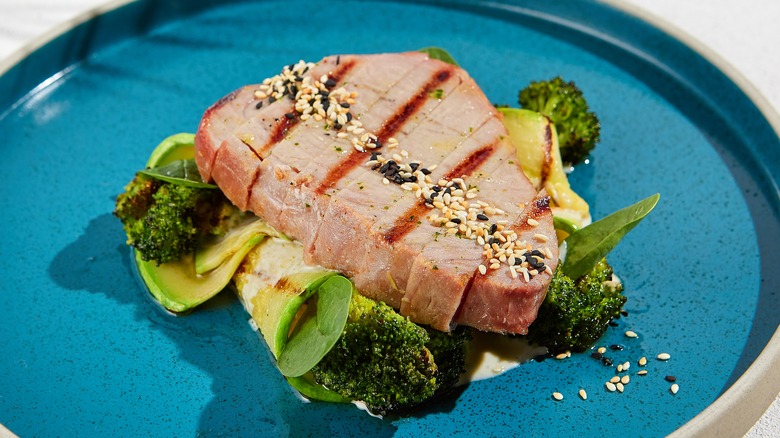
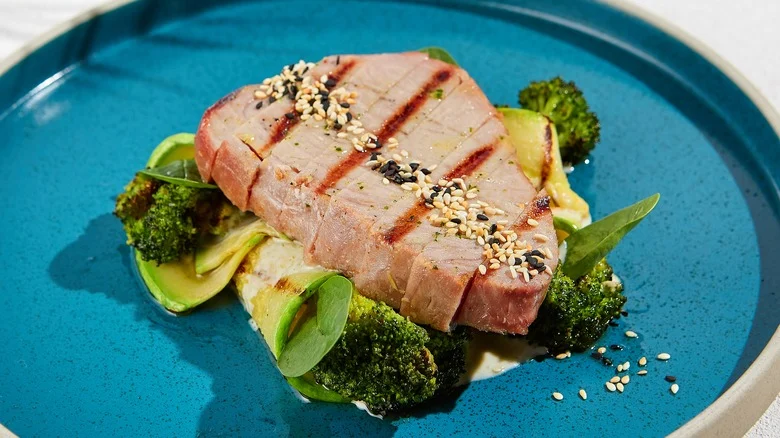
For a true medium-rare, the goal is a thin, seared crust on the outside and a vibrant, translucent red/pink center. The edges of the steak will appear opaque and cooked through, gradually transitioning to the raw center. This visual cue is often enough for experienced cooks, but for beginners, a more precise method is recommended.
The touch test is a classic technique. Gently press the center of the tuna steak with your finger or the back of your tongs. For medium-rare, it should feel firm on the outside but still have a slight give and springiness in the center, akin to the fleshy part of your palm just below your thumb when your thumb and middle finger are touching.
For absolute certainty, an instant-read meat thermometer is your best friend. Insert the thermometer into the thickest part of the steak, avoiding the pan. For a medium-rare tuna steak, aim for an internal temperature between 120-125°F (49-52°C). Remember that the temperature will continue to rise slightly as the fish rests.
Once your tuna steaks have reached the desired doneness, remove them from the pan immediately and place them on a cutting board. This next step is crucial and often overlooked: let the tuna rest. Allow the steaks to rest for 5 to 10 minutes. This allows the juices to redistribute throughout the fish, resulting in a more tender and moist steak. Skipping this step can lead to dry, less flavorful results.
After resting, slice the tuna steaks against the grain into thick medallions or thinner slices, depending on your preference. Slicing against the grain shortens the muscle fibers, making each bite more tender and enjoyable. Observe the beautiful gradient from the seared crust to the perfectly pink, raw center – a testament to your masterful cooking.
Let’s recap some common pitfalls to avoid that can derail your quest for the perfect medium-rare tuna steak. Firstly, not drying the tuna sufficiently will prevent a proper sear. Secondly, not preheating your pan to a high enough temperature will result in a ‘steamed’ rather than ‘seared’ fish. Thirdly, overcrowding the pan lowers the temperature, leading to uneven cooking.
To elevate your perfectly seared tuna, consider a simple accompanying sauce. A classic lemon butter sauce, made by melting butter with fresh lemon juice, capers, and a sprinkle of parsley, offers a bright, tangy contrast. For an Asian-inspired twist, a quick soy-ginger glaze or a dash of wasabi aioli can be incredibly complementary.
Another excellent option is a fresh salsa verde or a vibrant chimichurri. These herbaceous, zesty sauces cut through the richness of the tuna, adding layers of flavor and a beautiful splash of color. The key is to choose a sauce that enhances, rather than overwhelms, the delicate taste of the tuna.
Complementary side dishes also play a vital role in completing the meal. Think light and fresh. Roasted asparagus, sautéed green beans with garlic, or a simple mixed green salad with a vinaigrette are excellent choices. For a more substantial meal, consider quinoa, brown rice, or even some garlic mashed potatoes or roasted baby potatoes.
Beyond its exquisite taste, tuna is also incredibly healthy. It’s an excellent source of lean protein, essential for muscle repair and growth. It’s rich in Omega-3 fatty acids, which are beneficial for heart health, brain function, and reducing inflammation. Tuna also provides a good dose of B vitamins, selenium, and magnesium.
When purchasing tuna, consider its sustainability. Look for certifications from organizations like the Marine Stewardship Council (MSC) or refer to seafood watch guides. Choosing responsibly sourced tuna helps protect marine ecosystems and ensures the availability of this wonderful fish for future generations.
While searing is often the preferred method, a quick marinade can infuse your tuna with additional flavor, especially if you’re looking to experiment. A simple marinade of olive oil, lemon juice, garlic, and fresh herbs (like thyme or rosemary) for no more than 15-20 minutes can add a lovely aromatic note without ‘cooking’ the fish.
Alternatively, a brief soak in a light teriyaki or soy-ginger marinade can impart an umami-rich depth. Remember, marinating tuna for too long can begin to ‘cook’ the delicate protein, so keep it short and sweet, especially for a medium-rare finish.
For those who prefer grilling, the principles for achieving medium-rare remain largely the same. Ensure your grill grates are clean, well-oiled, and screaming hot. Sear for the same duration on each side, using visual cues or a thermometer to gauge doneness. The smoky char from the grill adds another dimension of flavor.
Let’s delve a bit deeper into the temperature zones for tuna doneness.
- Rare: 115-120°F (46-49°C) – Very red, almost raw center.
- Medium-Rare: 120-125°F (49-52°C) – Bright pink center, slightly firmer.
- Medium: 125-130°F (52-54°C) – Pinker throughout, but less translucent.
- Medium-Well: 130-135°F (54-57°C) – Mostly opaque, faint pink.
- Well-Done: Above 135°F (57°C) – Fully opaque, dry. (Avoid for tuna!)
Understanding the Maillard reaction is key to appreciating the sear. This complex chemical reaction between amino acids and reducing sugars gives seared foods their distinctive flavor, aroma, and golden-brown crust. It only occurs at high temperatures, which is why a super-hot pan is non-negotiable for that perfect tuna steak.
Finally, presentation matters. Arrange your sliced tuna beautifully on the plate, perhaps fanned out, showcasing the vibrant colors. Drizzle with your chosen sauce, add a sprinkle of fresh herbs, and serve alongside your complementary side dishes. A visually appealing plate enhances the entire dining experience.
Mastering the medium-rare tuna steak is a rewarding culinary skill that elevates your home cooking. It requires attention to detail, a hot pan, and a little bit of patience, but the result is a truly spectacular dish that rivals any restaurant offering. Don’t be afraid to experiment with seasonings and sauces once you’ve perfected the basic technique.
Embrace the process, trust your instincts, and enjoy the satisfaction of creating a dish that is both elegant and incredibly delicious. With these guidelines, you are well-equipped to prepare a tuna steak that is perfectly seared on the outside, succulent and tender on the inside, and sure to impress.