
Embarking on the journey of homemade sushi offers numerous advantages. Firstly, it’s significantly more cost-effective than dining out, allowing you to enjoy generous portions of your favorite rolls without breaking the bank. Secondly, you gain complete control over the freshness and quality of your ingredients, which is paramount when dealing with seafood. Lastly, and perhaps most excitingly, it opens up a world of customization, enabling you to experiment with various fillings, flavors, and presentations to perfectly suit your palate and dietary preferences.
This guide is designed for enthusiasts of all skill levels, from complete beginners to those looking to refine their techniques. We will meticulously cover every aspect, starting with the fundamental building blocks – the rice – and progressing through ingredient selection, preparation, rolling methods, and crucial food safety considerations. By the end, you’ll feel confident and inspired to host your own sushi-making party or simply enjoy a quiet evening of handcrafted culinary delight.
At the heart of every great sushi roll is perfectly prepared sushi rice. This isn’t just any rice; it’s a specific short-grain Japanese rice, meticulously cooked and seasoned to achieve a unique sticky, slightly firm, and subtly sweet-sour flavor profile. Understanding and mastering sushi rice preparation is arguably the most critical step in your sushi-making journey, as it forms the foundational texture and taste for your entire roll.
When selecting your rice, always opt for a high-quality short-grain Japanese rice labeled specifically for sushi. Brands like Nishiki, Kokuho Rose, or Tamaki Gold are excellent choices, known for their ability to absorb the seasoning beautifully and maintain the desired stickiness without becoming mushy. Avoid long-grain or medium-grain rice, as they lack the necessary starch content and texture for authentic sushi.
The preparation of sushi rice begins long before it hits the rice cooker. Start by vigorously rinsing the rice under cold running water in a fine-mesh sieve until the water runs clear. This process, which can take 5-10 minutes, removes excess starch, preventing the rice from becoming overly sticky or gummy. After rinsing, allow the rice to drain for at least 30 minutes, or even an hour, to ensure optimal water absorption during cooking.
Cooking the rice typically follows a 1:1 ratio of rice to water, though consulting your specific rice package instructions is always recommended. Once cooked, the rice needs to be seasoned with sushi-zu, a special vinegar mixture. To make sushi-zu, gently heat (do not boil) a mixture of rice vinegar, sugar, and salt until the sugar and salt dissolve. A common ratio is 4 tablespoons rice vinegar, 2 tablespoons sugar, and 1 teaspoon salt per 2 cups of uncooked rice.
Transfer the hot, cooked rice to a large, non-metallic bowl or a traditional wooden hangiri. Pour the prepared sushi-zu evenly over the rice. Using a wooden spoon or spatula, gently fold and cut the rice with a diagonal motion, being careful not to mash the grains. This process, known as shari awase, distributes the seasoning and helps cool the rice. Simultaneously, fan the rice vigorously to cool it down quickly and give it a shiny appearance. The rice should be cooled to body temperature before use.
The edible wrapper for your sushi rolls is nori, dried sheets of seaweed. High-quality nori is dark green, almost black, with a slightly shiny surface and a crisp texture. When held up to the light, it should have an even consistency without holes. Nori comes in various grades; choose a good quality product for the best flavor and ease of rolling. Some nori sheets are pre-toasted (yaki-nori), which is ideal for sushi.
Before diving into the rolling process, ensure you have all your essential tools and ingredients laid out. Organization is key to smooth sushi making. Your workstation should be clean and uncluttered, allowing for efficient assembly.
Key equipment includes:
- Bamboo Rolling Mat (Makisu): Essential for shaping your rolls.
- Sharp Knife: A long, thin, sharp knife (like a sashimi knife or a good chef’s knife) is crucial for clean cuts.
- Cutting Board: A stable surface for preparing ingredients and slicing rolls.
- Small Bowl of Water: For moistening your hands to prevent rice from sticking.
- Damp Cloth: To wipe your knife between cuts.
Selecting fresh, high-quality seafood is paramount for both taste and safety. If you plan to use raw fish, it is absolutely critical to source sushi-grade or sashimi-grade fish from a reputable fishmonger. This designation indicates that the fish has been handled and frozen in a way that minimizes parasitic risk, making it safe for raw consumption.
When choosing seafood, consider whether you prefer raw or cooked options. Both can create incredibly delicious rolls. Raw fish offers a melt-in-your-mouth texture and pure flavor, while cooked seafood provides a different dimension of taste and can be a great entry point for those new to sushi.
For raw seafood, popular choices include tuna (maguro), particularly lean bluefin or yellowfin, and salmon (sake). Look for fish that is vibrant in color, firm to the touch, and has a fresh, ocean scent, not a strong ‘fishy’ odor. When preparing, slice the fish against the grain into uniform strips, approximately 1/4 to 1/2 inch thick and long enough to fit across your nori sheet.
Preparing raw fish for sushi requires precision. Always use a very sharp knife to make clean cuts, which helps preserve the integrity of the fish’s texture. For tuna, you might cut it into long, slender batons. For salmon, thin, wide slices often work best. Keep the fish chilled until you are ready to assemble your rolls.
Cooked seafood options are incredibly versatile and popular. Shrimp (ebi), crab sticks (surimi), smoked salmon, and even cooked scallops or eel (unagi) are excellent choices. For shrimp, boil or steam them until pink and firm, then slice them in half lengthwise or butterfly them. Crab sticks can simply be shredded or left whole. Smoked salmon can be used as is, often paired with cream cheese.
Preparing cooked seafood might involve simple boiling, steaming, or light pan-searing. For example, to prepare shrimp, bring a pot of salted water to a boil, add the shrimp, and cook for 1-2 minutes until they turn pink and curl. Immediately transfer them to an ice bath to stop the cooking process and maintain their firm texture. Peel and devein if necessary, then slice or butterfly.
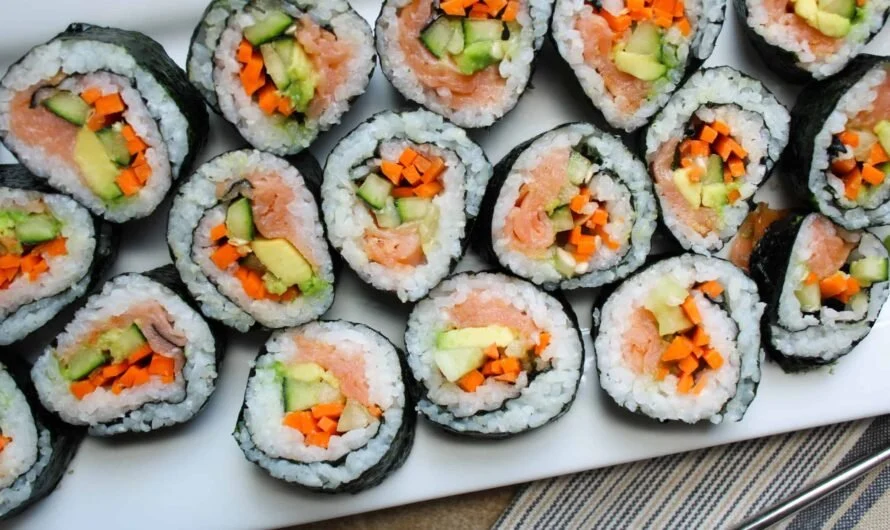
To add crunch, freshness, and a burst of color to your rolls, incorporate a variety of complementary vegetable fillings. Classic choices include cucumber (cut into thin matchsticks), avocado (sliced thinly), and carrot (julienned). Other popular additions include scallions, bell peppers, or even blanched asparagus.
Beyond the core seafood and vegetables, consider adding other flavor enhancers to elevate your rolls. These might include toasted sesame seeds (white or black), fish roe like tobiko (flying fish roe) or masago (capelin roe) for a pop of color and texture, or a thin smear of cream cheese for richness, especially with smoked salmon.
With all your ingredients prepped and equipment ready, it’s time to begin rolling. Lay your bamboo rolling mat flat on a clean surface. Place one sheet of nori, shiny side down, on the mat, aligning the bottom edge of the nori with the edge of the mat closest to you. Have your bowl of water nearby for moistening your hands.
Dip your hands in the water to prevent the rice from sticking. Take a handful of sushi rice (about 3/4 to 1 cup for a standard roll) and gently spread it evenly over the nori. Leave about a 1/2 to 1-inch border of nori bare at the top edge (the edge furthest from you). This border will help seal the roll. Apply gentle, even pressure to ensure the rice adheres to the nori without compressing it too much.
Once the rice is spread, arrange your chosen fillings horizontally across the center of the rice, forming a neat line. Be mindful not to overfill the roll, as this makes it difficult to close and can cause it to burst. A good rule of thumb is to use 2-3 types of filling, keeping the total volume moderate.
Now for the rolling technique, which requires a gentle yet firm touch. Grasp the edge of the bamboo mat closest to you, along with the bottom edge of the nori and rice. Carefully lift and fold the mat over the fillings, tucking the bottom edge of the nori and rice snugly over the fillings. Apply gentle, even pressure with your fingers to secure the fillings.
Continue rolling the mat forward, lifting the mat slightly as you roll to prevent it from getting incorporated into the sushi. Use your fingers to keep the fillings in place and to maintain the roll’s cylindrical shape. Apply firm, even pressure with the mat as you roll to ensure a tight, compact roll. Once you reach the bare nori border, moisten it with a tiny dab of water to help it seal, then complete the roll.
After your roll is complete, gently press it to ensure it’s firm and well-sealed. To slice the roll, place it on a clean cutting board. Dip your sharp knife in water and wipe it clean with a damp cloth between each cut. This prevents rice from sticking to the blade and ensures clean, precise slices. Cut the roll in half, then cut each half into three or four equal pieces, yielding 6-8 pieces per roll.
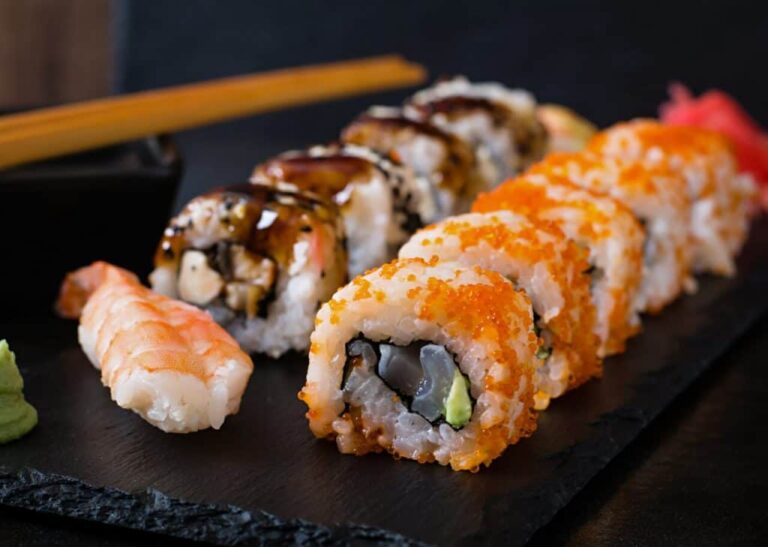
For those looking to advance their skills, try making an inside-out roll (uramaki). This roll has the rice on the outside and the nori on the inside, often adorned with sesame seeds or fish roe. To make uramaki, lay plastic wrap over your bamboo mat. Spread the rice over the nori, then flip the nori (rice side down) onto the plastic-covered mat. Add your fillings, then roll as usual. The plastic wrap prevents the rice from sticking to the mat.
When making uramaki, consider sprinkling sesame seeds or tobiko directly onto the rice layer before flipping it. This adds an attractive finish and an extra layer of texture. The plastic wrap is crucial for a clean release and to prevent the rice from sticking to the makisu. Practice makes perfect with this technique, so don’t be discouraged if your first few aren’t flawless.
While this guide focuses on sushi rolls (maki), the principles of rice preparation and ingredient selection extend to other sushi forms like nigiri (sliced fish over a ball of rice) and temaki (hand rolls). Mastering maki will give you a strong foundation for exploring these other delightful variations of sushi.
Food safety is paramount, especially when working with raw seafood. Always purchase sushi-grade fish from a trusted source. Keep all ingredients, particularly seafood, chilled until immediately before use. Wash your hands thoroughly before and during the preparation process. Use separate cutting boards and utensils for raw fish and other ingredients to prevent cross-contamination. Consume homemade sushi within a few hours of preparation, and never store raw fish sushi overnight.
Even with careful preparation, you might encounter a few common issues. If your rice is too sticky, you might have used too much water or not rinsed it enough. If your roll falls apart, it might not have been rolled tightly enough, or you overfilled it. Uneven slices usually indicate a dull knife or not wiping the blade between cuts. Don’t be discouraged; each attempt is a learning opportunity!
Presenting your homemade sushi beautifully enhances the dining experience. Arrange your sliced rolls artfully on a platter, perhaps garnished with a sprinkle of sesame seeds or a sprig of fresh herbs. The visual appeal is a significant part of sushi’s charm.
Serve your sushi with traditional accompaniments: soy sauce (preferably low-sodium Japanese soy sauce), a dollop of pungent wasabi paste, and thin slices of sweet, pickled ginger (gari). The ginger acts as a palate cleanser between different types of sushi, while wasabi adds a spicy kick, and soy sauce provides umami depth.
The beauty of making sushi at home lies in the freedom to experiment. Don’t be afraid to try new combinations of seafood, vegetables, and sauces. Consider adding a touch of spicy mayonnaise, a sprinkle of furikake, or even incorporating fruits like mango for a tropical twist. Your kitchen is your culinary laboratory!
Sharing your homemade sushi with friends and family is an incredibly rewarding experience. It’s not just about the food; it’s about the effort, the creativity, and the joy of sharing a meal you’ve crafted with your own hands. Sushi making can be a fun, interactive activity for gatherings, allowing everyone to customize their own rolls.
In conclusion, creating your own seafood sushi rolls at home is a culinary journey that is both accessible and deeply satisfying. By understanding the fundamentals of rice preparation, carefully selecting your ingredients, and practicing your rolling technique, you will gain the confidence to produce delicious and impressive sushi. Embrace the process, have fun with it, and savor the fresh, vibrant flavors of your homemade creations.
We hope this comprehensive guide has empowered you to take on the exciting challenge of sushi making. With a little practice and patience, you’ll soon be rolling like a pro, delighting yourself and your loved ones with exquisite homemade seafood sushi. Happy rolling!