
Recreating the magic of a luxury seafood platter goes beyond simply arranging cooked seafood on a plate. It’s about understanding the nuances of ingredient selection, mastering precise cooking techniques, developing complementary sauces, and, crucially, elevating the presentation to an art form. Our aim is to demystify the process, empowering you to curate a spread that is not only delicious but also visually stunning and deeply impressive.
At the heart of any exceptional seafood platter lies the uncompromising quality of its ingredients. This is not the time to cut corners. Seek out the freshest possible seafood from reputable fishmongers or markets. Prioritize sustainability and seasonality where possible, as these factors often correlate with superior flavor and texture. Think of your platter as a canvas, and each piece of seafood as a precious element contributing to the overall masterpiece.
A truly luxurious platter offers a diverse sensory experience. It combines various textures – the delicate chew of perfectly steamed shrimp, the creamy richness of an oyster, the flaky tenderness of grilled fish, and the crisp bite of fried calamari. A balance of flavors, from briny and sweet to subtly smoky or herbaceous, is also paramount. The visual appeal, with vibrant colors and elegant arrangement, completes the restaurant-style illusion.
Cold Elements: The Refreshing Start
- Fresh Oysters: The epitome of raw seafood elegance. Select plump, briny oysters. Serving them freshly shucked on a bed of ice with a classic mignonette or a squeeze of lemon is non-negotiable for a luxury platter.
- Chilled Shrimp/Prawns: Perfectly cooked and chilled shrimp are a staple. Look for large, firm prawns. Their sweet, delicate flavor is a crowd-pleaser.
- Cooked Crab Claws or Lump Crab Meat: Whether it’s the impressive presentation of cracked crab claws or the convenience of sweet lump crab meat, crab adds a layer of richness and sophistication. King crab or snow crab legs are particularly striking.
- Lobster Tails or Whole Lobster: The undisputed king of the platter. Chilled, perfectly cooked lobster tails, or even a whole split lobster, instantly elevate the dish to an extraordinary level.
- Steamed Mussels or Clams: Gently steamed and chilled, these offer a briny, oceanic flavor. Ensure they are purged properly before cooking.
Hot Elements: Adding Warmth and Variety (Optional but Recommended)
- Grilled Fish Fillets: Lightly seasoned and perfectly grilled fillets of white fish (like snapper, cod, or halibut) or even salmon can provide a wonderful contrast to the cold items.
- Seared Scallops: Large, perfectly seared sea scallops with a golden crust and tender interior are a luxurious addition, offering a sweet, buttery flavor.
- Crispy Calamari: Lightly battered and quickly fried calamari rings or tentacles offer a delightful textural contrast and a savory, addictive quality.
- Baked Oysters Rockefeller: For a decadent twist, a few baked oysters with a rich, herbaceous topping can add another dimension of flavor and warmth.
- Fish: Look for clear, bulging eyes; bright red gills; firm, shiny flesh that springs back when pressed; and a fresh, mild ocean scent, not overtly fishy.
- Shellfish (Shrimp, Lobster, Crab): Should be firm and intact, with no discoloration. Live shellfish (crabs, lobsters) should be active. Cooked shrimp should have a pleasant, mild smell.
- Oysters/Clams/Mussels: For live bivalves, ensure shells are tightly closed. Discard any that are open and do not close when tapped. They should smell clean and fresh, like the sea.
Now, let’s turn our attention to the meticulous preparation of each seafood component. Precision in cooking ensures optimal flavor and texture.
Preparing Shrimp and Prawns: For cold service, boil or steam shrimp just until they turn pink and opaque, typically 2-3 minutes depending on size. Immediately plunge them into an ice bath to stop the cooking process and maintain their firm texture. Peel and devein, leaving the tails on for presentation.
Cooking Lobster: Lobster can be boiled or steamed. For tails, steam for 5-8 minutes per pound. For a whole lobster, steam for 8-12 minutes per pound. The shell will turn bright red, and the meat will be opaque. Once cooked, chill thoroughly. Carefully crack and extract the meat from the tail and claws, keeping large pieces intact.
Crab Preparation: If using whole crabs or legs, cook according to type (usually steaming or boiling). Once cooled, use crackers and picks to extract the sweet meat, ensuring no shell fragments remain. For pre-cooked lump crab meat, simply drain and gently flake.
Shucking Oysters: This requires a bit of practice and a good oyster knife. Hold the oyster cup-side down, hinge facing you, wrapped in a towel. Insert the knife into the hinge and twist to pop it open. Slide the knife along the top shell to sever the adductor muscle, remove the top shell, then sever the bottom muscle, ensuring the oyster remains in its natural liquor. Discard any oysters that smell off.
Steaming Mussels and Clams: Thoroughly scrub and de-beard mussels. Place in a pot with a splash of white wine or water, cover, and steam until they open, typically 5-7 minutes. Discard any that do not open. Chill immediately.
Grilling Techniques: For fish fillets, scallops, or calamari, preheat your grill to medium-high. Lightly oil the seafood and season simply with salt, pepper, and perhaps a squeeze of lemon. Grill fish for 3-5 minutes per side, scallops for 1-2 minutes per side until caramelized, and calamari for 1-2 minutes per side to prevent toughness. The key is high heat and quick cooking.
Frying Calamari: For crispy calamari, toss rings and tentacles in seasoned flour, then flash-fry in oil heated to 350-375°F (175-190°C) for just 1-2 minutes until golden brown and tender. Drain on paper towels and season immediately with salt.
No luxury seafood platter is complete without an array of complementary sauces and dips. These enhance the natural flavors without overpowering them.
- Classic Cocktail Sauce: A must-have. Combine ketchup, horseradish (to taste), Worcestershire sauce, lemon juice, and a dash of hot sauce.
- Mignonette: The traditional accompaniment for oysters. Whisk together finely minced shallots, white wine vinegar, and freshly cracked black pepper.
- Lemon Aioli: A rich, creamy garlic mayonnaise with a bright lemon zing. Homemade is best, using egg yolk, garlic, lemon juice, Dijon mustard, and olive oil.
- Melted Garlic Herb Butter: Perfect for dipping hot grilled or steamed seafood. Melt butter with minced garlic, fresh parsley, and a squeeze of lemon.
- Spicy Sambal Mayo (Indonesian Touch): For those who appreciate a kick, mix mayonnaise with sambal ulek or a similar chili paste, a touch of lime juice, and a pinch of sugar.
- Fresh Lemon and Lime Wedges: Essential for a burst of acidity to cut through richness and brighten flavors.
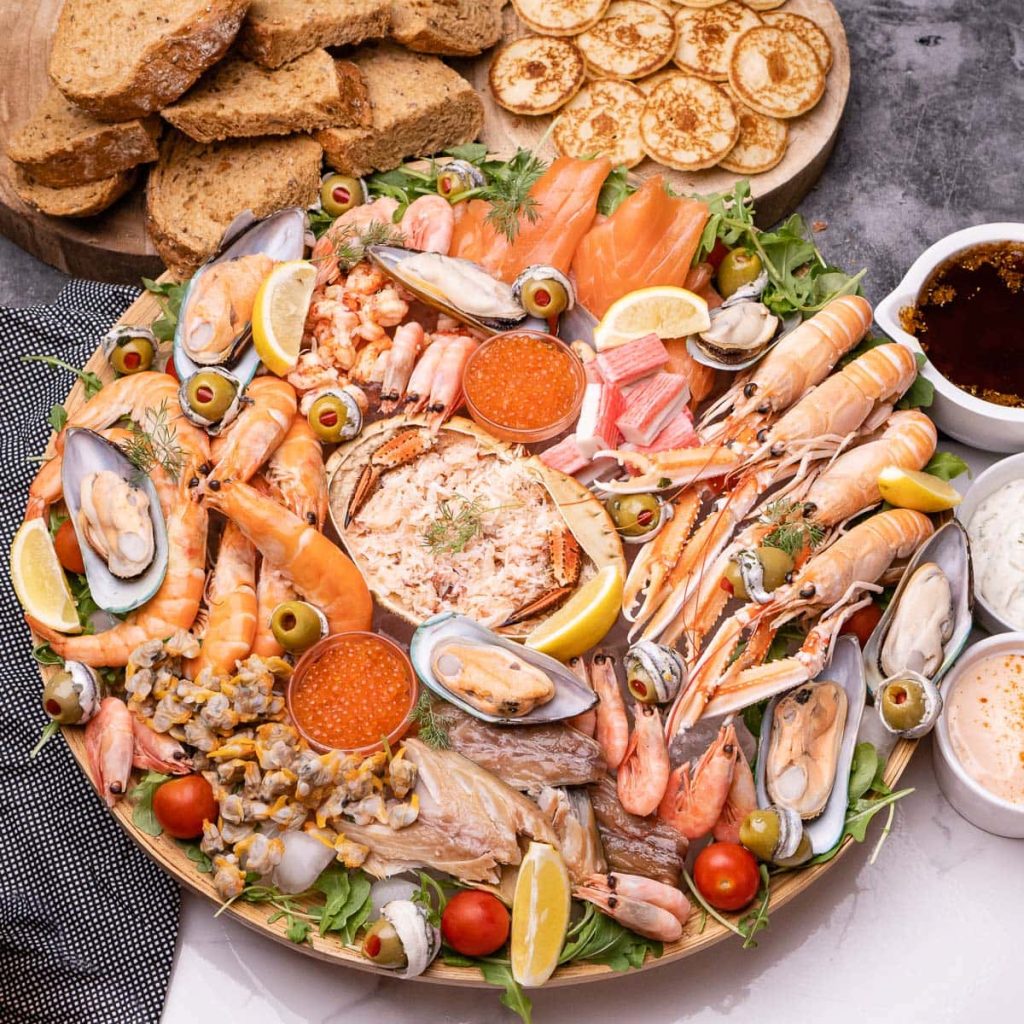
Presentation is where your platter truly transforms from a collection of ingredients into a restaurant-quality spectacle. Think about height, color, and arrangement.
Start with a large, attractive platter or serving tray. A bed of crushed ice is ideal for keeping cold items perfectly chilled and provides a stunning backdrop. Arrange the largest items first, creating a focal point. Then, artfully scatter smaller items around them.
Incorporate fresh garnishes generously. Bright green herbs like dill, parsley, and cilantro add color and freshness. Lemon and lime wedges are not just for flavor but also for visual appeal. Edible flowers, delicate seaweed, or even a few vibrant chili slices can add artistic flair. Arrange sauces in small, elegant ramekins or bowls, strategically placed for easy access.
The Grand Assembly: Step-by-Step
-
Prep All Seafood: Ensure all seafood is cooked, chilled (if serving cold), and prepped (shucked, peeled, cracked). Have all sauces ready in their serving dishes.
-
Prepare the Platter: Lay down a generous bed of crushed ice on your chosen platter. This is crucial for maintaining the freshness and temperature of your cold seafood.
-
Place Core Elements: Start by arranging the largest and most impressive items first – such as lobster tails, whole crab claws, or large grilled fish fillets. Position them to create visual anchors.
-
Add Supporting Cold Items: Artfully arrange oysters (nestled securely in the ice), chilled shrimp, mussels, and clams around the core elements. Vary the placement to create visual interest.
-
Incorporate Hot Elements (if using): If serving hot items, place them towards the center or in a separate, smaller dish alongside the main platter, ensuring they are served immediately after cooking to maintain warmth.
-
Arrange Sauces and Garnishes: Place your ramekins of sauces strategically within or around the platter. Scatter fresh herb sprigs, lemon/lime wedges, and any other decorative elements to fill gaps and add bursts of color.
-
Final Touches: Take a step back and assess your creation. Adjust any elements for balance and symmetry. Ensure serving utensils (oyster forks, crab crackers, small tongs) are readily available.
Serving a seafood platter is an experience in itself. Provide small plates for guests, and perhaps a finger bowl with warm lemon water for easy cleanup. Crusty bread or a light, crisp green salad can be excellent accompaniments, offering a neutral palate cleanser without competing with the seafood’s star power.
For beverages, a crisp, dry white wine is a classic pairing. Think Sauvignon Blanc, Pinot Grigio, or an unoaked Chardonnay. Sparkling wines like Prosecco or Champagne also beautifully complement the richness and brininess of seafood. For beer enthusiasts, a light lager, pilsner, or a Belgian witbier would be refreshing choices.
The beauty of a seafood platter is its adaptability. Feel free to customize based on your preferences, the season, and your budget. Explore different types of fish, experiment with unique shellfish, or incorporate regional flavors. For instance, add a Peruvian-inspired ceviche for a zesty kick, or include some Japanese-style sashimi for an ultra-premium touch.
Seafood is not only delicious but also incredibly beneficial for your health. It’s a fantastic source of lean protein, essential omega-3 fatty acids (known for heart and brain health), and a host of vitamins and minerals like iodine, selenium, and B vitamins. Enjoying a seafood platter is a delicious way to nourish your body.
When working with seafood, especially raw or partially cooked items, food safety is paramount. Always keep seafood chilled until ready to cook or serve. Avoid cross-contamination by using separate cutting boards and utensils for raw seafood. Cook shellfish thoroughly to destroy harmful bacteria. If in doubt about freshness, it’s always better to err on the side of caution and discard.
Crafting a luxury restaurant-style seafood platter at home is more than just cooking; it’s an act of culinary passion and an opportunity to create a truly memorable dining experience. With careful planning, attention to detail, and a commitment to quality ingredients, you can transform your table into a lavish feast that will impress even the most discerning palates. Embrace the challenge, savor the process, and delight in the spectacular results of your very own masterpiece.
Remember, the key to success lies in the freshness of your ingredients, the precision of your preparation, and the artistry of your presentation. Don’t be afraid to experiment and make it your own. Your journey to becoming a seafood platter connoisseur begins now. Enjoy the exquisite flavors of the ocean, beautifully presented, right in your home.