
At its core, ‘Cumi Hitam Pedas Bumbu Medok’ is more than just a recipe; it’s an experience. The term ‘bumbu medok’ is crucial here. It signifies a spice paste that is not merely applied but is deeply infused, cooked down to its essence, creating an aromatic and intensely flavorful foundation. This isn’t a dish where the spices are an afterthought; they are the soul of the preparation, coating every piece of tender squid in a luscious, vibrant sauce.
The ‘bumbu medok’ itself is a symphony of aromatics and spices. A typical base includes shallots and garlic, sautéed until fragrant. Ginger and galangal add warmth and a subtle citrusy note, while chilies provide the essential heat. The type and quantity of chilies will determine the spiciness level, ranging from mildly warm to intensely fiery. For those who prefer a milder version, red chilies can be used, while bird’s eye chilies (cabe rawit) will deliver a potent punch.
Beyond the primary aromatics, other spices play a vital role. Turmeric offers a beautiful golden hue and earthy notes, though in this dish, its color is often masked by the squid ink. Lemongrass, pounded or bruised, infuses a refreshing, zesty aroma. Kaffir lime leaves, torn or bruised, contribute a distinct citrus fragrance that cuts through the richness. Sometimes, candlenuts (kemiri) are added to the spice paste to lend a creamy texture and a subtly nutty flavor, helping to thicken the sauce and bind the flavors together.
The preparation of the spice paste is where the ‘medok’ truly comes into play. All the ingredients for the paste are typically ground or blended into a fine consistency. This is then painstakingly sautéed in oil over medium-low heat. The key is patience. The paste needs to be cooked until it darkens slightly, the oil separates from the solids, and the raw aroma of the spices transforms into a deeply fragrant, cooked perfume. This process, often taking 10-15 minutes or even longer, is what develops the ‘medok’ quality – a rich, concentrated flavor base.
Once the spice paste is perfectly sautéed, the cleaned squid is introduced. The squid should be added whole or cut into rings, depending on preference. The goal is to cook the squid quickly over high heat. Overcooking will result in tough, rubbery squid, which is a common pitfall. The squid should only be cooked until it turns opaque and firms up slightly, usually just a few minutes.
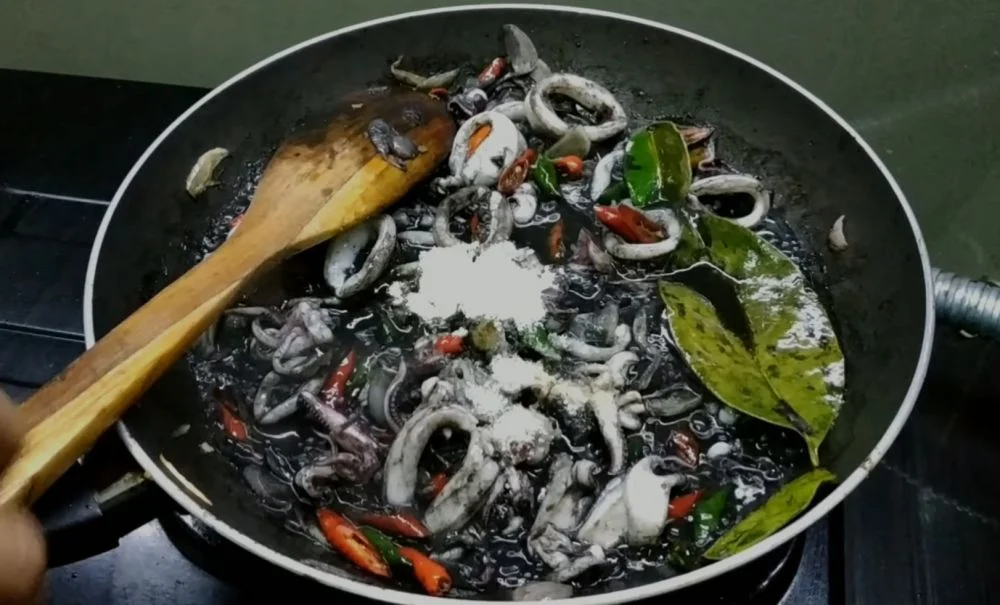
This is where the magic of the squid ink happens. The carefully preserved ink sacs are gently squeezed into the pan. The ink, along with a splash of water or sometimes coconut milk for added richness, creates the signature dark, glossy sauce. The ink adds a subtle brininess, a depth of flavor that is unique and cannot be replicated by any other ingredient. It also contributes to the dramatic visual appeal of the dish.
The cooking time for the squid is critical. Because squid cooks very quickly, adding it too early or cooking it for too long will result in a rubbery texture. The ideal approach is to add the squid to the already simmering spice paste and cook just until it turns opaque and firm. This usually takes no more than 3-5 minutes. Some chefs prefer to cook the squid separately and add it at the very end, just to coat it in the sauce, ensuring maximum tenderness.
For those who want to elevate the dish further, there are several variations and additions. Some recipes include a splash of tamarind juice for a tangy counterpoint to the richness. Others might add sliced tomatoes or bell peppers towards the end of cooking for a burst of freshness and color. A sprinkle of finely chopped spring onions or cilantro just before serving adds a final touch of herbaceousness.
The importance of fresh ingredients cannot be overstated. The quality of the squid directly impacts the final dish. Similarly, using fresh aromatics for the spice paste ensures a vibrant and authentic flavor profile. Wilting or old ingredients will result in a duller, less impactful taste.
Cleaning the squid properly is also a crucial step that many home cooks overlook. Ensuring all the inedible parts are removed, while carefully retaining the ink sac, requires a bit of finesse. A thorough rinse under cold water helps to remove any residual grit or slime, ensuring a clean taste.
The sautéing of the spice paste is arguably the most critical step in achieving ‘bumbu medok.’ Rushing this process means the raw flavors of the spices will persist, and the paste will lack depth. Slow and steady cooking, allowing the flavors to meld and concentrate, is paramount. Look for the oil to separate, indicating that the paste is well-cooked and ready for the next stage.
When it comes to the chilies, experimentation is key. If you’re unsure about your spice tolerance, start with a smaller amount of chilies and add more towards the end if needed. Using a mix of different chili types can also add complexity to the heat profile – for instance, combining the fruity notes of red chilies with the sharp bite of bird’s eye chilies.
The role of the squid ink is multifaceted. It provides the characteristic dark color, making the dish visually striking. More importantly, it imparts a unique umami flavor and a subtle brininess that complements the spice paste beautifully. It’s this ingredient that truly distinguishes ‘Cumi Hitam’ from other squid dishes.
Serving ‘Cumi Hitam Pedas Bumbu Medok’ is typically done piping hot. It is a dish best enjoyed immediately after cooking to appreciate the tender texture of the squid and the vibrant flavors of the sauce. Steamed white rice is the quintessential accompaniment, its plainness providing a perfect canvas for the intense flavors of the squid.
Garnishes can add both visual appeal and an extra layer of flavor. A scattering of fried shallots offers a delightful crunch and a sweet, savory note. Fresh cilantro or thinly sliced spring onions add a pop of green and a fresh, herbaceous aroma. A wedge of lime served on the side allows diners to add a squeeze of acidity, brightening the overall taste.
For those who are new to cooking squid, it’s helpful to remember the rule of thumb: cook it either very quickly or very slowly. For stir-fries and dishes like this, quick cooking is essential to maintain tenderness. If a dish requires longer cooking, such as in stews, the squid is often added towards the end.
The versatility of this dish is also noteworthy. While the classic preparation is already exceptional, adventurous cooks might experiment with adding other seafood elements, such as shrimp, to the mix. However, care must be taken to ensure all seafood is cooked to perfection.
Understanding the nuances of ‘bumbu medok’ is key to unlocking the full potential of this dish. It’s about building layers of flavor through patient sautéing and the careful selection of spices. This technique can be applied to many other Indonesian dishes, making it a valuable skill for any aspiring cook.
The visual aspect of ‘Cumi Hitam Pedas Bumbu Medok’ is undeniably dramatic. The deep, glossy black of the sauce, studded with the white rings of squid and flecked with red chili, is a feast for the eyes. This visual appeal makes it a popular choice for special occasions and celebratory meals.
When sourcing squid, look for plump, firm bodies and intact tentacles. Avoid squid that looks discolored or has a strong, unpleasant odor. Freshness is paramount for both texture and flavor. If using frozen squid, ensure it has been properly thawed before cooking.
The choice of cooking oil can subtly influence the final flavor. A neutral vegetable oil is standard, but some might opt for a small amount of chili oil for an added layer of heat and flavor.
The simmering process after adding the ink and liquid is important for allowing the flavors to meld. This is where the sauce truly develops its character. Keep the heat moderate to prevent the sauce from reducing too quickly or burning.
A common mistake when making this dish is not cooking the spice paste long enough. This results in a raw, pungent flavor that overpowers the delicate taste of the squid. Patience during the sautéing phase is non-negotiable.
Another pitfall is overcooking the squid. Remember, squid becomes tough and rubbery when exposed to heat for too long. Aim for a quick cook, just until the squid turns opaque. If you’re adding it to a simmering sauce, do so right at the end.
For a richer sauce, some recipes suggest using coconut milk instead of water when adding the ink. This adds a creamy texture and a subtle sweetness that complements the spice and brininess.
The balance of flavors is crucial. Taste and adjust the salt, sugar, and chili levels until you achieve a harmonious blend. This dish should be spicy, savory, slightly sweet, and have a pleasant brininess from the ink.
Finally, ‘Cumi Hitam Pedas Bumbu Medok’ is a testament to the power of simple, fresh ingredients combined with skillful preparation. It’s a dish that rewards patience and attention to detail, delivering an unforgettable culinary experience with every bite.