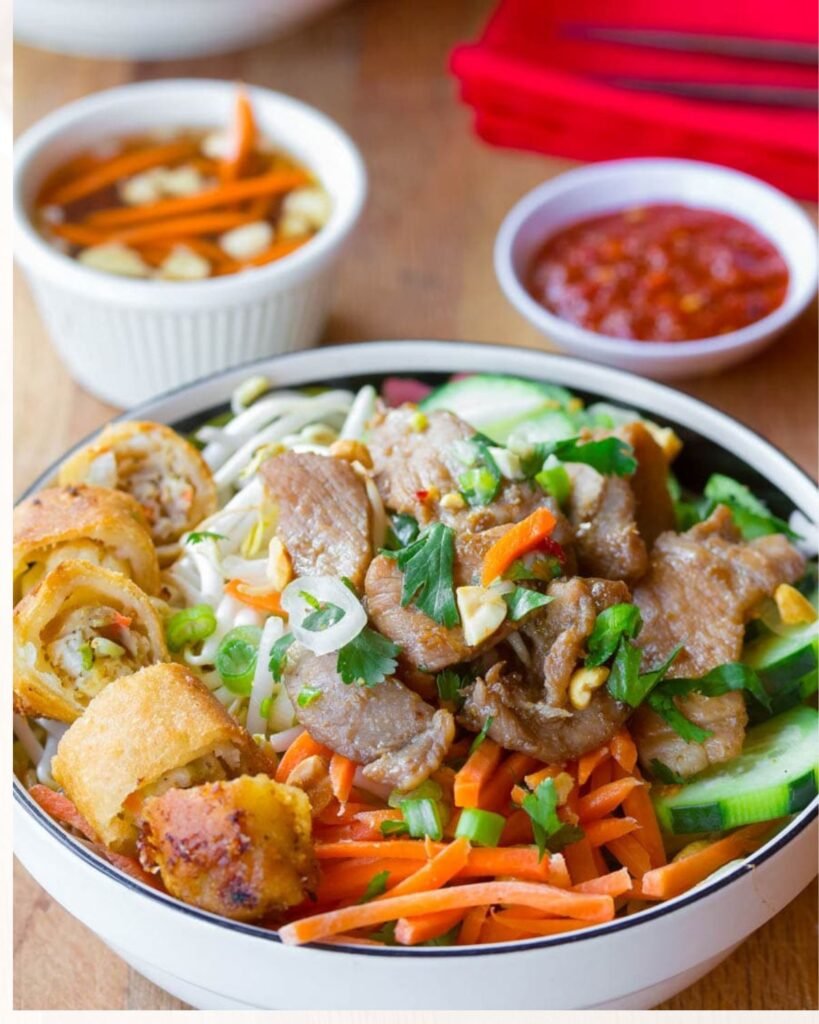
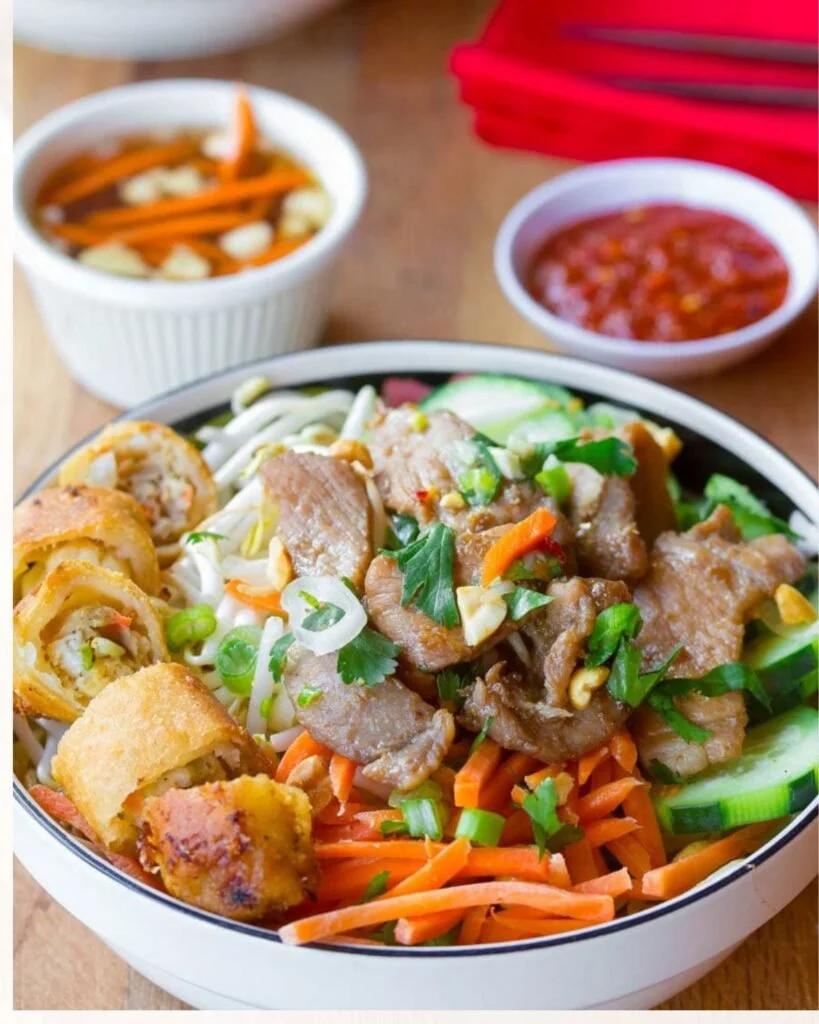

Understanding the anatomy of this dish is crucial before diving into the kitchen. The term ‘Bun’ refers to fresh rice vermicelli noodles, which serve as the carbohydrate base. ‘Cha Gio’ (in Southern Vietnam) or ‘Nem Ran’ (in the North) refers to the fried spring rolls. When you combine them with seafood fillings like shrimp, crab, and squid, you elevate the dish with a sweetness and bounce that red meat simply cannot provide. This guide will take you through every meticulous step to recreate this authentic Vietnamese experience at home.
The Philosophy of Flavor Balance
Vietnamese food is built on the philosophy of balancing five fundamental distinct tastes: spicy, sour, bitter, salty, and sweet. A perfect bowl of Bun Cha Gio Seafood exemplifies this principle. The spring rolls provide the savory and salty crunch, the dipping sauce (Nuoc Cham) adds sweetness and acidity, the herbs contribute bitterness and aromatics, and the chili offers the necessary heat. Achieving this balance is the secret to a successful dish.
Selecting the Best Seafood
The star of this recipe is the seafood filling. For the best texture, avoid using a food processor to blitz your seafood into a paste. Instead, hand-chop fresh shrimp and squid. You want the filling to have a ‘bouncy’ mouthfeel with discernible chunks of meat. If you have access to fresh crab meat, it adds a delicate sweetness that pairs beautifully with the earthiness of the wrapper. A mix of 50% shrimp, 30% crab, and 20% squid is often considered the golden ratio for a premium seafood spring roll.
The Importance of Texture: Fillers and Binders
A spring roll filled only with meat can be dense and heavy. To lighten the mixture and add crunch, traditional recipes call for wood ear mushrooms (nam meo) and glass noodles (mien). These ingredients must be rehydrated and chopped finely. The wood ear mushrooms provide a satisfying crunch that contrasts with the soft seafood, while the glass noodles absorb the savory juices released during frying, ensuring the filling remains moist.
Vegetables and Aromatics within the Roll
Apart from the proteins, the filling requires aromatics. Finely minced shallots and garlic are non-negotiable. Additionally, shredded carrots and taro root are often added. Taro is particularly special; when fried, it becomes starchy and creamy, acting as a natural binder while adding a subtle nuttiness. Ensure you squeeze the excess water out of the shredded carrots to prevent the rolls from becoming soggy during frying.
The Wrapper Debate: Rice Paper vs. Wheat Wrappers
Authentic Vietnamese Cha Gio uses rice paper (Banh Trang), not the wheat-based spring roll skins often found in Chinese takeout. Rice paper creates a blistered, shattering crispiness that is iconic to the dish. However, rice paper can be tricky to work with as it requires careful rehydrating. If you are a beginner, wheat wrappers are more forgiving, but for the true ‘Resep Bun Cha Gio’ experience, stick to the rice paper. Look for brands specifically labeled for frying, which often contain a mix of rice flour and tapioca starch.
Seasoning the Filling
The seasoning for the seafood mixture should be robust but not overpowering. High-quality fish sauce is the primary salting agent. A dash of sugar, plenty of cracked black pepper, and a chicken bouillon powder are standard additions. Because you cannot taste raw seafood filling to check for seasoning, a pro tip is to take a teaspoon of the mixture and microwave it for 30 seconds or fry it quickly in a pan to taste-test before rolling the entire batch.
The Art of Rolling
Rolling Cha Gio is a skill that improves with practice. Dip the rice paper quickly into warm water—do not soak it. Lay it on a flat surface and let it soften for a minute. Place a cylinder of filling on the bottom third of the paper. Fold the bottom up, then the sides in, and roll tightly. The key is to roll tight enough to prevent air pockets (which cause oil absorption) but not so tight that the filling bursts out when it expands during cooking.
Preparing the Vermicelli (Bun)
The noodles serve as the canvas for your bowl. Vietnamese rice vermicelli comes in various sizes; for this dish, choose the thin or medium thickness. Boil them according to the package instructions, but watch them closely—overcooked vermicelli turns into mush. Once cooked, immediately rinse them under cold running water to stop the cooking process and wash away excess starch. This ensures the noodles remain distinct and chewy rather than clumping together.
The Fresh Herbs (Rau Song)
You cannot have a Bun bowl without a mountain of herbs. This is where the ‘fresh’ aspect of the dish shines. Classic choices include Thai basil, cilantro, mint, and perilla leaves. Lettuce and cucumber cut into julienne strips provide the crunchy base. In Vietnam, you might also find fish mint or Vietnamese coriander. Wash these herbs thoroughly and dry them; wet herbs will dilute your sauce and ruin the intensity of the dish.
The Soul of the Dish: Nuoc Cham
Nuoc Cham is the amber-colored dipping sauce that ties everything together. It is a mixture of fish sauce, water, sugar, and lime juice. The ratio is typically 1 part fish sauce, 1 part sugar, 2 parts water, and 1 part lime juice, though this should be adjusted to taste. To this base, you add finely minced garlic and bird’s eye chilies. The sauce should be a punchy combination of savory, sweet, sour, and spicy.
Pickled Accompaniments: Do Chua
To cut through the richness of the fried seafood rolls, you need Do Chua—pickled carrots and daikon radish. These are easy to make: simply julienne the vegetables and marinate them in a mixture of vinegar, sugar, and water. The crunch and acidity of the pickles cleanse the palate between bites, making the dish feel lighter than it actually is.
Garnishes: The Final Flourish
Texture is paramount, and the garnishes provide the final layer of crunch. Roasted peanuts, crushed roughly, are sprinkled over the top. Fried shallots adds a deep, savory aroma. Some variations also include Scallion Oil (Mo Hanh), which is made by pouring hot oil over chopped green onions. This oil adds a glossy sheen to the noodles and an extra layer of richness.
Assembling the Bowl
Presentation matters. Start with a bed of lettuce and herbs at the bottom of a large bowl. Add a generous portion of the cool vermicelli noodles. Arrange the cucumber and pickled vegetables on one side. Take your hot, double-fried seafood spring rolls and cut them into bite-sized pieces using kitchen shears, placing them atop the noodles. Sprinkle with peanuts and fried shallots.
How to Eat Bun Cha Gio
Unlike a soup where the broth is consumed, the Nuoc Cham is used as a dressing. Pour a generous amount of the sauce over the entire bowl. Using chopsticks and a spoon, toss everything together so the noodles are coated in the sauce, the herbs are distributed, and the peanuts stick to the savory elements. It is a salad, a noodle dish, and a crispy treat all in one.
Troubleshooting: Why did my rolls burst?
If your spring rolls burst during frying, it is usually due to one of three reasons: the filling was too wet, the roll was wrapped too tightly, or the oil was too hot initially. Ensure you squeeze moisture out of your veggies, leave a little room for expansion when rolling, and control your oil temperature carefully.
Troubleshooting: Why aren’t they crispy?
If the rolls are chewy or soggy, you likely skipped the double-fry method or overcrowded the pan. Overcrowding drops the oil temperature significantly, causing the rice paper to absorb oil rather than frying. Fry in small batches to maintain heat.
Dietary Variations
For a gluten-free version, this dish is naturally compliant provided you use pure rice paper and check your fish sauce and hoisin labels. If you are allergic to shellfish, a minced white fish or purely pork filling works with the same seasonings. For a vegetarian version, substitute the seafood with tofu and extra mushrooms, and use a soy-based dipping sauce instead of fish sauce.
Making Ahead and Storage
The filling can be made a day in advance to let the flavors meld. You can also roll the spring rolls and freeze them before frying. In fact, frying them from frozen often yields excellent results as the structure holds up better. However, once the bowl is assembled with sauce, it must be eaten immediately, or the noodles will become soggy.
Reheating Tips
If you have leftover fried rolls, do not microwave them—they will become rubbery. Reheat them in an air fryer or a toaster oven to restore their crispiness. The noodles and herbs should always be prepared fresh.
The Cultural Experience
Eating Bun Cha Gio is a communal and casual experience in Vietnam. It is often eaten for lunch, providing a burst of energy for the rest of the day. By making this dish at home, you are not just cooking a meal; you are participating in a rich culinary tradition that values freshness and balance above all else.
Conclusion
Mastering the Resep Bun Cha Gio Seafood is a rewarding culinary journey. It requires patience, particularly in the rolling and frying stages, but the payoff is immense. The contrast of hot and cold, crispy and soft, savory and sweet creates a symphony of flavors that is hard to beat. Whether for a summer lunch or a dinner party, this Vietnamese classic is sure to impress.