
Understanding Okonomiyaki: A Culinary Canvas
Before diving into the recipe, it’s essential to understand the core components of okonomiyaki. At its heart, it’s a batter-based dish filled with shredded cabbage and a protein of your choice. The batter typically consists of flour, water or dashi (Japanese soup stock), and eggs. The cabbage provides a crucial textural element, adding a pleasant crunch to the soft pancake. The protein can range from pork belly to shrimp, squid, or a combination of seafood, as we’ll focus on in this guide.
Regional Variations: Osaka vs. Hiroshima
While the basic concept remains the same, two prominent regional styles of okonomiyaki stand out: Osaka-style and Hiroshima-style. Osaka-style, which we’ll be focusing on in this recipe, involves mixing all the ingredients, including the protein, into the batter before grilling. Hiroshima-style, on the other hand, layers the ingredients, starting with a crepe-like base, followed by cabbage, protein, and noodles, and then flips the entire stack during cooking.
Essential Ingredients for Seafood Okonomiyaki
- All-Purpose Flour: Forms the base of the batter.
- Water or Dashi: Provides moisture and flavor to the batter. Dashi, a Japanese soup stock made from kelp and bonito flakes, adds a deeper umami flavor.
- Eggs: Bind the ingredients and add richness to the batter.
- Shredded Cabbage: The star of the show, providing texture and volume.
- Green Onions: Add a mild onion flavor and a pop of color.
- Seafood Mix: A combination of shrimp, squid, scallops, or any other seafood you enjoy. Ensure the seafood is fresh and properly cleaned.
- Pickled Ginger (Beni Shoga): Adds a tangy and slightly spicy flavor.
- Tenkasu (Tempura Scraps): Provides a crispy texture and savory flavor.
- Okonomiyaki Sauce: A sweet and savory sauce specifically designed for okonomiyaki.
- Japanese Mayonnaise (Kewpie): Adds a creamy and tangy element.
- Aonori (Dried Green Seaweed Flakes): Provides a subtle seaweed flavor and visual appeal.
- Vegetable Oil: For greasing the griddle or pan.
Detailed Recipe: Seafood Okonomiyaki (Osaka-Style)
- Prepare the Seafood: Thoroughly clean and pat dry your chosen seafood. Cut larger pieces into bite-sized portions. You can lightly season the seafood with salt and pepper.
- Make the Batter: In a large bowl, whisk together the all-purpose flour and water or dashi until smooth. Be careful not to overmix, as this can result in a tough pancake.
- Add the Eggs: Beat in the eggs until well combined. The batter should have a slightly thick but pourable consistency.
- Incorporate the Vegetables: Add the shredded cabbage, green onions, and pickled ginger to the batter. Mix well to ensure the vegetables are evenly distributed.
- Add the Seafood: Gently fold in the prepared seafood and tenkasu. Be careful not to overmix, as this can toughen the seafood.
- Heat the Griddle or Pan: Heat a flat-top griddle or a large frying pan over medium heat. Grease the surface generously with vegetable oil.
- Pour the Batter: Pour a ladleful of batter onto the hot griddle or pan, forming a circular shape about 6-8 inches in diameter. You can make multiple okonomiyaki at once, depending on the size of your cooking surface.
- Cook the Okonomiyaki: Cook for 4-5 minutes per side, or until golden brown and cooked through. Use a spatula to gently flip the okonomiyaki. Be careful not to press down on the pancake while cooking, as this can make it dense.
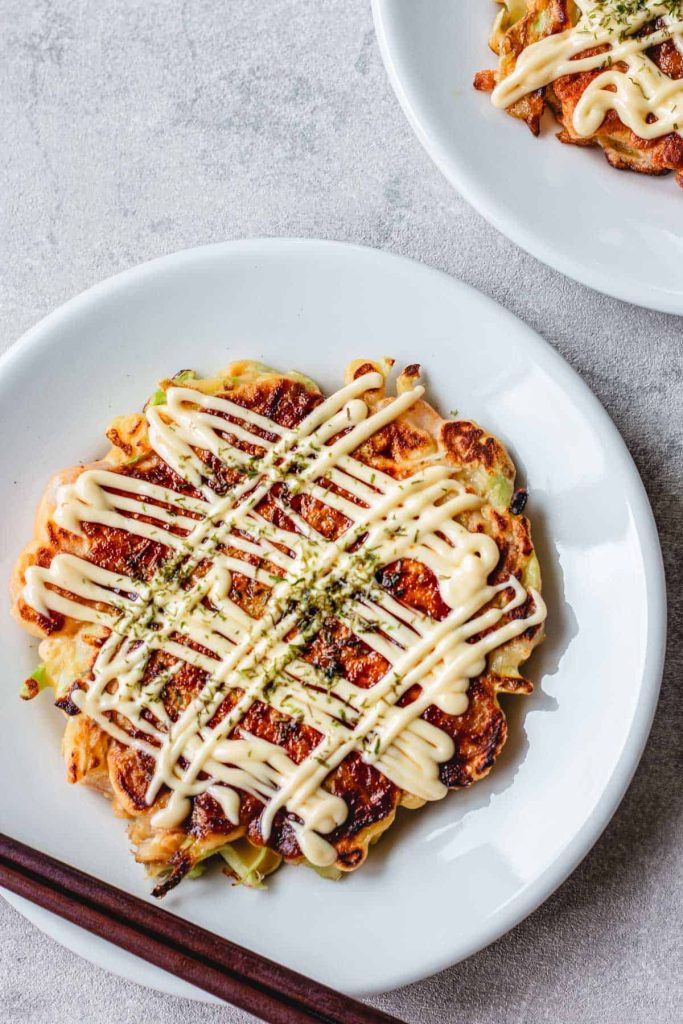
- Serve and Garnish: Once cooked through, transfer the okonomiyaki to a plate. Generously spread okonomiyaki sauce over the top, followed by Japanese mayonnaise. Sprinkle with aonori and additional pickled ginger, if desired.
Tips for Perfect Okonomiyaki
- Don’t Overmix the Batter: Overmixing develops the gluten in the flour, resulting in a tough pancake. Mix just until the ingredients are combined.
- Use Fresh Ingredients: Fresh seafood and crisp cabbage are key to a delicious okonomiyaki.
- Control the Heat: Cooking over medium heat ensures the okonomiyaki cooks evenly without burning.
- Don’t Press Down: Avoid pressing down on the pancake while cooking, as this can make it dense.
- Get Creative with Toppings: Feel free to experiment with different toppings, such as bonito flakes (katsuobushi), fried egg, or even cheese.
Selecting the Right Seafood
- Shrimp: Offers a sweet and slightly firm texture.
- Squid: Provides a chewy and slightly salty flavor.
- Scallops: Adds a delicate and sweet taste.
- Octopus: Offers a unique texture and a slightly briny flavor.
- Crab Meat: Provides a rich and savory flavor.
When selecting seafood, ensure it is fresh and properly cleaned. Frozen seafood can also be used, but be sure to thaw it completely and pat it dry before adding it to the batter.
Making Dashi from Scratch
- Ingredients: 4 cups water, 4-inch square of kombu (dried kelp), 1 cup katsuobushi (dried bonito flakes)
- Instructions: Wipe the kombu with a damp cloth to remove any surface impurities. Do not wash it. Place the kombu and water in a pot and let it soak for at least 30 minutes, or up to several hours. Heat the pot over medium heat and remove the kombu just before the water begins to boil. Add the katsuobushi to the pot and bring to a boil. Immediately remove from heat and let the bonito flakes steep for 2-3 minutes. Strain the dashi through a fine-mesh sieve lined with cheesecloth. Discard the kombu and bonito flakes.
The Importance of Okonomiyaki Sauce
Okonomiyaki sauce is a crucial component of this dish, providing a sweet, savory, and slightly tangy flavor that complements the other ingredients. It’s similar in taste to Worcestershire sauce but thicker and sweeter. You can find okonomiyaki sauce at most Asian grocery stores or online. If you can’t find it, you can make a substitute by combining Worcestershire sauce, ketchup, oyster sauce, and a touch of sugar.
Japanese Mayonnaise (Kewpie): The Creamy Touch
Japanese mayonnaise, also known as Kewpie mayonnaise, is distinct from Western mayonnaise due to its richer flavor and creamier texture. It’s made with egg yolks instead of whole eggs and contains rice vinegar, which gives it a slightly tangy flavor. Kewpie mayonnaise is an essential ingredient for okonomiyaki, adding a creamy and tangy element that balances the savory flavors.
Variations and Customizations
- Add Mochi: Incorporate small cubes of mochi (Japanese rice cake) for a chewy texture.
- Include Kimchi: Add kimchi for a spicy and fermented flavor.
- Top with a Fried Egg: A fried egg adds richness and a runny yolk that enhances the overall flavor.
- Use Different Sauces: Experiment with other sauces, such as tonkatsu sauce or yakisoba sauce.
- Make it Vegetarian: Omit the seafood and add more vegetables, such as mushrooms, carrots, or bell peppers.
Serving Suggestions
Okonomiyaki is typically served hot off the griddle or pan. It can be enjoyed as a main course or as a shared appetizer. Pair it with a side of miso soup or a refreshing Japanese salad for a complete meal. It’s also commonly served with a cold beer or sake.
Storage and Reheating
Leftover okonomiyaki can be stored in the refrigerator for up to 2 days. To reheat, warm it in a frying pan over medium heat or in a microwave. However, keep in mind that reheating may slightly alter the texture.
Health Benefits of Okonomiyaki
While okonomiyaki is not necessarily a health food, it can offer some nutritional benefits. The cabbage provides fiber and vitamins, while the seafood is a good source of protein and omega-3 fatty acids. However, it’s important to be mindful of the sodium content of the sauces and toppings.
Conclusion: Embrace the Art of Okonomiyaki
Making okonomiyaki is a fun and rewarding culinary experience. With this comprehensive guide, you have all the knowledge and techniques needed to create a delicious and authentic seafood okonomiyaki at home. So gather your ingredients, fire up the griddle, and embrace the art of okonomiyaki! Enjoy the process of creating this customizable and flavorful Japanese dish, and don’t be afraid to experiment and make it your own.
Troubleshooting Common Okonomiyaki Issues
- Batter Too Thick: If your batter is too thick, add a little more water or dashi until it reaches a pourable consistency.
- Batter Too Thin: If your batter is too thin, add a little more flour until it thickens.
- Okonomiyaki Burning: Reduce the heat to medium-low and cook for a longer period.
- Okonomiyaki Not Cooking Through: Cover the pan with a lid to trap heat and cook the okonomiyaki more evenly.
- Okonomiyaki Sticking to the Pan: Ensure the pan is well-greased and the heat is not too high.
Okonomiyaki Around the World
While okonomiyaki is a distinctly Japanese dish, its concept of a savory pancake has resonated with culinary traditions around the world. Similar dishes can be found in various cultures, each with its unique ingredients and preparation methods. This highlights the universal appeal of simple, customizable, and satisfying comfort food.
The Cultural Significance of Okonomiyaki
Okonomiyaki holds a special place in Japanese culture, often associated with family gatherings, festivals, and casual dining. It’s a dish that brings people together, encouraging sharing and customization. The interactive nature of cooking okonomiyaki, especially on a communal griddle, fosters a sense of community and enjoyment.
Pairing Okonomiyaki with Drinks
- Beer: A cold Japanese beer, such as Asahi or Sapporo, is a classic pairing.
- Sake: Dry sake complements the savory flavors of the okonomiyaki.
- Shochu: Shochu, a Japanese distilled spirit, can also be a good match.
- Green Tea: A refreshing cup of green tea can cleanse the palate between bites.
Enhancing Your Okonomiyaki Presentation
- Neat Slices: Cut the okonomiyaki into neat, even slices for easy serving.
- Artistic Sauce Drizzle: Use a squeeze bottle to create artistic patterns with the okonomiyaki sauce and mayonnaise.
- Garnish with Fresh Herbs: Add a sprinkle of fresh herbs, such as cilantro or parsley, for a pop of color.
- Serve on a Stylish Plate: Choose a plate that complements the colors and textures of the okonomiyaki.
Exploring Different Okonomiyaki Styles
Beyond the Osaka and Hiroshima styles, there are numerous regional variations of okonomiyaki throughout Japan. Each region boasts its unique ingredients and cooking techniques, reflecting the local culinary traditions. Exploring these different styles can be a fascinating culinary adventure.
Conclusion: Your Okonomiyaki Journey Begins Now
With this comprehensive guide, you’re now equipped with the knowledge and inspiration to embark on your own okonomiyaki journey. Experiment with different ingredients, toppings, and sauces to create your signature version of this beloved Japanese dish. Enjoy the process, share your creations with friends and family, and savor the delicious flavors of homemade okonomiyaki!