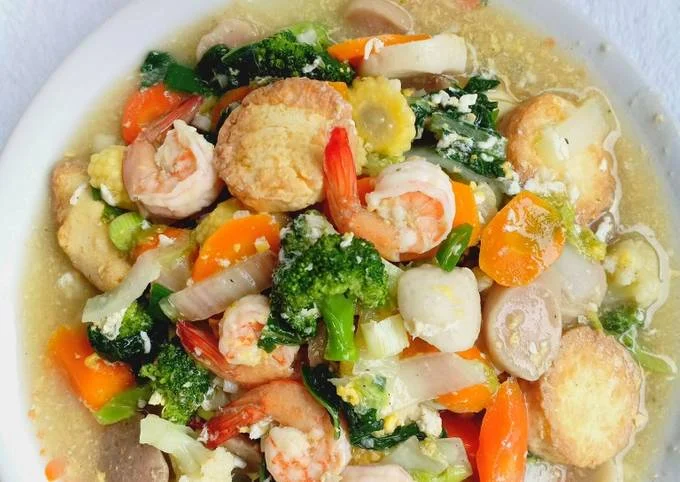

The essence of a great Capcay lies in its name: ‘Cap Cai’ literally translates to ‘ten vegetables’ in Hokkien Chinese. While you don’t need precisely ten, the spirit of the dish is to incorporate a diverse array of colorful and nutritious vegetables. This variety not only enhances the visual appeal but also contributes a complex tapestry of textures and flavors.
Seafood adds a luxurious and distinctly oceanic dimension to Capcay. The natural sweetness and brininess of fresh seafood beautifully complement the earthy notes of the vegetables and the savory depth of the sauce. Common seafood choices include shrimp, squid, fish balls, and sometimes even mussels or crab meat, each bringing its unique character to the stir-fry.
The ‘Kuah Kental’ aspect is crucial for this particular rendition. A well-balanced, thickened sauce acts as a luscious coating for all the ingredients, ensuring that every bite is packed with flavor. Achieving the right consistency requires a careful understanding of thickening agents and cooking techniques.
Let’s begin by discussing the star ingredients: the seafood. For optimal results, always opt for fresh, high-quality seafood. Shrimp should be firm and have a sweet aroma. Squid should be plump and opaque. If using fish, choose firm white fish that can withstand the quick cooking process without breaking apart.
Preparing the seafood is a critical first step. Shrimp should be peeled and deveined. For squid, clean it thoroughly, removing the quill and ink sac, and then slice it into rings or bite-sized pieces. If using fish fillets, cut them into uniform cubes or strips. Marinating the seafood briefly can enhance its flavor and tenderness. A simple marinade of a little soy sauce, sesame oil, and cornstarch can work wonders.
- Bok Choy (Pak Choi): Its crisp stalks and tender leaves add a refreshing crunch and mild sweetness.
- Broccoli: A classic for a reason, offering a robust texture and earthy flavor.
- Carrots: Provide a vibrant color and a subtle sweetness, with a satisfying bite.
- Cauliflower: Similar to broccoli, it adds a different texture and absorbs flavors well.
- Mushrooms: Shiitake, button, or oyster mushrooms all lend an umami depth.
- Snap Peas or Snow Peas: For a burst of freshness and a delightful crunch.
- Bell Peppers: Red, yellow, or green bell peppers add sweetness and visual appeal.
- Cabbage: Napa cabbage or regular green cabbage can add bulk and a pleasant texture.
- Celery: Its crisp stalks offer a refreshing, slightly peppery note.
The preparation of these vegetables is key to achieving the perfect Capcay texture. They should be cut into uniform, bite-sized pieces. Harder vegetables like carrots and broccoli florets should be cut smaller or blanched briefly to ensure they cook through at the same rate as softer vegetables like bok choy leaves and mushrooms.
A common mistake is overcooking the vegetables, which results in a mushy, unappetizing dish. The goal is to maintain a slight crispness, known as ‘al dente,’ in most of the vegetables. This is achieved by stir-frying them quickly over high heat.
- Chicken or Vegetable Broth: Provides the liquid base and a savory foundation.
- Oyster Sauce: Adds a rich, umami depth and a hint of sweetness.
- Soy Sauce: For saltiness and color.
- Garlic and Ginger: Essential aromatics that build flavor.
- Sugar: Balances the saltiness and enhances the overall taste.
- White Pepper: Adds a subtle warmth and spice.
To achieve the ‘Kuah Kental’ (thickened sauce), a slurry of cornstarch (or tapioca starch) mixed with water is indispensable. The amount of cornstarch will determine the thickness of the sauce. Start with a moderate amount and add more if needed. It’s crucial to mix the cornstarch with cold water thoroughly to avoid lumps.
The cooking process itself is a rapid affair, best done in a wok or a large, heavy-bottomed skillet over high heat. This high heat is essential for achieving that characteristic ‘wok hei’ – a smoky, slightly charred flavor that is highly desirable in stir-fried dishes.
Start by heating your wok or skillet until it’s smoking hot. Add a neutral cooking oil, such as vegetable or canola oil. Swirl the oil to coat the bottom and sides of the wok.
Next, add your aromatics: minced garlic and grated or minced ginger. Stir-fry them quickly for about 30 seconds until fragrant. Be careful not to burn them, as burnt garlic and ginger can impart a bitter taste.
If you’re using any protein that requires longer cooking, like chicken or beef (though this is a seafood recipe, it’s good to note for general Capcay knowledge), you would add it at this stage and stir-fry until almost cooked through. For seafood, which cooks very quickly, it’s often added towards the end.
Add the harder vegetables first – carrots, broccoli, cauliflower, celery. Stir-fry for a couple of minutes until they start to soften slightly but still retain their crunch.
Then, add the softer vegetables – bok choy stems, bell peppers, snap peas, and mushrooms. Continue to stir-fry for another minute or two. The goal is to keep everything moving in the wok.
Now, it’s time to introduce the sauce. Pour in the prepared broth, oyster sauce, soy sauce, sugar, and white pepper. Bring the mixture to a simmer, stirring to combine all the flavors.
This is the moment to add the seafood. Shrimp and squid cook very quickly. Add them to the simmering sauce and stir-fry for just 1-2 minutes, or until the shrimp turn pink and opaque and the squid becomes firm. Overcooking seafood will make it tough and rubbery, so be vigilant.
Finally, it’s time to thicken the sauce. Give your cornstarch slurry a good stir to ensure it’s well-combined. Gradually pour the slurry into the simmering sauce while stirring continuously. You’ll notice the sauce begin to thicken almost immediately. Add just enough to reach your desired ‘Kuah Kental’ consistency. You want a sauce that coats the ingredients beautifully without being overly gloopy.
Once the sauce has thickened to your liking, stir in the tender bok choy leaves. They only need about 30 seconds to wilt. Taste and adjust seasoning if necessary – you might need a touch more soy sauce for saltiness or sugar for sweetness.
The final touch is often a drizzle of sesame oil for added aroma and flavor, and perhaps a sprinkle of chopped green onions or cilantro for freshness and color. Serve immediately.
To achieve the best flavor, consider a few key techniques. High heat is paramount for stir-frying. Ensure your wok or pan is sufficiently hot before adding ingredients. ‘Mise en place’, or having all your ingredients prepped and ready to go before you start cooking, is essential for stir-frying, as the cooking process is very fast.
Don’t overcrowd the wok. Cook in batches if necessary. Overcrowding lowers the temperature of the wok, leading to steaming rather than stir-frying, and results in soggy vegetables.
Blanching certain harder vegetables like carrots and broccoli beforehand can ensure they are tender-crisp without overcooking the other ingredients. This step is optional but can be helpful for beginners.
Marinating the seafood, even for a short period, can significantly improve its flavor and texture. The cornstarch in the marinade also helps create a protective coating that keeps the seafood moist.
The quality of your sauces matters. Use good quality oyster sauce and soy sauce for the best flavor profile. Fresh garlic and ginger are also non-negotiable for authentic taste.
For a vegetarian or vegan version, simply omit the seafood and use vegetable broth. You can add more tofu, tempeh, or a wider variety of mushrooms to compensate for the protein.
Serving your Seafood Capcay Kuah Kental is typically done piping hot, often alongside steamed white rice. The comforting warmth and savory flavors make it a perfect meal for any occasion, from a quick weeknight dinner to a more elaborate family gathering.
In summary, crafting an exceptional Seafood Capcay Kuah Kental involves careful selection and preparation of ingredients, mastering the art of stir-frying over high heat, and achieving the perfect balance of flavors and textures in the savory, thickened sauce. With this comprehensive guide, you are well-equipped to recreate this classic dish in your own kitchen and delight your family and friends with its irresistible taste and vibrant appeal.
Experiment with different vegetable combinations and seafood choices to find your personal favorite iteration. The adaptability of Capcay is one of its greatest strengths, allowing for endless customization.
Remember that practice makes perfect. The more you cook Capcay, the more intuitive the process will become, and the better you’ll become at judging cooking times and sauce consistency.
Enjoy the process of creating this wonderful dish, and savor every delicious bite of your homemade Seafood Capcay Kuah Kental!