
Are you ready to transform your kitchen into a culinary arena and impress your family and friends with dishes worthy of a television cooking competition? Salmon, with its rich flavor, beautiful texture, and incredible versatility, is the perfect canvas for aspiring home chefs. This comprehensive guide will walk you through creating MasterChef-style salmon recipes, turning everyday meals into extraordinary dining experiences.
Cooking ‘MasterChef-style’ isn’t just about complex ingredients; it’s about precision, technique, flavor balance, and breathtaking presentation. It’s about understanding your ingredients, respecting their qualities, and elevating them to their highest potential. Salmon, being a favorite among professional chefs, offers endless possibilities for culinary creativity.
Why choose salmon for your gourmet endeavors? Beyond its delicious taste, salmon is packed with omega-3 fatty acids, making it a healthy choice. Its firm yet flaky texture holds up well to various cooking methods, and its mild flavor profile can beautifully complement a wide array of seasonings, sauces, and accompaniments. It’s a true star ingredient.
Before diving into the cooking, selecting the right salmon is paramount. Just like a MasterChef contestant, you need the best ingredients. Look for fillets that are vibrant in color, firm to the touch, and have a fresh, ocean-like smell, not fishy. Wild-caught salmon often boasts a richer flavor profile, while farmed salmon can be more consistent in fat content.
Consider the different types of salmon available:
- King (Chinook) Salmon: Known for its high fat content and rich, buttery flavor.
- Sockeye Salmon: Distinctive deep red color and firm texture, with a robust flavor.
- Coho (Silver) Salmon: Milder flavor and delicate texture, often more affordable.
- Atlantic Salmon: Commonly farmed, offering a consistent, mild flavor and flaky texture.
Each type brings a unique character to your MasterChef salmon dish.
Mastering basic cooking techniques is the foundation of any MasterChef-worthy dish. For salmon, these include pan-searing, baking, grilling, and poaching. Each method brings out different qualities of the fish and can be chosen based on the desired final texture and flavor.
Pan-searing is perhaps the most popular for achieving that coveted crispy skin. To do this, pat your salmon fillet very dry, season generously, and place skin-side down in a hot pan with a little oil. Cook for 90% of the time on the skin side, pressing gently to ensure full contact, then flip for a minute or two to finish.
For a more hands-off approach, baking or roasting salmon ensures even cooking and a tender, flaky interior. Preheat your oven to a moderate temperature (around 400°F or 200°C), season your salmon, and bake until it reaches an internal temperature of 145°F (63°C). This method is excellent for infusing flavors with herbs and citrus.
Poaching offers a delicate, moist result, perfect for lighter, elegant presentations. Gently simmer salmon in a flavorful liquid – water, wine, broth, or a combination with aromatics like lemon and dill – until just cooked through. This technique preserves the salmon’s natural moisture beautifully.
When it comes to MasterChef salmon recipes, the sauce can often be the star. Elevating your salmon with a thoughtfully crafted sauce or glaze is crucial. Think beyond simple lemon wedges and explore complex flavor profiles that complement, rather than overpower, the fish.
Consider a classic Lemon-Dill Beurre Blanc: a rich, emulsified butter sauce infused with fresh lemon and dill. This provides a luxurious texture and bright, herbaceous notes that perfectly cut through the salmon’s richness. It’s a timeless combination that always impresses.
For an Asian-inspired twist, a Miso-Maple Glaze can add incredible depth and umami. Whisk together white miso paste, maple syrup, soy sauce, rice vinegar, and a touch of ginger. Brush this glaze over your salmon during the last few minutes of baking or grilling for a beautiful caramelization.
Mediterranean flavors also pair wonderfully with salmon. A vibrant Pesto or Chimichurri can offer a fresh, zesty kick. These herbaceous sauces, typically made with fresh herbs, garlic, olive oil, and sometimes nuts or cheese, add both color and an explosion of flavor.
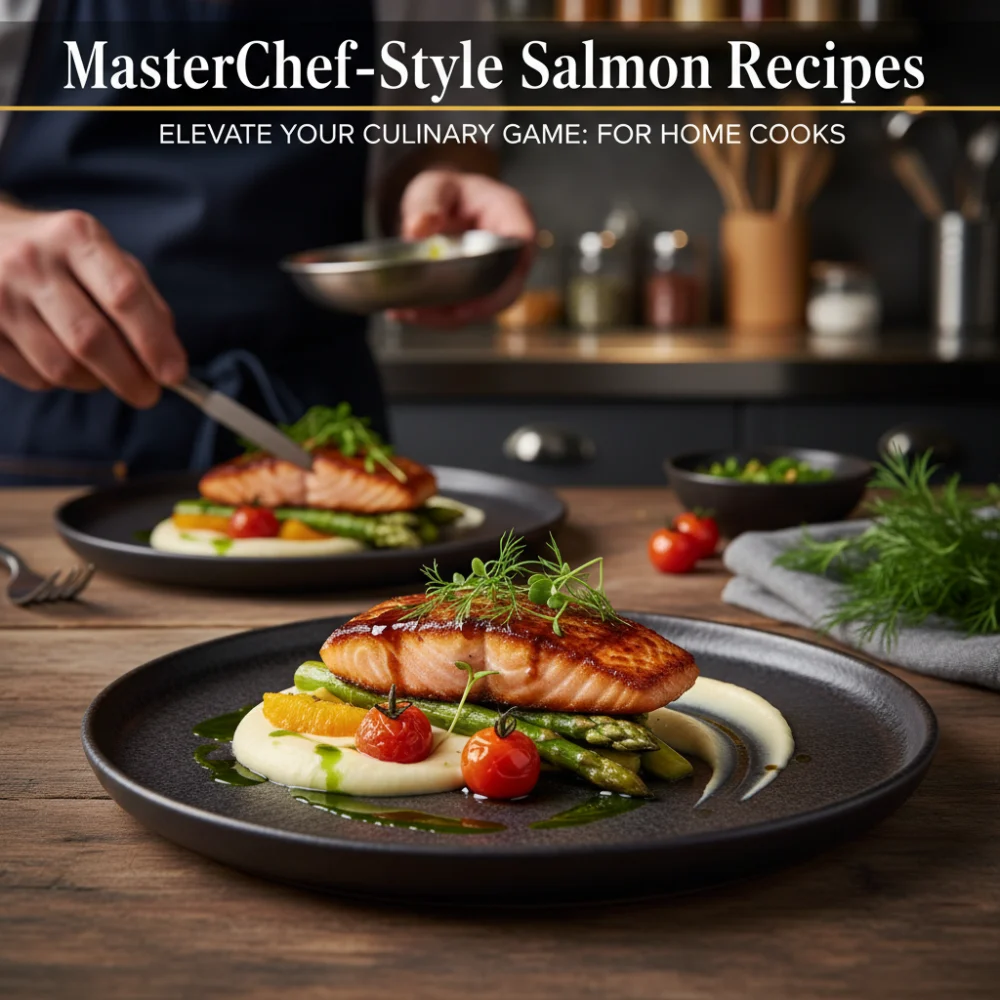
The presentation of your MasterChef salmon dish is just as important as its taste. A beautifully plated dish shows attention to detail and elevates the entire dining experience. Think about color, height, texture, and how each component sits on the plate.
Create height by stacking components or leaning them against each other. Use contrasting colors from your salmon, vibrant vegetables, and garnishes to make the plate pop. Varying textures – crispy skin, flaky fish, creamy puree, crunchy nuts – adds interest with every bite.
Garnishes are not just for show; they add a final layer of flavor and aroma. Fresh herbs like dill, parsley, or chives, a sprinkle of toasted sesame seeds, or a drizzle of a finishing oil can complete your MasterChef salmon masterpiece.
Let’s explore a few MasterChef salmon recipe ideas to inspire your culinary journey:
- Pan-Seared Salmon with Saffron Risotto and Asparagus: The crispy salmon skin contrasts beautifully with creamy saffron risotto, while blanched asparagus adds a touch of freshness and color.
- Pistachio-Crusted Salmon with Sweet Potato Puree and Haricots Verts: A vibrant green pistachio crust provides crunch and nutty flavor, balanced by the sweetness of the puree and crisp green beans.
- Miso-Glazed Salmon with Forbidden Rice and Kimchi-Braised Bok Choy: A fusion dish featuring the savory-sweet glaze, the dramatic color of forbidden rice, and the tangy, tender bok choy.
Even seasoned chefs make mistakes. Here are some common pitfalls to avoid when preparing MasterChef-style salmon:
- Overcooking: This is the cardinal sin. Overcooked salmon becomes dry and chalky. Use a meat thermometer to ensure it reaches 145°F (63°C) and remove it just before, as it will continue to cook slightly from residual heat.
- Under-seasoning: Salmon needs salt and pepper, and often more. Don’t be shy!
- Cold Pan: For crispy skin, your pan must be hot before the salmon goes in.
- Crowding the Pan: If you’re cooking multiple fillets, give them space. Crowding lowers the pan temperature and steams the fish instead of searing it.
- Neglecting Plating: A delicious dish can lose its appeal if it’s haphazardly thrown on a plate. Take the extra minute to arrange it thoughtfully.
Achieving MasterChef excellence at home requires a few key practices. Firstly, mise en place – ‘everything in its place’ – is crucial. Have all your ingredients prepped, measured, and ready to go before you start cooking. This ensures a smooth, stress-free cooking process.
Secondly, taste as you go. This is how chefs develop complex flavors. Adjust seasonings, acid, and sweetness in your sauces and accompaniments until they are perfectly balanced. Don’t be afraid to experiment with small adjustments.
Invest in quality tools. A good non-stick or cast-iron pan, a sharp knife, and a reliable instant-read thermometer will make a significant difference in your results. These are extensions of your skill.
Practice makes perfect. Don’t be discouraged if your first attempt isn’t flawless. Every cooking experience is a learning opportunity. The more you cook, the more intuitive and confident you’ll become in handling salmon and various techniques.
Finally, don’t be afraid to experiment and personalize. While MasterChef-style cooking emphasizes technique, it also celebrates creativity. Once you master the basics, feel free to adapt recipes, introduce new flavors, and make them your own. That’s where true culinary artistry lies.
Let’s address some frequently asked questions about creating exquisite salmon dishes.
How do I know when salmon is cooked perfectly? The easiest way is to use an instant-read thermometer. Insert it into the thickest part of the fillet; it should read 145°F (63°C). Visually, the flesh will turn opaque and flake easily with a fork.
What’s the best way to get crispy salmon skin? Start with a very dry fillet. Season well. Heat a pan over medium-high heat with a high smoke point oil (like grapeseed or avocado oil). Place salmon skin-side down and press gently with a spatula for the first minute to ensure full contact. Cook mostly on the skin side (about 80-90% of the cooking time) until it’s golden and crisp, then flip briefly to finish.
Can I use frozen salmon for these MasterChef-style recipes? Absolutely! Thaw frozen salmon properly in the refrigerator overnight or under cold running water. Pat it very dry before cooking to ensure good searing and even cooking.
What side dishes pair well with MasterChef salmon? Consider components that offer contrasting textures and flavors. Roasted asparagus, creamy mashed potatoes or purees (sweet potato, parsnip), risotto, quinoa salads, or sautéed greens like spinach or bok choy are excellent choices. A vibrant salsa or relish can also add a fresh element.
Embarking on the journey of creating MasterChef-style salmon recipes at home is a rewarding experience. It’s about more than just cooking a meal; it’s about honing your skills, understanding ingredients, and expressing your creativity. By focusing on quality ingredients, mastering fundamental techniques, experimenting with sophisticated flavors, and paying meticulous attention to presentation, you can consistently produce dishes that are not only delicious but also visually stunning. So, grab your apron, sharpen your knives, and get ready to create culinary magic in your own kitchen.