
The Key to Perfect Fish and Chips: Ingredients and Preparation
- Hake: A sustainable and affordable alternative to cod or haddock.
- Pollock: Another mild-flavored white fish that’s widely available.
- Plaice: A flatfish with a delicate flavor and tender texture.
When selecting fish, opt for fresh fillets that are about 1-inch thick. If using frozen fish, thaw it completely before cooking and pat it dry with paper towels to remove excess moisture. This will help the batter adhere better and prevent the fish from becoming soggy.
- Peel and cut the potatoes: Peel the potatoes and cut them into thick batons, about ½-inch thick. Aim for uniform sizes to ensure even cooking.
- Soak the potatoes: Soak the cut potatoes in cold water for at least 30 minutes, or up to several hours. This helps remove excess starch, resulting in crispier chips. Change the water a few times during soaking.
- Parboil the potatoes: Place the soaked potatoes in a pot of cold water and bring to a boil. Cook for about 5-7 minutes, or until they are slightly tender but still hold their shape. Drain the potatoes and let them cool completely.
Parboiling the potatoes is a crucial step for achieving the perfect texture. It partially cooks the potatoes, allowing them to develop a fluffy interior during the second frying.
- All-purpose flour: Provides structure to the batter.
- Cornstarch: Contributes to the crispiness of the batter.
- Baking powder: Helps the batter rise and become light.
- Salt and pepper: Season the batter.
- Cold beer or sparkling water: The carbonation creates air bubbles in the batter, resulting in a light and crispy coating.
To make the batter, whisk together the dry ingredients in a large bowl. Gradually add the cold beer or sparkling water, whisking until just combined. Be careful not to overmix the batter, as this can develop the gluten in the flour and make it tough. The batter should be thin enough to coat the fish evenly but thick enough to cling to it.
The Recipe: Homemade Fish and Chips
- 1.5 lbs white fish fillets (cod, haddock, or your choice)
- 4 large russet potatoes
- 2 cups all-purpose flour
- ½ cup cornstarch
- 1 tbsp baking powder
- 1 tsp salt
- ½ tsp black pepper
- 1 ½ cups cold beer or sparkling water
- Vegetable oil or peanut oil, for frying
- Salt, to taste
- Malt vinegar, for serving (optional)
- Prepare the chips: Peel and cut the potatoes into thick batons. Soak them in cold water for at least 30 minutes. Parboil the potatoes for 5-7 minutes, then drain and cool completely.
- Prepare the fish: Pat the fish fillets dry with paper towels. Season with salt and pepper.
- Make the batter: In a large bowl, whisk together the flour, cornstarch, baking powder, salt, and pepper. Gradually add the cold beer or sparkling water, whisking until just combined.
- Heat the oil: Fill a large, heavy-bottomed pot or deep fryer with vegetable oil or peanut oil. Heat the oil to 350°F (175°C). Use a thermometer to monitor the temperature.
- Fry the fish: Dip each fish fillet into the batter, ensuring it’s fully coated. Carefully lower the battered fish into the hot oil. Fry for 5-7 minutes per side, or until golden brown and cooked through. The internal temperature of the fish should reach 145°F (63°C).
- Fry the chips: Increase the oil temperature to 375°F (190°C). Fry the parboiled potatoes in batches for 3-5 minutes, or until golden brown and crispy.
- Drain and season: Remove the fish and chips from the oil and place them on a wire rack lined with paper towels to drain excess oil. Season with salt to taste.
- Serve: Serve the fish and chips immediately, with malt vinegar or your favorite dipping sauce.
- Use a thermometer: Maintaining the correct oil temperature is crucial for achieving crispy fish and chips. Use a thermometer to monitor the temperature and adjust the heat as needed.
- Don’t overcrowd the pot: Fry the fish and chips in batches to prevent the oil temperature from dropping too low. Overcrowding the pot can result in soggy food.
- Use a wire rack: Place the fried fish and chips on a wire rack to drain excess oil. This will help them stay crispy.
- Serve immediately: Fish and chips are best enjoyed fresh and hot. Serve them immediately after frying for the best flavor and texture.
- Spice it up: Add a pinch of cayenne pepper or paprika to the batter for a touch of heat.
- Herb it up: Incorporate fresh herbs like parsley, dill, or thyme into the batter for added flavor.
- Add cheese: Sprinkle grated Parmesan cheese over the chips after frying for a cheesy twist.
- Make it gluten-free: Use gluten-free flour and beer to make a gluten-free version of fish and chips.
- Experiment with different dipping sauces: Try serving your fish and chips with tartar sauce, ketchup, curry sauce, or garlic aioli.
- Mushy peas: A classic British side dish made from mashed peas.
- Coleslaw: A creamy salad made from shredded cabbage and carrots.
- Pickled onions: Adds a sharp and tangy flavor.
- Lemon wedges: A squeeze of lemon juice brightens up the flavors.
- Bake the fish: Instead of frying the fish, bake it in the oven for a lower-fat alternative. Coat the fish with breadcrumbs or a light batter before baking.
- Use an air fryer: Air fry the chips for a crispy result with less oil.
- Choose a leaner fish: Opt for a leaner fish like cod or haddock.
- Use whole wheat flour: Substitute some of the all-purpose flour with whole wheat flour in the batter for added fiber.
Leftover fish and chips can be stored in the refrigerator for up to 2 days. To reheat, bake the fish and chips in a preheated oven at 350°F (175°C) for 10-15 minutes, or until heated through. You can also reheat them in an air fryer for a crispier result. Note that reheated fish and chips may not be as crispy as freshly fried ones.
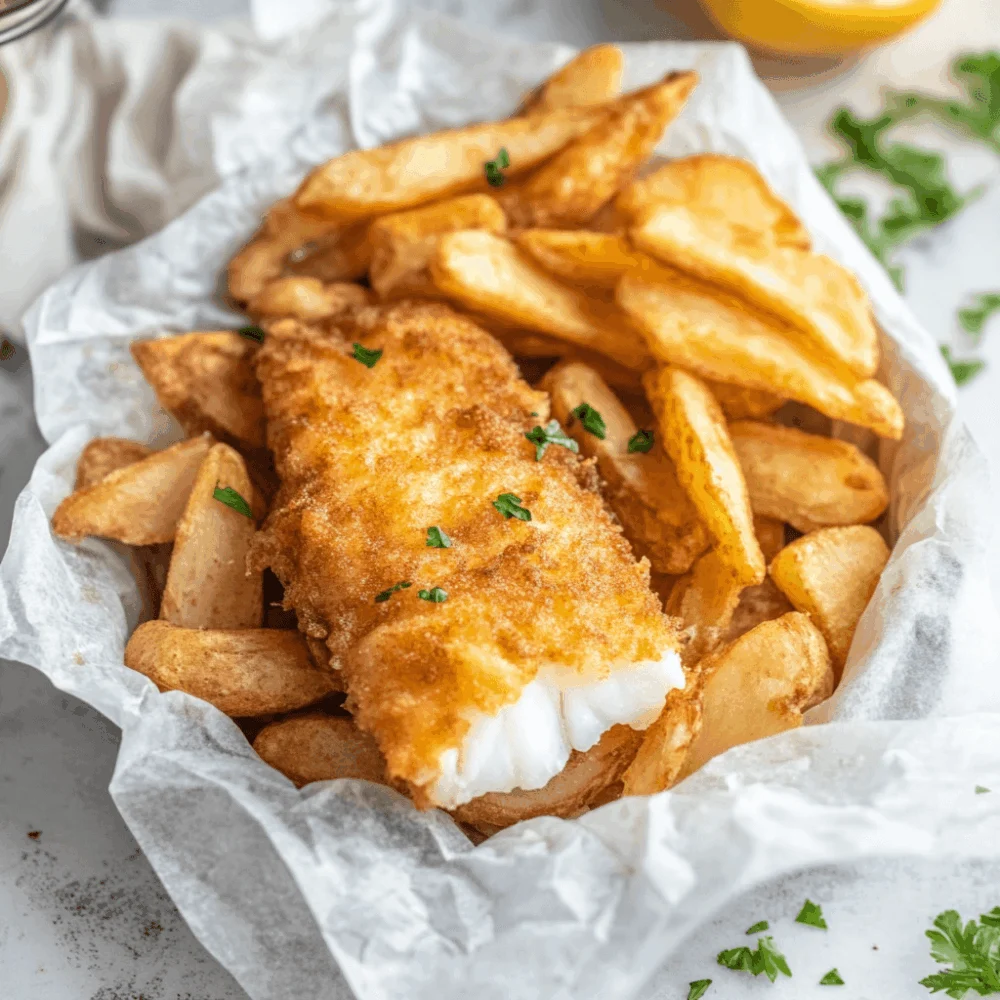
Making homemade fish and chips is a rewarding experience that allows you to enjoy this classic dish with fresh, high-quality ingredients. By following this detailed recipe and incorporating the tips and variations provided, you can create restaurant-quality fish and chips that will impress your family and friends. So, gather your ingredients, fire up the fryer, and get ready to enjoy a taste of Britain in your own home!
Enjoy your homemade Fish and Chips!