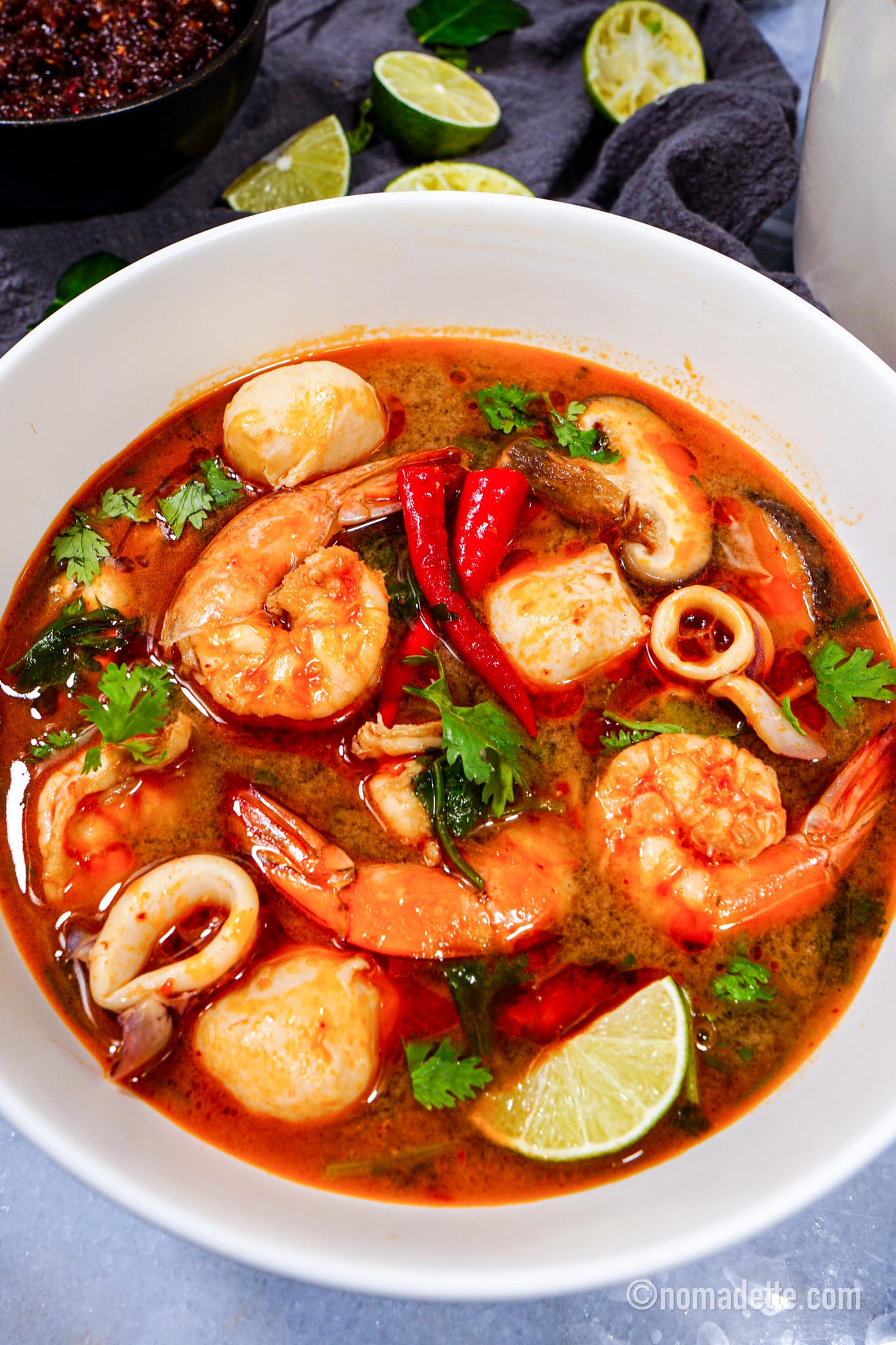
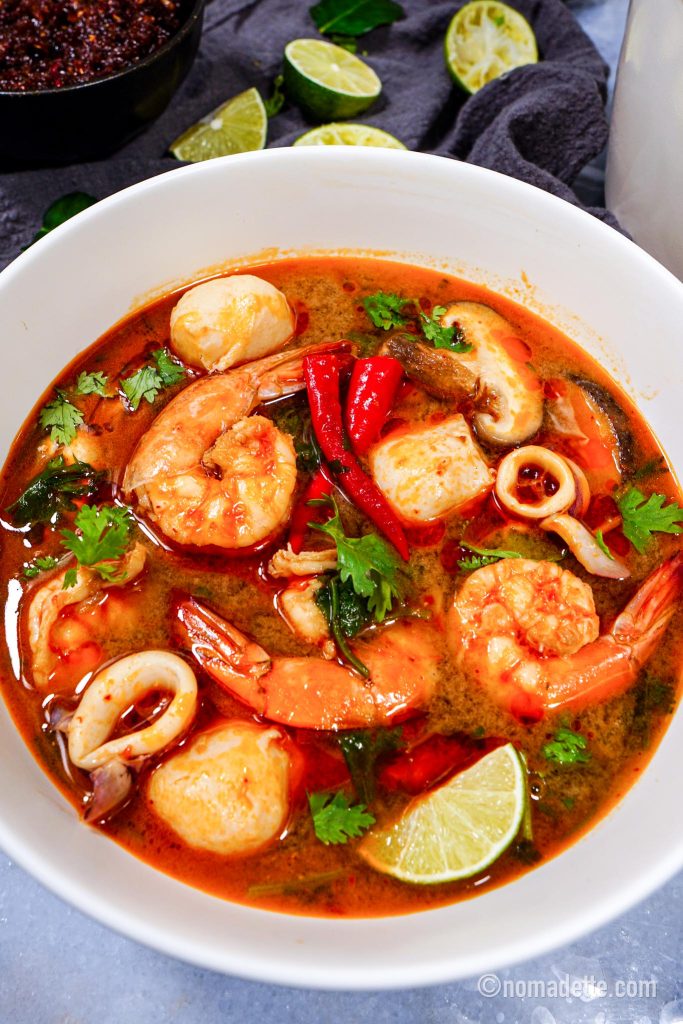

Understanding Tom Yum: A Flavor Profile
- Spicy: Red chilies or chili paste provide the heat.
- Sour: Lime juice and tamarind paste contribute the sourness.
- Savory: Fish sauce and shrimp paste (optional) add umami depth.
- Aromatic: Lemongrass, galangal (Thai ginger), and kaffir lime leaves infuse the broth with their unique fragrance.
These elements must be carefully balanced to achieve the signature Tom Yum flavor. Adjusting the quantities of each ingredient allows you to tailor the soup to your personal preference.
Ingredients for Authentic Seafood Tom Yum Soup
- Seafood: 1 pound of mixed seafood, such as shrimp (peeled and deveined), squid (cleaned and sliced), mussels (scrubbed), and fish fillets (cut into bite-sized pieces). Freshness is key for the best flavor.
- Broth: 6 cups of chicken or vegetable broth. Homemade broth is ideal, but high-quality store-bought broth will also work.
- Aromatics:
- 3 stalks of lemongrass, bruised and roughly chopped.
- 1-inch piece of galangal (Thai ginger), sliced.
- 5-6 kaffir lime leaves, torn.
- 2-3 red chilies, crushed (adjust to your spice preference).
- 4-5 cloves of garlic, minced.
- 1 shallot, thinly sliced.
- Flavor Enhancers:
- 3-4 tablespoons of fish sauce.
- 2-3 tablespoons of lime juice (freshly squeezed).
- 1-2 tablespoons of tamarind paste.
- 1 tablespoon of sugar (palm sugar preferred).
- 1-2 tablespoons of chili paste (optional, for extra heat and color).
- 1 tablespoon of shrimp paste (optional, for a deeper umami flavor).
- Vegetables:
- 1 cup of straw mushrooms or button mushrooms, halved.
- 1 tomato, cut into wedges.
- 1 onion, quartered.
- Garnish: Fresh cilantro and green onions, chopped.
Step-by-Step Instructions for Making Tom Yum Soup
Step 1: Prepare the Aromatic Broth
In a large pot or Dutch oven, combine the chicken or vegetable broth with the lemongrass, galangal, kaffir lime leaves, chilies, garlic, and shallot. Bring the mixture to a boil, then reduce the heat and simmer for at least 20-30 minutes. This allows the aromatic ingredients to infuse the broth with their flavors. The longer you simmer, the more flavorful the broth will become.
Step 2: Strain the Broth
After simmering, strain the broth through a fine-mesh sieve to remove the solid aromatics. Discard the solids. This step ensures a clear and smooth soup base.
Step 3: Add Flavor Enhancers
Return the strained broth to the pot. Add the fish sauce, lime juice, tamarind paste, sugar, and chili paste (if using). Stir well to combine. Taste the broth and adjust the seasonings as needed. You may want to add more lime juice for sourness, fish sauce for saltiness, or sugar for sweetness. Remember, the key is to balance the flavors to your liking.
Step 4: Add Vegetables
Add the mushrooms, tomato wedges, and onion quarters to the broth. Bring the soup back to a simmer and cook for about 5-7 minutes, or until the vegetables are slightly softened.
Step 5: Add Seafood
Gently add the mixed seafood to the soup. Cook for 3-5 minutes, or until the seafood is cooked through. Be careful not to overcook the seafood, as it can become tough and rubbery. Shrimp should turn pink and opaque, squid should be tender, and mussels should open up.
Step 6: Serve and Garnish
Remove the soup from the heat. Ladle the Tom Yum soup into bowls and garnish with fresh cilantro and green onions. Serve immediately and enjoy the explosion of flavors!
Tips for Achieving Authentic Tom Yum Flavor
- Use Fresh Ingredients: The quality of your ingredients directly impacts the flavor of the soup. Opt for fresh seafood, herbs, and spices whenever possible.
- Don’t Skip the Aromatics: Lemongrass, galangal, and kaffir lime leaves are essential for the characteristic Tom Yum aroma and flavor.
- Balance the Flavors: Taste and adjust the seasoning throughout the cooking process. The key is to achieve a harmonious balance of spicy, sour, and savory flavors.
- Adjust the Spice Level: Add more or fewer chilies depending on your spice preference. You can also use chili paste for a milder heat.
- Don’t Overcook the Seafood: Overcooked seafood can become tough and rubbery. Cook it just until it’s done.
- Use Palm Sugar: Palm sugar adds a unique sweetness to the soup. If you can’t find palm sugar, you can substitute it with brown sugar or white sugar.
- Make it Vegetarian: To make a vegetarian version, use vegetable broth instead of chicken broth and omit the seafood and shrimp paste. You can add tofu or other vegetarian protein sources.
Variations on Tom Yum Soup
- Tom Yum Goong: This is the most popular version, featuring shrimp as the main ingredient.
- Tom Yum Gai: This version uses chicken instead of seafood.
- Tom Yum Pla: This version features fish as the main ingredient.
- Tom Yum Hed: This is a vegetarian version made with mushrooms.
- Tom Yum Nam Khon: This version includes coconut milk for a creamier and richer flavor.
Feel free to experiment with different ingredients and variations to create your own unique Tom Yum soup.
Serving Suggestions
Tom Yum soup is a versatile dish that can be enjoyed as a starter, a light meal, or a main course. It pairs well with steamed rice, noodles, or grilled vegetables. You can also serve it with a side of Thai iced tea or Singha beer for a complete Thai dining experience.
Storing Leftovers
Leftover Tom Yum soup can be stored in an airtight container in the refrigerator for up to 2-3 days. Reheat gently on the stovetop or in the microwave before serving. The flavors may intensify slightly after refrigeration.
Health Benefits of Tom Yum Soup
- Boosts Immunity: The ingredients in Tom Yum soup, such as ginger, lemongrass, and chilies, have immune-boosting properties.
- Aids Digestion: The spices in the soup can help stimulate digestion and relieve bloating.
- Anti-Inflammatory: Ginger and other spices have anti-inflammatory effects that can help reduce pain and inflammation.
- Rich in Antioxidants: The vegetables and herbs in the soup are rich in antioxidants, which can protect your body against cell damage.
- Low in Calories: Tom Yum soup is relatively low in calories, making it a healthy and satisfying meal option.
Conclusion: Embrace the Flavors of Thailand
Making authentic Thai seafood Tom Yum soup at home is a rewarding culinary experience. By following this guide and using fresh, high-quality ingredients, you can create a soup that rivals your favorite Thai restaurant. Embrace the vibrant flavors of Thailand and enjoy the delightful combination of spicy, sour, and savory notes in every spoonful. Don’t be afraid to experiment with different ingredients and variations to create your own signature Tom Yum soup. Happy cooking!
Frequently Asked Questions (FAQs)
- Can I use frozen seafood? While fresh seafood is preferred, frozen seafood can be used if fresh is not available. Make sure to thaw it completely before adding it to the soup.
- Where can I find galangal and kaffir lime leaves? These ingredients can be found at most Asian grocery stores. If you can’t find them fresh, you can use dried galangal and kaffir lime leaves, but the flavor will be less intense.
- Can I make Tom Yum soup ahead of time? Yes, you can make the broth ahead of time and store it in the refrigerator for up to 3 days. Add the vegetables and seafood just before serving.
- How can I make the soup less spicy? Remove the seeds from the chilies before adding them to the soup. You can also use a milder chili paste or reduce the amount of chili paste you use.
- What if I don’t like fish sauce? You can substitute fish sauce with soy sauce or tamari, but the flavor will be slightly different.
Alternative Ingredients and Substitutions
- Galangal: If you can’t find galangal, you can use ginger as a substitute, although the flavor profile will be slightly different. Galangal has a more citrusy and piney flavor compared to ginger.
- Kaffir Lime Leaves: If kaffir lime leaves are unavailable, you can use lime zest as a substitute. Use the zest of one lime for every 4-5 kaffir lime leaves.
- Tamarind Paste: If you can’t find tamarind paste, you can use a mixture of lime juice and brown sugar as a substitute. Mix 1 tablespoon of lime juice with 1 teaspoon of brown sugar for every tablespoon of tamarind paste.
- Palm Sugar: If palm sugar is unavailable, you can use brown sugar or white sugar as a substitute. Palm sugar has a more caramel-like flavor compared to other sugars.
- Straw Mushrooms: If you can’t find straw mushrooms, you can use button mushrooms or oyster mushrooms as a substitute.
Remember that while these substitutions can work in a pinch, using the authentic ingredients will always yield the best and most authentic flavor.
Pairing Tom Yum Soup with Other Thai Dishes
- Pad Thai: The sweet and savory flavors of Pad Thai complement the spicy and sour flavors of Tom Yum soup perfectly.
- Green Curry: The creamy and aromatic Green Curry provides a nice contrast to the light and refreshing Tom Yum soup.
- Mango Sticky Rice: This classic Thai dessert is a sweet and satisfying way to end your meal.
- Spring Rolls: Fresh spring rolls filled with vegetables and herbs are a light and refreshing appetizer that pairs well with Tom Yum soup.
- Satay: Grilled chicken or beef satay served with peanut sauce is a flavorful and satisfying side dish.
By combining different Thai dishes, you can create a diverse and flavorful meal that will transport you to Thailand.
Tom Yum Soup: A Culinary Journey Through Thailand
Tom Yum soup is more than just a dish; it’s a culinary journey through the heart of Thailand. Each ingredient tells a story of the country’s rich culture and history. From the fragrant lemongrass to the fiery chilies, every element contributes to the soup’s unique and unforgettable flavor.
As you prepare and savor your homemade Tom Yum soup, take a moment to appreciate the artistry and tradition that goes into creating this iconic dish. Let the flavors transport you to the bustling streets of Bangkok and the tranquil beaches of Phuket. Enjoy the experience and share it with your loved ones.
Mastering the Art of Thai Cooking
Making Tom Yum soup is a great way to start your journey into the world of Thai cooking. Once you’ve mastered this dish, you can explore other popular Thai recipes, such as Pad See Ew, Massaman Curry, and Som Tum. With a little practice and patience, you can become a skilled Thai chef in your own kitchen.
Remember to always use fresh, high-quality ingredients and to balance the flavors to your liking. Don’t be afraid to experiment and try new things. The most important thing is to have fun and enjoy the process of creating delicious and authentic Thai food.
Sharing Your Tom Yum Creations
Once you’ve perfected your Tom Yum soup recipe, be sure to share it with your friends and family. Invite them over for a Thai-themed dinner party and impress them with your culinary skills. You can also share your creations on social media and inspire others to try making Tom Yum soup at home.
Don’t forget to tag your photos with #TomYumSoup #ThaiFood #Homemade and share your tips and tricks with the online community. Let’s spread the love for this amazing dish and encourage more people to experience the flavors of Thailand.
The Enduring Appeal of Tom Yum Soup
Tom Yum soup has stood the test of time and continues to be a beloved dish around the world. Its unique flavor profile, health benefits, and versatility make it a favorite among food enthusiasts of all ages. Whether you’re a seasoned chef or a beginner cook, Tom Yum soup is a dish that you can easily master and enjoy for years to come.
So, gather your ingredients, put on your apron, and get ready to embark on a culinary adventure. The flavors of Thailand await you!