
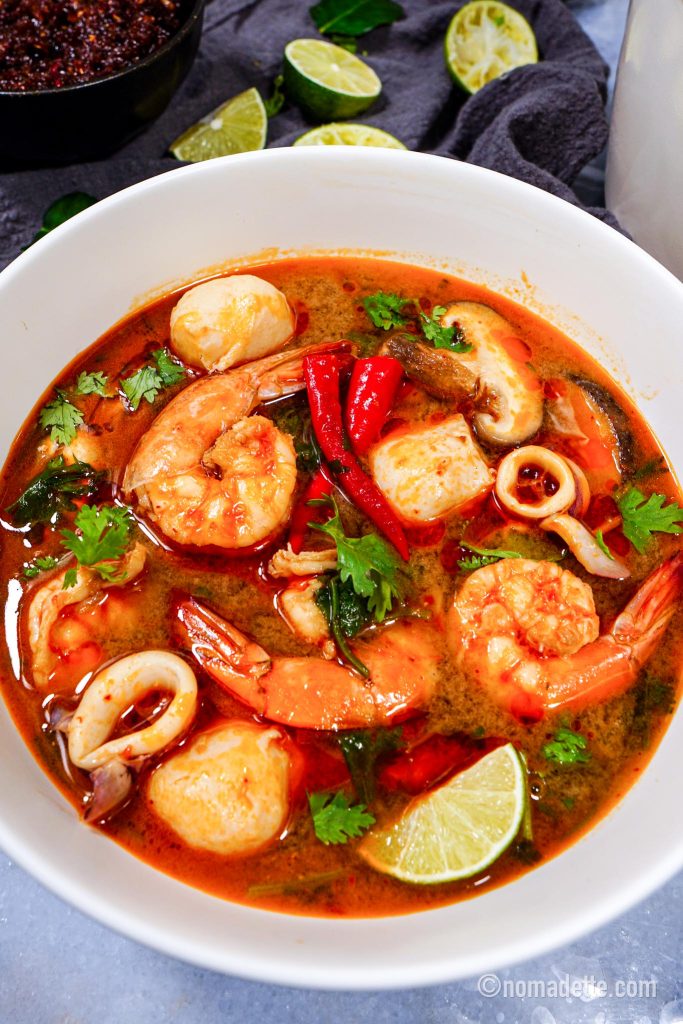

At its core, Tom Yum Goong is a celebration of fresh ingredients. The soup’s distinctive character comes from a unique combination of aromatics and herbs. Lemongrass, galangal, kaffir lime leaves, and chilies form the foundational flavor profile, infusing the broth with an unparalleled depth and fragrance. These ingredients are not merely spices; they are the soul of authentic Thai cuisine.
Beyond shrimp, a truly authentic Tom Yum Goong often features a medley of other seafood, transforming it into a ‘Tom Yum Talay’ (seafood Tom Yum). Common additions include squid, fish fillets (like snapper or sea bass), mussels, and sometimes even crab. Each type of seafood contributes its unique texture and flavor, making every spoonful a delightful discovery.
The broth itself is usually a light yet intensely flavorful base, often made with chicken or seafood stock. Some recipes incorporate evaporated milk or coconut milk for a richer, creamier texture, creating the ‘Tom Yum Nam Khon’ (creamy Tom Yum). However, the clear version, ‘Tom Yum Nam Sai,’ is equally popular and emphasizes the pure, unadulterated flavors of the aromatics and seafood.
Preparing Tom Yum Goong from scratch might seem daunting, but it’s an achievable and rewarding endeavor. The key lies in sourcing fresh, high-quality ingredients and understanding the balance of flavors. This guide aims to demystify the process, providing you with an authentic recipe that you can recreate in your own kitchen.
To achieve the true taste of Thailand, gather these key components. Freshness is paramount, especially for the aromatics.
- Broth Base: 4-6 cups chicken stock or seafood stock (homemade is best for depth of flavor).
- Aromatics:
- 3-4 stalks lemongrass, bruised and sliced into 2-inch pieces.
- 1-inch piece galangal, sliced thinly.
- 5-7 kaffir lime leaves, torn or bruised.
- 3-5 Thai bird’s eye chilies, bruised (adjust to your spice preference).
- 1-2 shallots, halved or quartered.
- Seafood:
- 1/2 lb large shrimp, peeled and deveined (tails on for presentation).
- 1/2 lb squid, cleaned and cut into rings.
- 1/2 lb firm white fish fillets (e.g., snapper, cod), cut into bite-sized pieces.
- Optional: Mussels, scallops, crab.
- Flavor Enhancers:
- 2-3 tablespoons fish sauce (nam pla).
- 1-2 tablespoons lime juice (freshly squeezed is crucial).
- 1-2 teaspoons sugar (palm sugar is traditional, but granulated sugar works).
- 1 tablespoon chili paste in oil (nam prik pao) – this adds depth, color, and a touch of sweetness.
- Garnishes:
- Fresh cilantro sprigs.
- Fresh Thai basil leaves (horapha).
- Lime wedges.
- Sliced red chilies (optional, for extra heat and color).
- Optional Creaminess:
- 1/4 cup evaporated milk or coconut milk (for Tom Yum Nam Khon).
Follow these instructions carefully to unlock the authentic flavors of this beloved Thai soup.
Step 1: Prepare the Aromatics and Broth
In a medium pot, bring the chicken or seafood stock to a gentle simmer over medium heat. Add the bruised lemongrass stalks, sliced galangal, torn kaffir lime leaves, bruised chilies, and shallots. Let this mixture simmer for about 10-15 minutes, allowing the aromatics to infuse the broth with their essential oils and fragrances. This step is crucial for developing the soup’s signature aroma and flavor base.
Step 2: Strain (Optional but Recommended)
For a clearer soup and a more refined texture, you can strain the broth at this point, discarding the solids. However, some prefer to leave the aromatics in for a more rustic presentation. If you choose to strain, return the infused broth to the pot.
Step 3: Add the Seafood
Increase the heat slightly to bring the broth to a gentle boil. Add the fish pieces first, as they require a bit longer to cook. Simmer for 2-3 minutes until the fish is almost cooked through. Then, add the shrimp and squid rings. Cook for another 1-2 minutes, just until the shrimp turn pink and opaque and the squid is tender. Be careful not to overcook the seafood, as it can become tough.
Step 4: Season the Soup
Reduce the heat to low. Stir in the fish sauce, lime juice, sugar, and chili paste in oil (nam prik pao). Taste and adjust the seasoning as needed. This is where you balance the sourness from the lime, the saltiness from the fish sauce, and the subtle sweetness from the sugar and chili paste. Aim for a vibrant, harmonious blend of all flavors.
Step 5: Add Creaminess (Optional)
If you are making the creamy version (Tom Yum Nam Khon), gently stir in the evaporated milk or coconut milk now. Heat through gently but do not bring to a rolling boil after adding the milk, as it may curdle.
Step 6: Final Touches and Serving
Remove the pot from the heat immediately after adding the final seasonings or milk. Stir in the fresh cilantro sprigs and Thai basil leaves. The residual heat will wilt them slightly and release their fresh, herbaceous aromas. Ladle the hot Tom Yum Goong into serving bowls, ensuring each bowl gets a generous portion of seafood and broth. Garnish with extra cilantro, Thai basil, lime wedges, and sliced red chilies if desired.
- Freshness is Key: Use the freshest lemongrass, galangal, kaffir lime leaves, and chilies you can find. Dried versions won’t deliver the same vibrant aroma and flavor.
- Bruise, Don’t Chop: Bruise the lemongrass and galangal to release their oils. Tearing or bruising kaffir lime leaves also helps release their fragrance.
- Balance is Everything: The magic of Tom Yum lies in its perfect balance of spicy, sour, salty, and sweet. Taste and adjust seasonings diligently. Don’t be afraid to add more lime juice for sourness, fish sauce for saltiness, or sugar for sweetness.
- Chili Paste in Oil (Nam Prik Pao): This ingredient is essential for authentic depth and a hint of smokiness. It’s a complex chili paste that adds more than just heat.
- Don’t Overcook Seafood: Seafood cooks very quickly. Add it towards the end and cook just until done to maintain tenderness.
- Lime Juice at the End: Add lime juice towards the end of cooking to preserve its fresh, bright flavor. Boiling lime juice for too long can make it bitter.
- Thai Basil: Use Thai basil (horapha) if possible, as it has a distinct anise-like flavor that is characteristic of Tom Yum. Regular basil is a passable substitute but won’t be quite the same.
- Spice Level: Adjust the number of chilies to your personal preference. For a milder soup, remove the seeds from the chilies before bruising them.
- Broth Quality: A good quality stock makes a significant difference. If using store-bought, opt for low-sodium varieties so you have more control over the final saltiness.
While this recipe focuses on seafood (Goong and Talay), Tom Yum is incredibly versatile.
- Tom Yum Gai: Uses chicken instead of seafood.
- Tom Yum Hed: A vegetarian version, often using mushrooms as the main ingredient. Vegetable stock should be used.
- Tom Yum Pla: Features fish as the primary protein.
- Adding Vegetables: Some enjoy adding vegetables like straw mushrooms, oyster mushrooms, baby corn, or tomatoes for extra texture and nutrients. Add these along with the seafood or slightly before, depending on their cooking time.
Tom Yum Goong is more than just a soup; it’s a national dish of Thailand, deeply ingrained in its culinary identity. It’s a staple in homes, street food stalls, and high-end restaurants across the country and has gained immense popularity globally. Its complex flavor profile is a testament to the Thai philosophy of balancing contrasting tastes and textures.
The soup is often served as an appetizer or a main course, typically accompanied by steamed jasmine rice, which helps to temper the heat and complement the rich flavors. It’s a dish that evokes warmth, comfort, and the vibrant spirit of Thailand.
- Lemongrass: This tall, fibrous grass imparts a distinct citrusy, lemony flavor and aroma. It’s essential for the soup’s refreshing base.
- Galangal: A rhizome related to ginger, galangal offers a sharper, more pungent, and slightly medicinal flavor compared to ginger. It adds a complex depth that ginger cannot replicate.
- Kaffir Lime Leaves: These glossy, double-lobed leaves have an intensely fragrant citrus aroma. They are crucial for the authentic Tom Yum scent and taste.
- Thai Bird’s Eye Chilies: These small but fiery chilies provide the signature heat. Their fruity undertones add complexity to the spice.
Nam Prik Pao is a fundamental component in many Thai dishes, including Tom Yum. It’s a savory, slightly sweet, and spicy paste made from roasted chilies, garlic, shallots, dried shrimp, and sometimes shrimp paste. It adds a deep umami flavor, a rich reddish hue, and a subtle sweetness that balances the sour and spicy elements. Finding a good quality store-bought version is recommended, or you can embark on the journey of making it from scratch, which is a rewarding culinary project in itself.
Tom Yum Goong is best served piping hot, straight from the pot. Ladle it into individual bowls. Traditionally, it’s served with a side of steamed jasmine rice. The rice acts as a perfect counterpoint to the soup’s intense flavors, allowing you to savor every spoonful. Don’t forget the lime wedges for those who prefer an extra zing.
- Too Sour: Add a little more sugar or fish sauce to balance.
- Too Salty: Add more lime juice, a touch more sugar, or dilute with a little more stock.
- Not Spicy Enough: Add more bruised chilies or a dash of chili paste in oil.
- Flavor Seems Flat: Ensure you used enough aromatics and consider adding a bit more fish sauce or lime juice. The quality of your stock also plays a big role.
- Seafood is Tough: This indicates overcooking. Next time, add seafood later in the cooking process and cook for a shorter duration.
Conclusion: A Culinary Journey to Thailand
Crafting an authentic Tom Yum Goong is a journey that engages all the senses. From the intoxicating aroma of simmering aromatics to the explosion of spicy, sour, and savory flavors on your palate, this soup offers a truly immersive Thai culinary experience. By understanding the essential ingredients, mastering the balance of flavors, and following the steps outlined, you can confidently recreate this iconic dish in your own kitchen.
Embrace the process, experiment with the spice level, and savor the vibrant taste of authentic Tom Yum Goong. It’s a dish that promises to transport you straight to the bustling streets and serene landscapes of Thailand, one delicious spoonful at a time. Enjoy the fiery, fragrant, and utterly unforgettable flavor of this Thai masterpiece!