
In this guide, we are going to explore how you can revitalize your menu—whether it’s for a bustling gastropub, a refined seafood bistro, or a special dinner party—by introducing Asian-inspired mussel dishes. We will travel through the flavor landscapes of Thailand, Japan, Korea, and China to see how these diverse culinary traditions can transform a humble pot of shellfish into a show-stopping main course.
The Foundation: Selecting and Prepping Your Mussels
Before we dive into the woks and steamers, we must address the foundation of any great mussel dish: the quality of the product. No amount of ginger or lemongrass can hide a bad mussel. When sourcing for your menu, look for rope-grown mussels. They are generally sustainable, cleaner (meaning less grit), and have a higher meat-to-shell ratio. They should smell like the ocean—fresh and salty—never fishy or stagnant.
Preparation is minimal but critical. While most farm-raised mussels come relatively clean, you should always give them a cold water rinse. Check for the "beard" (the byssal threads used to attach to rocks or ropes) and pull it firmly towards the hinge of the shell to remove it. Discard any mussels with broken shells, and tap any open mussels; if they don’t close, they are dead and must be thrown away. This quality control step ensures that your final dish is safe and delicious.
1. The Thai Standard: Coconut, Lemongrass, and Kaffir Lime
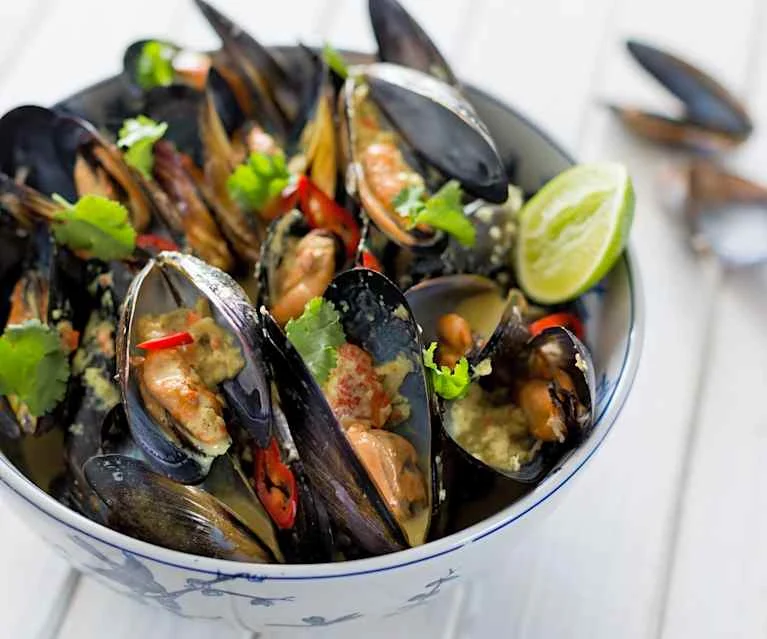
To build this dish, you want to start by sweating aromatics. Don’t just throw everything in the pot at once. Sauté garlic, chopped galangal (or ginger), and smashed lemongrass stalks in a little oil until fragrant. This releases the essential oils that define Thai cooking. Add a dollop of red or green curry paste—fry the paste for a minute to "wake it up"—before pouring in high-quality coconut milk.
Once the liquid is simmering, add the mussels and cover. They will steam open in about 3 to 5 minutes. The finishing touches are what separate a good dish from a great one. Finish with a generous squeeze of fresh lime juice to cut the richness of the coconut, a splash of fish sauce for deep salinity, and a handful of torn cilantro and Thai basil. Serve this with crusty baguette or jasmine rice to soak up that incredible gold-hued broth.
2. Japanese Elegance: Sake, Miso, and Mirin
If the Thai version is a flavor explosion, the Japanese approach is a study in elegance and umami. This recipe mimics the technique of Sakamushi (sake steaming). It is incredibly simple, relying on the purity of the ingredients. This version is perfect for menus that focus on clean, refined flavors.
Start with a base of dashi or a mix of water and sake. Sake adds a distinct sweetness and acidity that white wine simply doesn’t provide. Bring the liquid to a boil with julienned ginger. Once the mussels are added and steamed open, the magic ingredient comes into play: Miso.
Whisk white miso (Shiro Miso) into a small amount of the hot broth separately before stirring it back into the pot. Never boil miso vigorously, as it kills the probiotic qualities and ruins the delicate flavor. For a luxurious finish, whisk in two tablespoons of cold unsalted butter. This creates a glossy, emulsified sauce that coats the shells. Garnish with finely sliced scallions and perhaps a dusting of Togarashi (Japanese seven-spice) for a gentle kick.
3. The Korean Kick: Spicy Gochujang and Kimchi
Korean cuisine is having a massive moment globally, and for good reason. The combination of heat and fermentation creates addictive flavors. For a mussel dish with attitude, we turn to Gochujang (Korean chili paste) and Gochugaru (chili flakes). This dish is robust, fiery, and perfect for cold evenings or as a bar snack alongside cold beers.
Create a broth using chicken or vegetable stock, garlic, and a generous spoonful of Gochujang. You might want to add a little soy sauce and a touch of sugar or honey to balance the aggressive heat of the chili paste. If you really want to lean into the funk, add chopped kimchi to the base. The texture of the cabbage provides a nice contrast to the soft mussels.
Steam the mussels in this fiery red broth. The meat will stain slightly red, looking appetizing and bold. Finish this dish with a drizzle of sesame oil and toasted sesame seeds. This recipe pairs exceptionally well with Soju or a crisp, dry lager to cut through the spice.
4. Chinese Wok-Tossed: Black Bean and Garlic
Moving to China, specifically Cantonese influences, we find the classic combination of fermented black beans (douchi), garlic, and ginger. Unlike the previous recipes which are heavy on broth, this preparation is often drier, focusing on a sauce that clings to the shells, usually achieved through wok-tossing.
To execute this in a restaurant setting, you need high heat. Stir-fry fermented black beans (rinsed and mashed), minced garlic, ginger, and sliced fresh chilies. Add the mussels and toss them vigorously to coat the shells in the aromatic oil. Deglaze the wok with Shaoxing rice wine—the aroma is unmistakable and essential for authentic Chinese flavor.
Cover the wok to steam the mussels. Once they open, you can thicken the remaining juices with a cornstarch slurry to create a glossy sauce that adheres to the meat. The result is savory, salty, and incredibly fragrant. Garnish with cilantro and scallions.
5. Vietnamese Freshness: Lemongrass, Chili, and Beer
In Vietnam, mussels and clams are popular street food, often steamed simply with lemongrass and chili. A popular variation involves steaming them in lager beer. The yeasty, bitter notes of the beer pair surprisingly well with the sweetness of the shellfish.
The defining element of this Vietnamese style is the dipping sauce. While the mussels are tasty on their own, they are often served with a side of Muoi Tieu Chanh—a mixture of salt, white pepper, and fresh lime juice. The diner pulls the mussel meat, dips it into the tangy pepper mixture, and eats it. It is an interactive and zesty way to enjoy the dish.
Serving and Menu Integration
When adding these items to your menu, consider the vessel. While a standard bowl works, cast iron pots or clay pots retain heat longer and look fantastic on the table. Asian-inspired mussels also offer flexibility in sides. While bread is the European standard, these recipes open the door to other options.
- Rice: Jasmine or sticky rice is perfect for the Thai and Korean versions.
- Fried Mantou Buns: These Chinese steamed-then-fried buns are incredible for dipping in the Black Bean sauce.
- Roti Canai: A flaky flatbread that pairs beautifully with the coconut curry style.
- Fries: Fusion is fun! Kimchi-seasoned fries served alongside Gochujang mussels is a modern gastropub winner.
Beverage Pairings
Don’t forget to train your staff on beverage pairings for these specific flavor profiles. The wine that works for Moules Marinières (like a buttery Chardonnay) might clash with a spicy Thai curry. Instead, look toward off-dry Rieslings or Gewürztraminers, which have the sweetness to handle spice.
For the Japanese and Chinese preparations, Junmai Sake or a dry Sherry can be excellent. And never underestimate the power of beer. A cold Singha with the Thai mussels or an Asahi with the Japanese style is often the most refreshing choice for the diner.
Conclusion
Mussels are a blank canvas waiting for your creativity. By stepping away from the traditional white wine and cream and embracing the pantry staples of Asia—soy, miso, lemongrass, chilies, and coconut milk—you can create dishes that are vibrant, memorable, and highly profitable. These recipes are not just about feeding people; they are about transporting them. So, fire up the wok, crack open the coconut milk, and get ready to serve the best mussels your customers have ever tasted.