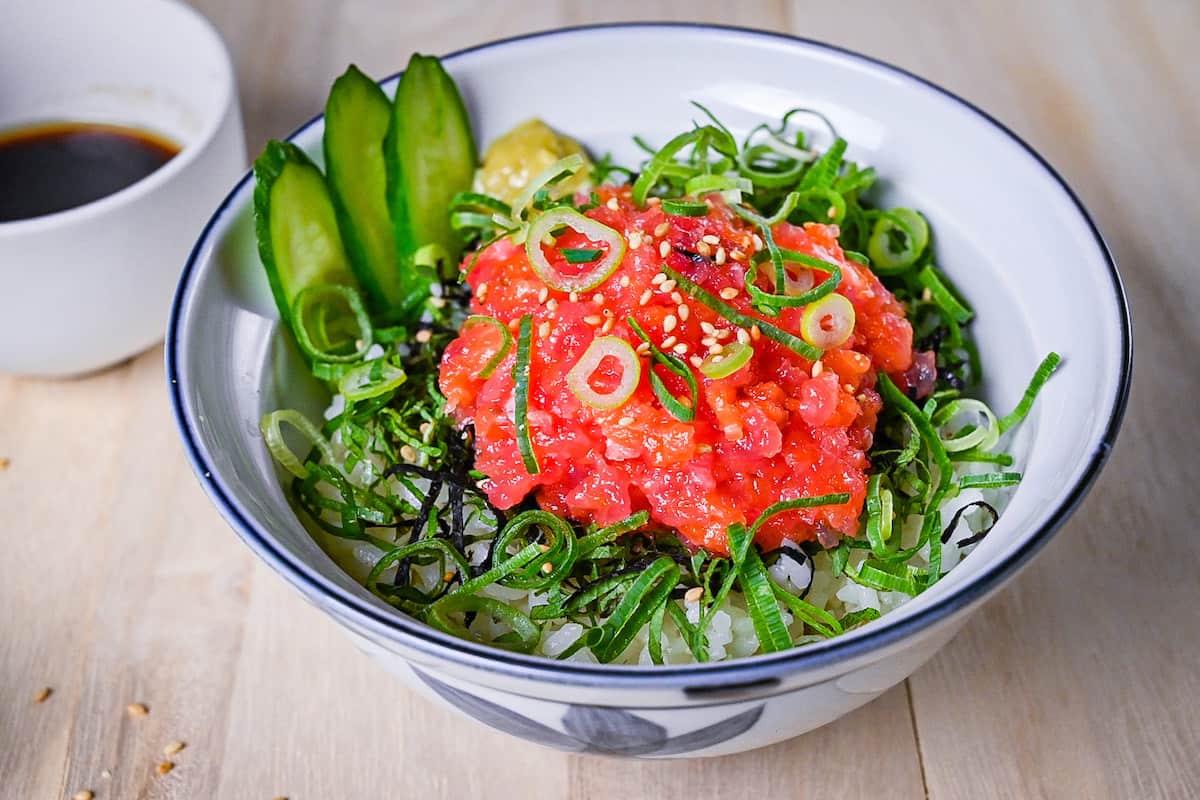


The term ‘negitoro’ itself provides a clue to its composition. ‘Negi’ refers to the Japanese long onion (scallion), which is traditionally finely chopped and mixed with the tuna. ‘Toro’ signifies the fatty part of the tuna, known for its melt-in-your-mouth quality and rich flavor. While authentic negitoro often uses fatty tuna belly (chu-toro or o-toro), modern interpretations frequently employ high-quality akami (leaner tuna) or a blend, depending on availability and desired richness.
The origins of Negitoro Don are rooted in the resourceful culinary traditions of Japan. Historically, chefs would utilize the trimmings and less aesthetically perfect parts of the tuna, often from the belly, which are rich in fat and flavor. Instead of discarding these pieces, they were finely chopped and combined with aromatics like scallions, creating a delicious and economical dish that showcased the full potential of the fish.
Preparing negitoro requires a specific technique to achieve the desired texture. The tuna, ideally sushi-grade, is first chilled thoroughly. This makes it firmer and easier to mince. Using a sharp knife, the tuna is then meticulously chopped into very small, almost paste-like pieces. Some chefs employ a specialized tool called a ‘deba’ knife, known for its heavy blade, which aids in this process. The goal is a fine, uniform mince that will readily absorb the seasonings and meld with the rice.
Once the tuna is minced, it’s typically seasoned with a delicate mixture. Common additions include soy sauce, mirin (a sweet rice wine), and finely chopped scallions. A touch of grated ginger or wasabi can also be incorporated to add a subtle warmth and complexity. The key is to enhance, not overpower, the natural sweetness and richness of the tuna. The mixture is gently tossed to ensure even distribution of flavors.
The foundation of any donburi (rice bowl) dish is the rice. For Negitoro Don, perfectly cooked Japanese short-grain rice is essential. The rice should be slightly sticky, allowing it to hold its shape and provide a comforting bed for the tuna. It’s often seasoned with a light mixture of rice vinegar, sugar, and salt, similar to sushi rice, to add a subtle tang and sweetness that complements the seafood.
Assembling the Negitoro Don is an art form in itself. A generous portion of warm, seasoned rice is placed in a deep bowl. The prepared negitoro mixture is then carefully spooned over the rice, often forming a neat mound or fanned out attractively. Garnishes play a crucial role in both visual appeal and flavor enhancement.
Traditional garnishes for Negitoro Don include thinly sliced scallions, toasted sesame seeds, and a dab of vibrant green wasabi. Nori (seaweed) strips or furikake (a dry Japanese condiment) are also popular additions. Some variations might include a raw quail egg yolk placed in the center, which, when broken and mixed, adds an incredible richness and creamy texture to the negitoro.
The beauty of Negitoro Don lies in its versatility. While the classic preparation is widely enjoyed, numerous regional and personal variations exist. Some chefs might incorporate finely chopped pickled ginger (beni shoga) for a zesty kick, while others might add a drizzle of spicy mayonnaise for a modern twist.
The quality of the tuna is paramount. For the most authentic and luxurious experience, sushi-grade fatty tuna (o-toro or chu-toro) is preferred. Its high fat content renders it exceptionally tender and flavorful. However, high-quality akami (lean tuna) can also be used, especially if a lighter flavor profile is desired. It’s crucial to source tuna from a reputable fishmonger to ensure freshness and safety for raw consumption.
Beyond the tuna itself, the freshness of the negi (scallions) is also important. Young, tender scallions offer a milder, sweeter flavor compared to older, tougher ones. Their crisp texture provides a pleasant contrast to the soft tuna and rice.
The preparation of the rice is as critical as the tuna. Rinsing the rice thoroughly before cooking removes excess starch, resulting in distinct, fluffy grains. Using the correct water-to-rice ratio is essential for achieving the ideal consistency – not too mushy, not too dry.
Seasoning the rice is typically done while it’s still warm. A mixture of rice vinegar, sugar, and salt is gently folded into the cooked rice, ensuring it’s evenly distributed without crushing the grains. This process, known as ‘shari’ in sushi making, adds a crucial layer of flavor.
When mincing the tuna, patience and precision are key. Avoid over-processing the tuna into a paste; the goal is a fine mince with some discernible texture. Chilling the tuna beforehand is a non-negotiable step for achieving the best results.
The soy sauce used should be of good quality. A light or tamari soy sauce can be used, depending on preference. The amount should be judicious, allowing the tuna’s flavor to shine through. Mirin adds a touch of sweetness and gloss, balancing the saltiness of the soy sauce.
For those who enjoy a bit of heat, a small amount of grated fresh ginger can be added to the negitoro mixture. Alternatively, a touch of grated wasabi can provide a more pungent, sinus-clearing warmth. Experiment with small amounts to find your preferred level of spice.
The inclusion of a raw quail egg yolk is a popular addition that significantly elevates the dish. The yolk acts as a natural emulsifier, binding the minced tuna and creating an incredibly smooth, rich, and luxurious mouthfeel. It adds a decadent finish that many find irresistible.
Serving Negitoro Don immediately after preparation is highly recommended. The warmth of the rice contrasts beautifully with the cool negitoro, and the textures are at their best when fresh. The flavors meld together perfectly in the short time between assembly and consumption.
Negitoro Don is often enjoyed as a light lunch, a satisfying dinner, or even as part of a larger sushi or sashimi meal. Its richness makes it quite filling, so a modest portion is often sufficient.
Nutritionally, Negitoro Don can be a good source of protein and omega-3 fatty acids, thanks to the tuna. However, depending on the fattiness of the tuna and the amount of rice and seasonings used, it can also be relatively high in calories and sodium. Moderation is key for a balanced diet.
Exploring variations can lead to exciting culinary discoveries. Consider adding finely chopped avocado for extra creaminess, or a sprinkle of shichimi togarashi (Japanese seven-spice blend) for a complex heat.
For those concerned about consuming raw fish, there are alternatives. While it deviates from the traditional preparation, lightly searing the exterior of the tuna before mincing can offer a different texture and flavor profile, while still being safe for consumption. However, authentic Negitoro Don relies on the pristine quality of raw, sushi-grade tuna.
The art of Negitoro Don is accessible to home cooks with the right ingredients and techniques. Sourcing high-quality sushi-grade tuna is the most critical step. Many Asian markets or specialized fishmongers offer pre-minced negitoro, but preparing it yourself allows for greater control over texture and seasoning.
When purchasing tuna for negitoro, look for vibrant red color, a firm texture, and a fresh, ocean-like aroma. Avoid tuna that appears dull, brown, or has a strong ‘fishy’ smell, as these are signs of lower quality or age.
The choice of rice is also important. Japanese short-grain rice, often labeled as ‘sushi rice,’ is ideal due to its sticky texture and ability to absorb seasonings. Other types of rice may not yield the same desirable consistency.
Mastering the mincing technique might take practice. Start with a very sharp knife and work on a stable cutting board. Chop the tuna finely, but avoid turning it into a complete paste. A slightly coarser mince can provide a more interesting texture.
The seasoning balance is crucial. Taste as you go. The soy sauce should complement the tuna, not dominate it. Mirin adds sweetness and depth, while the scallions provide a fresh counterpoint. Adjust these elements to your personal preference.
Garnishes are not just for show; they add layers of flavor and texture. Don’t skip the scallions, sesame seeds, or wasabi. If using a quail egg yolk, ensure it’s fresh and carefully separated.
Negitoro Don represents a perfect balance of simplicity and sophistication. It’s a dish that celebrates the inherent deliciousness of high-quality tuna, enhanced by thoughtful preparation and complementary flavors. It’s a testament to the culinary philosophy that often, less is more.
Whether you’re a seasoned sushi enthusiast or new to Japanese cuisine, trying your hand at making Negitoro Don at home can be a rewarding culinary adventure. The satisfaction of creating this elegant and flavorful dish from scratch is immense.
In conclusion, Negitoro Don is a delightful and accessible Japanese rice bowl that offers a pure taste of the ocean. By understanding the key ingredients, preparation techniques, and the importance of quality, anyone can recreate this beloved dish and savor its unique charm.