
Unlike the meticulously rolled sushi maki or nigiri, Chirashi Don celebrates a more rustic, yet equally elegant, presentation. It offers a liberating experience for both the creator and the diner, allowing for boundless creativity in ingredient selection and arrangement. This article will guide you through the intricate steps of preparing an authentic Seafood Chirashi Don, from selecting the finest ingredients to mastering the art of presentation, ensuring a delightful and memorable dining experience.
At its core, Chirashi Don embodies the Japanese principle of shun – appreciating ingredients at their peak freshness and seasonality. While the concept might seem simple, achieving a truly outstanding Chirashi Don requires attention to detail, a respect for the ingredients, and a foundational understanding of Japanese culinary techniques. We will delve deep into each component, transforming what might seem daunting into an accessible and enjoyable cooking adventure.
Historically, Chirashi Don has roots in traditional Japanese home cooking, offering a practical way to utilize various seafood offcuts or smaller portions of fish. Over time, it evolved into a sophisticated dish served in sushi restaurants, showcasing a chef’s skill and the quality of available seafood. It’s a dish that symbolizes celebration and abundance, often prepared for special occasions or family gatherings.
The beauty of Chirashi Don lies in its versatility. While the core elements remain consistent – seasoned rice and fresh seafood – the specific toppings can vary widely based on regional preferences, seasonal availability, and personal taste. This adaptability makes it an exciting dish to explore and customize, encouraging culinary exploration and creativity in your own kitchen.
The absolute bedrock of any excellent Chirashi Don is the sushi rice, known as shari. This is not just any plain steamed rice; it is a meticulously prepared foundation that carries the delicate flavors of the seafood. The process begins with selecting the right kind of rice, typically a short-grain Japanese variety, which yields the perfect sticky yet separate texture when cooked.
Preparing the sushi rice involves several crucial steps. First, the rice must be thoroughly washed to remove excess starch, ensuring each grain cooks evenly and retains its individual integrity. This washing process is repeated until the water runs clear, often taking several rinses. Once washed, the rice is typically soaked for a short period before cooking, promoting uniform hydration and a tender texture.
Cooking the rice is often best done in a dedicated rice cooker, which maintains precise temperature and moisture levels. However, it can also be achieved on the stovetop with careful monitoring. The goal is perfectly cooked rice – tender but not mushy, with a slight chewiness that provides a satisfying mouthfeel.
The magic truly happens after the rice is cooked, when it’s seasoned with sushi-zu, a mixture of rice vinegar, sugar, and salt. This seasoning, often warmed slightly to help dissolve the sugar and salt, is gently folded into the hot rice using a slicing motion with a wooden paddle. It’s crucial not to mash the rice, but to separate the grains while evenly distributing the seasoning.
As the seasoned rice cools, it develops its characteristic glossy sheen and distinct sweet and tangy flavor profile. This cooling process is often accelerated by fanning the rice, which also helps to evaporate excess moisture, resulting in perfectly textured shari that is ready to embrace its glorious toppings. The balance of sweetness, tanginess, and umami in the rice is paramount, as it provides the perfect counterpoint to the rich seafood.
Now, let’s talk about the stars of the show: the seafood toppings, or neta. The quality and freshness of your seafood are non-negotiable for an exceptional Chirashi Don. Always opt for sashimi-grade fish from a reputable fishmonger. Look for fish that is firm, vibrant in color, and has a clean, oceanic smell, free from any ‘fishy’ odor.
A classic Chirashi Don typically features an assortment of different fish, offering a variety of colors, textures, and flavors. Popular choices include:
- Tuna (Maguro): Often lean akami or fattier chu-toro, known for its rich red color and meaty texture.
- Salmon (Sake): With its distinctive orange hue and buttery, rich flavor due to its fat content.
- Yellowtail (Hamachi): A delicate, firm white fish with a subtle sweetness.
- Scallops (Hotate): Sweet and tender, often served raw or lightly seared.
- Shrimp (Ebi): Cooked and butterflied, offering a sweet, firm bite.
- Octopus (Tako): Boiled until tender and thinly sliced, providing a unique chewy texture.
- Salmon Roe (Ikura) or Flying Fish Roe (Tobiko): Adding bursts of briny flavor and vibrant color.
Beyond these staples, feel free to experiment with other sashimi-grade options like sea bream (tai), mackerel (saba), or even freshwater eel (unagi), which is typically grilled and glazed with a sweet soy sauce.
Proper preparation of the seafood is key. Most fish will be sliced thinly, typically against the grain, to ensure tenderness and an appealing presentation. The thickness of the slices can vary, but generally, pieces should be easy to eat in one bite without being overly thick or too thin to appreciate the texture.
Some seafood might benefit from a light marinade. For instance, tuna can be briefly marinated in a mixture of soy sauce, mirin, and sake (known as zuke) to enhance its umami and add another layer of flavor. This technique is particularly effective for leaner cuts of tuna, infusing them with a deeper savory profile.
- Thinly Sliced Cucumber: For a refreshing crunch and vibrant green.
- Avocado: Creamy texture and subtle flavor, often sliced or diced.
- Shredded Nori (Seaweed): A classic sushi topping, offering a savory, oceanic note.
- Tamagoyaki (Japanese Omelette): Sweet, fluffy, and vibrant yellow, cut into strips or cubes.
- Pickled Ginger (Gari): Essential for cleansing the palate between different types of fish.
- Wasabi: A pungent condiment, used sparingly to add a kick and enhance the fish’s flavor.
- Shiso Leaves: A fragrant herb offering a unique minty, peppery flavor.
- Lemon Wedges: A squeeze of fresh lemon juice can brighten the flavors of white fish.
Each garnish is chosen not just for its aesthetic contribution but for how it complements and balances the rich flavors of the seafood and the seasoned rice. The interplay of these elements is what makes Chirashi Don such a complex and satisfying dish.
Step 1: Prepare the Sushi Rice. Begin by thoroughly washing 2 cups of short-grain Japanese rice until the water runs clear. Drain and let it sit for 15-20 minutes. Cook the rice according to your rice cooker’s instructions or stovetop method. While the rice cooks, prepare your sushi-zu: combine 4 tablespoons rice vinegar, 2 tablespoons sugar, and 1 teaspoon salt in a small saucepan over low heat, stirring until sugar and salt dissolve. Do not boil.
Once the rice is cooked, transfer it to a large, wide wooden or non-reactive bowl (a hangiri is traditional). Pour the sushi-zu evenly over the hot rice. Using a wooden paddle or spatula, gently fold and ‘cut’ the rice to distribute the seasoning, fanning it simultaneously to cool it down and give it a glossy finish. Continue until the rice is lukewarm and well-seasoned.
Step 2: Prepare the Seafood. Ensure your sashimi-grade fish is chilled. Using a very sharp knife, carefully slice the fish against the grain into thin, bite-sized pieces. For salmon, you might aim for slightly thicker slices to highlight its rich texture. For shrimp, boil or steam until cooked, then butterfly them. If using octopus, ensure it’s tenderly boiled and thinly sliced. Pat any excess moisture from the fish with paper towels.
Consider marinating a portion of your tuna. In a shallow dish, combine 2 tablespoons soy sauce, 1 tablespoon mirin, and 1 teaspoon sake. Briefly immerse the tuna slices for 5-10 minutes, ensuring even coating without over-marinating, which can ‘cook’ the fish.
Step 3: Prepare the Garnishes. Slice cucumbers thinly, peel and slice avocado, and prepare your tamagoyaki (if making from scratch) into strips. Have your pickled ginger, wasabi, and shredded nori ready. If using shiso leaves, gently wash and pat them dry.
Step 4: Assemble the Chirashi Don. Take your chosen serving bowls. Scoop a generous portion of the seasoned sushi rice into each bowl, gently pressing it down to form an even base. Avoid compacting it too much; it should remain fluffy.
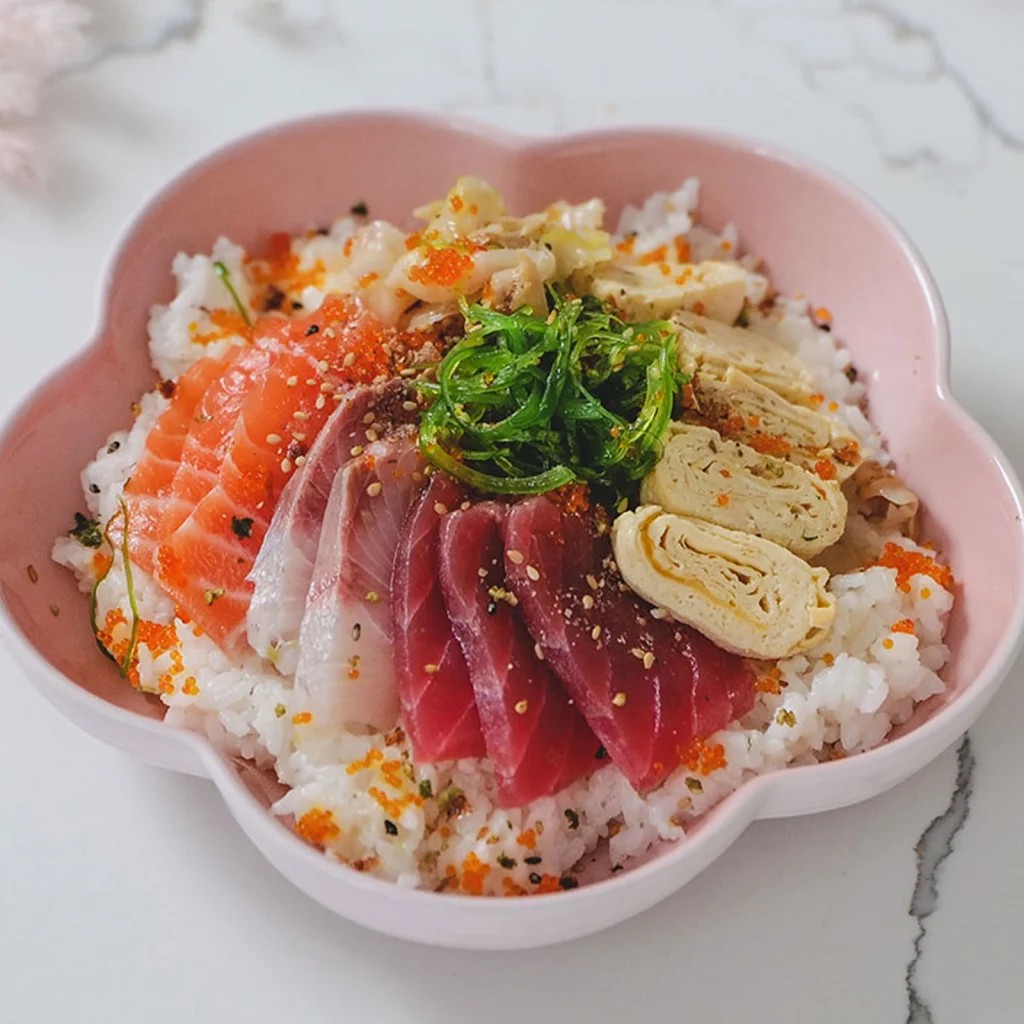
Now comes the artistic part: arranging the seafood. Start by placing larger pieces of fish, like tuna and salmon, around the bowl. Alternate colors and textures to create a visually appealing mosaic. Add smaller elements like scallops, shrimp, and octopus to fill in gaps and add variety.
Finally, scatter your garnishes strategically. Place strips of tamagoyaki, slices of avocado, cucumber, and shiso leaves. Finish with a spoonful of ikura or tobiko for a pop of color and briny flavor. A sprinkle of shredded nori or a few sesame seeds can add the final touch.
Serve immediately with small dishes of soy sauce, extra wasabi, and pickled ginger on the side. Encourage diners to mix and match bites, enjoying the individual flavors and the harmonious blend of all components.
Chirashi Don offers incredible opportunities for customization. While traditional toppings are wonderful, feel free to adapt it to your preferences or what’s available. You could create a vegetarian Chirashi Don with various colorful vegetables, mushrooms, and tofu, or a ‘surf and turf’ version with thinly sliced rare beef alongside seafood.
Explore regional variations, such as Edomae Chirashi (Tokyo style), which typically features artfully arranged raw fish over seasoned rice, or Gomoku Chirashi (Osaka style), where the toppings are often cooked, mixed into the rice, or laid out in a more ‘scattered’ fashion.
When serving Chirashi Don, provide individual small dishes for soy sauce and a small amount of wasabi. Traditionally, soy sauce should be brushed lightly onto the fish, rather than dipping the entire piece, to avoid over-seasoning the delicate flavors. The pickled ginger serves as an excellent palate cleanser between different types of fish, preparing your taste buds for the next exquisite bite.
Beyond its delicious taste, Chirashi Don can be a surprisingly healthy meal. It’s rich in lean protein from the fish, provides healthy omega-3 fatty acids, and includes complex carbohydrates from the rice. The addition of various vegetables and seaweed contributes vitamins, minerals, and fiber, making it a well-rounded and nutritious dish.
Preparing Chirashi Don at home is not just about making a meal; it’s an immersive culinary experience. It allows you to connect with Japanese food culture, practice knife skills, and express your creativity through food presentation. The satisfaction of crafting such a beautiful and delicious dish is truly rewarding.
Whether you’re a seasoned sushi enthusiast or a curious home cook, attempting Chirashi Don is a journey worth taking. It’s a dish that impresses with its elegance, delights with its flavors, and satisfies with its substance. With this comprehensive guide, you are now equipped with the knowledge and confidence to create your own masterful Seafood Chirashi Don.
Embrace the process, savor the fresh ingredients, and enjoy the art of Japanese cuisine right in your own kitchen. Itadakimasu! (Let’s eat!)