
At its heart, a great seafood udon soup is defined by its broth. In Japanese cuisine, this foundational element is often a dashi, a simple yet incredibly complex stock made primarily from kombu (dried kelp) and katsuobushi (dried, fermented, and smoked skipjack tuna). The resulting liquid is a powerhouse of umami, providing a clean, savory base that allows the other ingredients to shine.
The process of creating an authentic dashi is surprisingly straightforward, yet it demands attention to detail. Start with high-quality kombu. Gently wipe any white powder (which is actually mannitol, a source of umami) off the surface with a damp cloth – don’t wash it away entirely. Soak the kombu in cold water for at least 30 minutes, or even overnight in the refrigerator, to allow its flavor to fully infuse.
Next, gently heat the kombu-infused water in a pot. Crucially, remove the kombu just before the water reaches a rolling boil. Boiling kombu can release a slimy texture and a less desirable flavor. Once the kombu is removed, bring the water to a boil and then add your katsuobushi. Simmer for about 30 seconds to a minute, then turn off the heat and let the katsuobushi steep for another 5-10 minutes until it sinks to the bottom.
Finally, strain the dashi through a fine-mesh sieve lined with cheesecloth or a paper towel. This yields a crystal-clear, fragrant broth that is the soul of your udon soup. For a richer, more complex broth, you can also incorporate ingredients like shiitake mushrooms, dried sardines (niboshi), or even chicken bones, depending on the desired flavor profile.
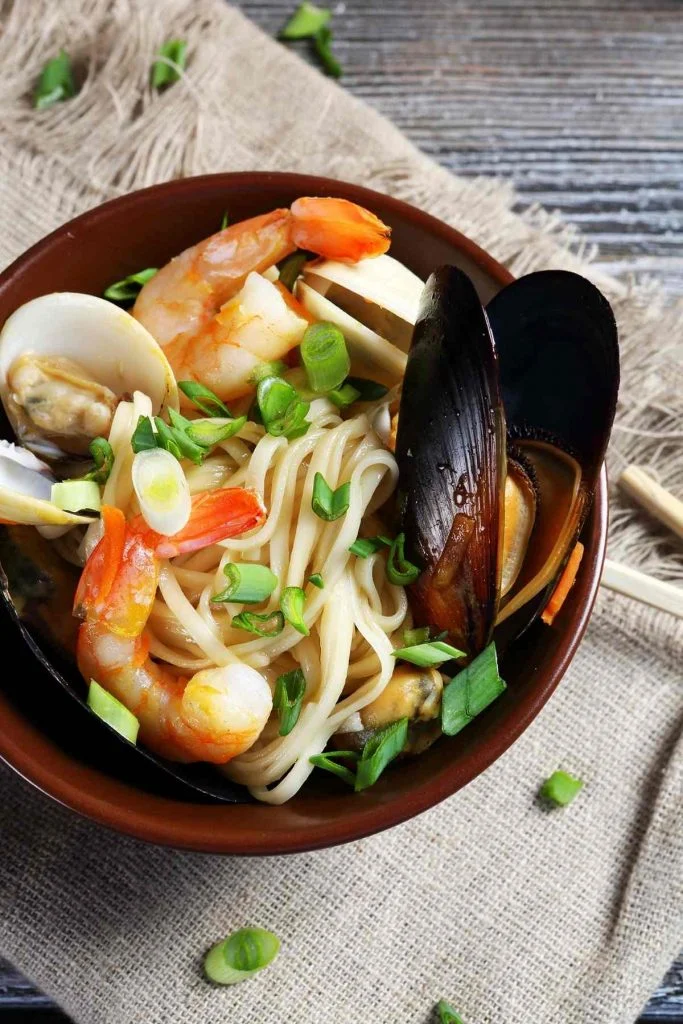
Beyond the dashi, the seafood is the star attraction. The beauty of seafood udon is its versatility. You can use a wide array of ocean delights, from succulent shrimp and tender squid to plump mussels and delicate white fish. The key is to use fresh, high-quality ingredients, as their natural flavors will be the highlight of the dish.
When preparing your seafood, ensure it is cleaned and prepped properly. Shrimp should be peeled and deveined. Mussels should be scrubbed and debearded. Fish fillets should be cut into bite-sized pieces. The goal is to have everything ready to cook quickly, as seafood can easily overcook and become tough.
The udon noodles themselves are essential. Udon noodles are thick, wheat-flour noodles that have a wonderfully chewy texture. You can find them fresh, frozen, or dried in most Asian grocery stores. Frozen udon noodles are often the best option for their superior texture, closely mimicking freshly made noodles.
Cooking the udon noodles requires careful timing. They should be cooked until al dente – tender but still with a slight bite. Overcooked udon can become mushy and lose their appeal. It’s often best to cook the udon separately from the broth, then add them to individual serving bowls before ladling the hot soup over them. This prevents the noodles from absorbing too much broth and becoming overly soft.
Now, let’s talk about assembling the soup. In a pot, heat your prepared dashi broth. You can enhance the dashi by adding a splash of soy sauce for saltiness and depth, a touch of mirin for sweetness and gloss, and perhaps a hint of sake to meld the flavors. Seasoning is a crucial step, so taste and adjust as needed.
Once the broth is simmering, it’s time to add the seafood. The cooking order depends on the type of seafood. Shrimp and scallops cook very quickly, usually within 2-3 minutes. Mussels and clams will need a few minutes longer until they open. Fish fillets will cook in just a few minutes until opaque and flaky. Add them in stages to ensure each type is cooked perfectly.
Aromatic elements play a vital role in elevating the soup. Sautéing some finely chopped garlic and ginger in a little sesame oil before adding the dashi can impart a wonderful fragrance and warmth. Sliced scallions, both white and green parts, can be added towards the end of the cooking process for a fresh, pungent flavor.
For added depth and color, consider incorporating some vegetables. Thinly sliced carrots, bok choy, spinach, or Napa cabbage can add nutrients and visual appeal. These should be added to the broth just long enough to become tender-crisp.
The final presentation is as important as the taste. Ladle the cooked udon noodles into deep bowls. Carefully arrange the cooked seafood and vegetables over the noodles. Pour the steaming hot broth over everything, ensuring the ingredients are partially submerged.
Garnishes are the finishing touches that transform a good soup into a great one. Thinly sliced scallions, a sprinkle of toasted sesame seeds, a sheet of nori (seaweed) cut into strips, or a dash of shichimi togarashi (Japanese seven-spice blend) can add visual interest and an extra layer of flavor.
For those who enjoy a bit of spice, a dollop of chili paste or a drizzle of chili oil can be added. Some variations also include a small amount of miso paste stirred into the broth for an even deeper, fermented umami flavor. If using miso, ensure you dissolve it in a little warm broth before adding it to the main pot, and avoid boiling the soup after the miso has been added, as this can diminish its flavor and beneficial properties.
The beauty of this dish is its adaptability. Don’t have a specific type of seafood? Substitute it! Not a fan of dashi? Experiment with a rich chicken or vegetable broth base, though it will change the authentic character of the dish.
For a vegetarian or vegan version, omit the seafood and dashi (if made with katsuobushi). Create a robust vegetable broth using kombu, dried shiitake mushrooms, and a medley of root vegetables. Load it with tofu, an assortment of mushrooms (like enoki and shiitake), and plenty of fresh vegetables for a hearty and satisfying meal.
Consider the quality of your ingredients. Freshness is paramount for seafood. If fresh is not available, good quality frozen seafood can be used, but be sure to thaw it properly. For the dashi, using high-grade kombu and katsuobushi will make a noticeable difference in the final flavor.
When it comes to udon noodles, the texture is key. If you can find fresh or frozen udon, opt for those. Dried udon can be a good substitute, but be mindful of the cooking times as they can vary significantly between brands.
The broth can be prepared in advance. In fact, dashi often tastes even better the next day as the flavors have had more time to meld. Store it in an airtight container in the refrigerator.
To reheat the broth, gently warm it on the stovetop. Add your seasonings and bring it to a simmer before cooking the seafood. This allows for a quick and efficient assembly of the final dish.
The cooking of the seafood is a delicate dance. Each type of seafood has its own ideal cooking time. Shrimp turn pink and opaque quickly. Scallops become firm and opaque. Mussels and clams should open up. Fish should flake easily. Removing them from the broth as soon as they are cooked prevents them from becoming rubbery.
Some cooks prefer to poach the seafood gently in the simmering broth, while others might quickly sauté it separately before adding it to the soup bowls. Both methods can yield delicious results, depending on your preference and the specific seafood used.
The aromatic base of garlic and ginger is a simple yet powerful addition. Sautéing them until fragrant releases their essential oils, infusing the broth with warmth and complexity. A touch of sesame oil adds a nutty undertone that complements the seafood beautifully.
Vegetable additions can range from hardy root vegetables that require longer cooking times to leafy greens that wilt in seconds. Consider the balance of textures and colors when selecting your vegetables. Thinly sliced carrots offer a slight sweetness and crunch, while spinach wilts down to add a vibrant green hue.
The act of serving is an art form. Arranging the ingredients thoughtfully in the bowl creates an inviting visual. The steaming broth should be ladled carefully to showcase the vibrant colors of the seafood and vegetables.
The garnishes are the final flourish. Fresh herbs like cilantro or chives can offer a burst of freshness. A sprinkle of furikake, a Japanese seasoning mix, can add another layer of umami and texture.
For a truly authentic experience, consider adding a perfectly cooked soft-boiled egg (ajitsuke tamago) to your udon soup. The rich, runny yolk can add a creamy element to the broth.
Experiment with different types of seafood. While common choices include shrimp, mussels, and squid, consider adding scallops, crab meat, or even a piece of firm white fish like cod or halibut. Each will contribute its unique flavor and texture to the soup.
The broth itself can be customized. While dashi is traditional, a good quality chicken broth or even a mushroom broth can serve as a base for a delicious udon soup, albeit with a different flavor profile. Adding a tablespoon of white miso paste to the broth can lend a subtle sweetness and creamy texture.
The key to a successful Seafood Udon Soup lies in respecting each ingredient and allowing its natural flavors to meld together. From the delicate umami of the dashi to the sweet succulence of the seafood and the satisfying chew of the udon, every component plays a crucial role in creating this comforting and delicious dish.
Embrace the process, don’t be afraid to experiment with your favorite seafood and vegetables, and you’ll soon be creating your own signature bowl of Seafood Udon Soup that will impress your family and friends. It’s a dish that offers both a taste of the ocean and a hug in a bowl.