
Our comprehensive guide will take you through every crucial step, from selecting the finest seafood to mastering the art of wrapping and achieving that coveted golden-brown crispness. Whether you’re a seasoned home cook or a culinary novice, this detailed walkthrough is designed to empower you with the knowledge and techniques needed to prepare truly exceptional fried seafood wontons that will impress family and friends alike.
The allure of homemade wontons lies in the ability to control the quality and balance of flavors. Store-bought versions, while convenient, often lack the vibrant freshness and bespoke seasoning that makes a truly memorable dish. By making them yourself, you can tailor the spice level, adjust the seafood blend, and ensure every bite is bursting with taste.
For shrimp, opt for medium-sized prawns, ensuring they are peeled, deveined, and finely minced. This creates a tender, slightly bouncy texture that holds up well during frying. White fish, such as cod, snapper, or tilapia, should be boneless and skinless, then finely diced or flaked. If incorporating crab, fresh crab meat offers superior flavor compared to imitation varieties.
Beyond the seafood, the aromatic base provides the foundational flavor profile. Fresh ginger and garlic are indispensable, offering pungent warmth and depth. Finely minced spring onions (scallions) add a subtle oniony bite and a touch of color, enhancing both the flavor and visual appeal of the filling.
Seasoning is where the magic truly happens, transforming raw ingredients into a symphony of taste. Key seasonings typically include light soy sauce for umami, a touch of sesame oil for its distinctive nutty aroma, white pepper for a gentle spice, and a pinch of sugar to balance the savory notes. Some recipes also call for a dash of oyster sauce for added richness.
To bind the filling together and ensure it doesn’t fall apart during cooking, binders are essential. A small amount of cornstarch or tapioca starch, along with an egg white, works wonders. The starch helps to absorb moisture and gives the filling a cohesive texture, while the egg white acts as a powerful emulsifier, keeping everything beautifully integrated.
Now, let’s talk about the wonton wrappers. These thin, square sheets of dough are readily available in the refrigerated section of most Asian grocery stores or even larger supermarkets. Look for wrappers that are fresh, pliable, and free from tears. Square wrappers are most common for frying, offering versatility in folding techniques.
When purchasing wrappers, check the expiration date and ensure the packaging is sealed. Once opened, they should be kept moist to prevent drying out. If you’re not using them all at once, reseal the package tightly and store them in the refrigerator, or even freeze them for longer storage.
Before diving into the preparation, gather all your necessary equipment. A sturdy
- cutting board
- sharp chef’s knife
- large mixing bowl
- small bowl of water (for sealing)
- deep frying pan or wok
- slotted spoon or spider
- baking sheet lined with paper towels (for draining)
will make the process smooth and efficient. Having everything organized beforehand is key to a stress-free cooking experience.
The first step in crafting your wontons is preparing the filling. Begin by thoroughly mincing your chosen seafood. For shrimp, you might roughly chop half and finely mince the other half to achieve varied texture. For fish, ensure it’s finely diced. Combine all the minced seafood in your large mixing bowl.
Next, add your finely minced aromatics: ginger, garlic, and spring onions. Incorporate the seasonings: soy sauce, sesame oil, white pepper, sugar, and oyster sauce if using. Mix everything together until well combined. Then, add the cornstarch/tapioca starch and the egg white. Mix vigorously, preferably with your hands, until the mixture becomes sticky and cohesive. This vigorous mixing helps to develop the protein structure, leading to a bouncier filling.
Once the filling is prepared, it’s beneficial to chill it in the refrigerator for at least 30 minutes. This allows the flavors to meld and the mixture to firm up slightly, making it easier to handle during the wrapping process. A chilled filling is less sticky and holds its shape better.
Now comes the artistic part: wrapping the wontons. There are several popular folding techniques, each yielding a slightly different aesthetic. The most common and straightforward method involves placing a small amount of filling (about a teaspoon) in the center of a square wrapper.
To fold, dip your finger in water and moisten all four edges of the wrapper. Fold the wrapper diagonally to form a triangle, pressing firmly to seal the edges and remove any air pockets. You can leave it as a triangle, or take the two bottom corners of the triangle and bring them together, overlapping slightly, sealing them with a dab of water to form a classic ‘tortellini’ or ‘purse’ shape.
Another simple method is the ‘envelope’ fold. Place the filling in the center. Moisten the edges. Fold the bottom corner up to meet the top corner, forming a triangle. Then, fold the left and right corners inwards towards the center, overlapping slightly, and seal them securely. Practice makes perfect, and soon you’ll find a technique that feels most comfortable and efficient for you.
The crucial aspect of wrapping is ensuring a tight and secure seal. Any gaps or weak points can cause the wonton to burst open during frying, releasing the delicious filling into the oil. Don’t overfill the wrappers; a modest amount of filling is easier to manage and less prone to bursting.
With your wontons expertly wrapped, it’s time for the grand finale: frying. The choice of oil is important. Opt for a neutral-flavored oil with a high smoke point, such as vegetable oil, canola oil, peanut oil, or grapeseed oil. Pour enough oil into your deep frying pan or wok to submerge the wontons halfway or fully.
Heat the oil over medium-high heat until it reaches approximately 170-180°C (340-350°F). You can test the oil by dropping a small piece of wrapper into it; if it sizzles and floats to the surface immediately, the oil is ready. Avoid overheating, as this can burn the wrappers before the filling is cooked through.
Carefully place the wontons into the hot oil, ensuring not to overcrowd the pan. Fry in batches to maintain the oil temperature and allow for even cooking. Overcrowding will lower the oil temperature, resulting in greasy, soggy wontons rather than crispy ones.
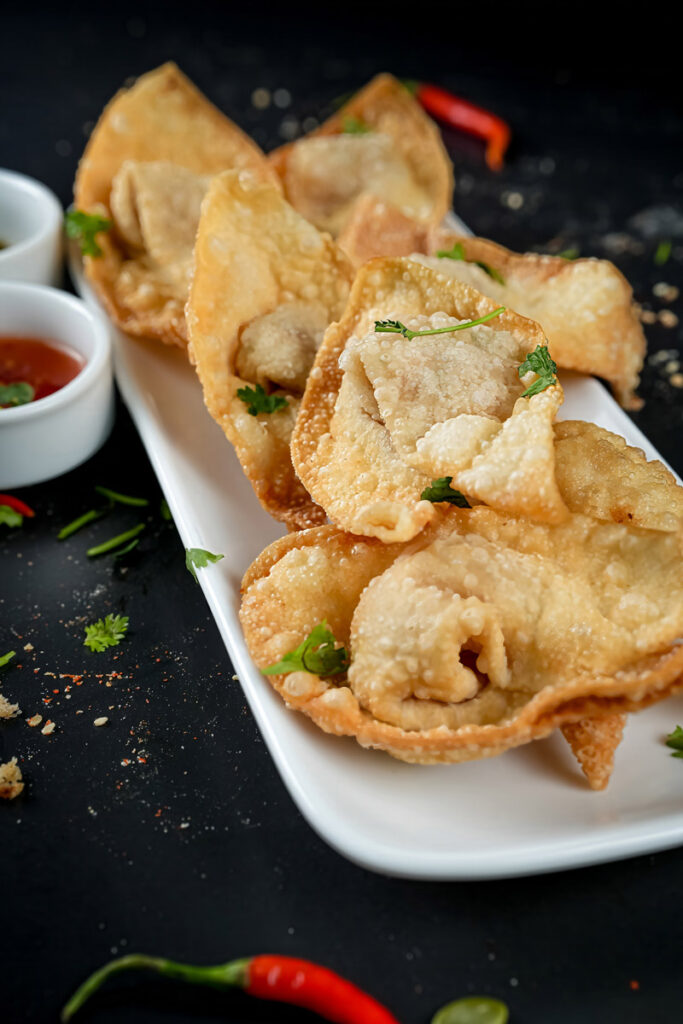
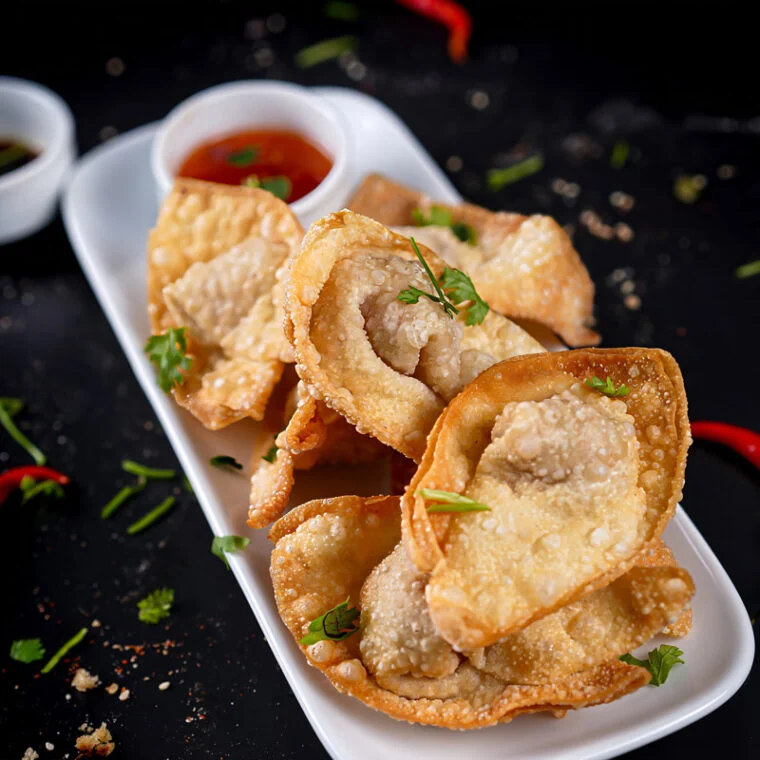
Fry for 2-4 minutes per batch, turning occasionally, until they achieve a beautiful golden-brown color and are crispy on all sides. The exact time will depend on the size of your wontons and the heat of your oil. Once cooked, use a slotted spoon or spider to remove the wontons from the oil.
Transfer the fried wontons to a baking sheet lined with paper towels to drain any excess oil. This step is crucial for maintaining their crispness. Serve them immediately while they are still hot and at their peak crispness. The aroma alone will be enough to entice everyone!
Fried seafood wontons are incredibly versatile when it comes to serving. They are fantastic on their own as an appetizer, but truly shine when paired with a complementary dipping sauce. Classic choices include sweet chili sauce, a simple mixture of soy sauce and ginger, or a spicy Sriracha mayonnaise.
For an elevated presentation, consider garnishing your finished wontons with a sprinkle of fresh chopped spring onions or a dash of toasted sesame seeds. They also make an excellent side dish for noodle soups, fried rice, or as part of a larger dim sum spread.
Here are some essential tips for ensuring your fried seafood wontons are a resounding success:
- Don’t overfill: Less is more when it comes to filling, preventing bursts.
- Seal securely: A good seal is non-negotiable for structural integrity.
- Maintain oil temperature: Consistent heat prevents sogginess and ensures even browning.
- Fry in batches: Never overcrowd the pan.
- Taste the filling: Before wrapping, cook a tiny bit of the filling and taste to adjust seasonings.
- Keep wrappers moist: Cover unused wrappers with a damp cloth to prevent drying.
Even with the best intentions, sometimes things go awry. If your wontons turn out soggy, it’s likely due to insufficient oil temperature or overcrowding the pan. If they burst, the filling might have been too wet, or the wrappers weren’t sealed properly. Uneven browning usually indicates inconsistent oil temperature or not turning the wontons enough.
Don’t be afraid to experiment with variations! Consider adding finely diced water chestnuts for an extra crunch, or shredded carrots for a touch of sweetness and color. A pinch of red chili flakes in the filling can add a delightful kick for those who enjoy a spicier profile. You could also explore different seafood combinations, perhaps adding scallops or mussels.
For a healthier alternative, these seafood wontons can also be steamed or boiled. Steamed wontons offer a softer texture and a purer taste of the filling, while boiled wontons are often served in a light broth. The filling recipe remains largely the same, only the cooking method changes.
If you’ve prepared more wontons than you can eat, both cooked and uncooked versions can be stored. Uncooked wontons can be arranged in a single layer on a parchment-lined tray, frozen until solid, then transferred to an airtight container or freezer bag for up to one month. Fry them directly from frozen, adding a minute or two to the cooking time.
Cooked fried wontons are best enjoyed fresh, as they lose some crispness upon cooling. However, they can be stored in an airtight container in the refrigerator for 1-2 days. To reheat, place them in a preheated oven or air fryer at 180°C (350°F) for 5-10 minutes until crispy again.
While often considered an indulgence, homemade seafood wontons can be part of a balanced diet when prepared thoughtfully. The lean protein from the seafood and fresh aromatics offer nutritional benefits. Controlling the amount of oil used during frying and serving with lighter dipping sauces can further enhance their health profile.
In conclusion, mastering fried seafood wontons is a rewarding culinary endeavor that brings the vibrant flavors of Asian cuisine into your home. With fresh ingredients, careful preparation, and attention to detail in wrapping and frying, you can consistently create a truly exceptional appetizer. So, roll up your sleeves, gather your ingredients, and prepare to delight your taste buds with these irresistible crispy parcels of seafood goodness!
This guide provides you with all the insights and practical advice you need to confidently tackle this dish. Experiment with flavors, refine your techniques, and most importantly, enjoy the process of creating something truly delicious from scratch. Happy cooking!