
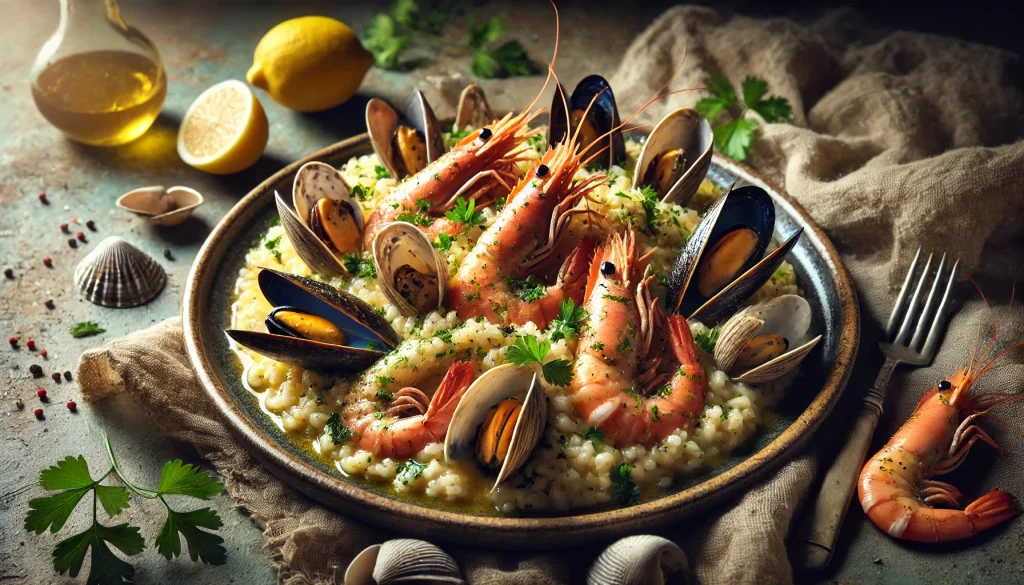

Before we dive into the recipe, let’s talk about the key ingredients. Quality is paramount when it comes to seafood, so sourcing the freshest possible ingredients is essential. For the risotto itself, Arborio rice is the traditional choice, known for its ability to absorb liquid while maintaining a firm core. Squid ink is the star of the show, lending its distinctive color and oceanic flavor. A good quality fish stock is also crucial, providing the base for the risotto’s rich taste.
- 1 pound fresh mixed seafood (such as shrimp, scallops, mussels, clams, and calamari)
- 1 tablespoon olive oil
- 1 small onion, finely chopped
- 2 cloves garlic, minced
- 1 1/2 cups Arborio rice
- 1/2 cup dry white wine
- 4-6 cups hot fish stock
- 2-4 tablespoons squid ink (depending on desired intensity)
- 2 tablespoons butter
- 1/4 cup grated Parmesan cheese
- Fresh parsley, chopped (for garnish)
- Salt and pepper to taste
Preparing the Seafood: The first step is to prepare your seafood. If using frozen seafood, thaw it completely before starting. For fresh seafood, clean it thoroughly. Devein the shrimp, scrub the mussels and clams, and rinse the scallops and calamari. Cut the calamari into rings or bite-sized pieces.
Sautéing the Aromatics: In a large, heavy-bottomed pot or Dutch oven, heat the olive oil over medium heat. Add the chopped onion and cook until softened, about 5 minutes. Add the minced garlic and cook for another minute until fragrant, being careful not to burn it.
Toasting the Rice: Add the Arborio rice to the pot and toast it for 2-3 minutes, stirring constantly. This step is crucial for developing the risotto’s creamy texture. Toasting the rice helps to create a barrier that prevents it from becoming mushy during cooking.
Deglazing with Wine: Pour in the dry white wine and stir until it is completely absorbed by the rice. This adds acidity and complexity to the risotto. The alcohol will evaporate, leaving behind a subtle flavor that complements the seafood.
Adding the Fish Stock: Now it’s time to start adding the fish stock. Keep the stock hot in a separate saucepan. Add about 1 cup of hot stock to the rice, stirring constantly until it is almost completely absorbed. Continue adding stock, one cup at a time, stirring continuously and allowing each addition to be absorbed before adding the next. This process takes about 20-25 minutes.
Incorporating the Squid Ink: About halfway through the cooking process, when the rice is al dente (firm to the bite), stir in the squid ink. Start with 2 tablespoons and add more to achieve your desired color and flavor intensity. The squid ink will turn the risotto a deep, dramatic black.
Cooking the Seafood: In a separate skillet, heat a tablespoon of olive oil over medium-high heat. Add the prepared seafood and cook until it is just cooked through. Be careful not to overcook the seafood, as it will become tough and rubbery. Shrimp and scallops usually take about 2-3 minutes per side, while mussels and clams will open when they are done.
Combining Seafood and Risotto: Once the seafood is cooked, gently fold it into the risotto. Stir until everything is well combined and heated through. Reserve a few pieces of seafood for garnish.
Finishing Touches: Remove the risotto from the heat and stir in the butter and Parmesan cheese. This will add richness and creaminess to the dish. Season with salt and pepper to taste.
Serving the Risotto: Serve the Seafood Risotto Nero immediately, garnished with fresh parsley and the reserved seafood. A squeeze of lemon juice can also brighten the flavors.
- Use High-Quality Ingredients: The better the ingredients, the better the final dish will taste.
- Keep the Stock Hot: Adding cold stock will lower the temperature of the rice and disrupt the cooking process.
- Stir Constantly: Stirring helps to release the starch in the rice, creating the creamy texture that is characteristic of risotto.
- Don’t Overcook the Seafood: Overcooked seafood is tough and rubbery. Cook it just until it is cooked through.
- Serve Immediately: Risotto is best served immediately, as it will continue to absorb liquid and become mushy if left to sit.
- Vegetarian Risotto Nero: Omit the seafood and use vegetable stock instead of fish stock. Add roasted vegetables such as mushrooms, zucchini, and bell peppers.
- Spicy Risotto Nero: Add a pinch of red pepper flakes to the risotto for a touch of heat.
- Lemon Risotto Nero: Add lemon zest and juice to the risotto for a bright, citrusy flavor.
Leftover Seafood Risotto Nero can be stored in an airtight container in the refrigerator for up to 2 days. Reheat gently in a saucepan over low heat, adding a little broth or water to loosen it up. Be aware that the texture may change slightly upon reheating.
The Art of Risotto: Understanding the Process
Making risotto is more than just following a recipe; it’s about understanding the process. The constant stirring is crucial because it encourages the rice to release its starches, creating that signature creamy texture. Think of it as coaxing the rice to share its essence with the broth, slowly transforming into a velvety, flavorful dish.
Choosing the Right Rice: Arborio and Beyond
While Arborio is the most common choice for risotto, other varieties like Carnaroli and Vialone Nano offer slightly different textures and starch contents. Carnaroli is often considered the ‘king’ of risotto rice due to its higher starch content and ability to maintain its shape. Vialone Nano is smaller and plumper, resulting in a creamier texture. Experimenting with different rice varieties can add a new dimension to your risotto.
The Importance of Quality Fish Stock
The fish stock is the backbone of Seafood Risotto Nero. A homemade stock made from fish bones, vegetable scraps, and aromatics will provide the most intense flavor. However, a good quality store-bought fish stock can also work well. Look for a stock that is low in sodium and free from artificial flavors and preservatives. Avoid using bouillon cubes, as they often lack the depth of flavor needed for a truly delicious risotto.
Squid Ink: More Than Just Color
Squid ink is not just a food coloring; it’s a flavor enhancer. It adds a subtle briny, oceanic taste to the risotto that complements the seafood perfectly. When purchasing squid ink, look for a reputable brand that uses natural squid ink without any additives. Squid ink can be found in specialty food stores, Italian delis, or online.
Mastering the Al Dente Texture
The perfect risotto should be al dente, meaning ‘to the tooth’ in Italian. The rice should be firm but not hard, with a slight bite in the center. Achieving this texture requires careful attention and constant tasting. As you add the stock, keep tasting the rice to monitor its progress. Remove the risotto from the heat when it is just al dente, as it will continue to cook from its own heat.
Pairing Seafood with Risotto Nero
While the recipe calls for a mix of seafood, you can customize it to your liking. Shrimp, scallops, mussels, clams, and calamari are all excellent choices. You can also add other types of seafood, such as lobster, crab, or octopus. When selecting seafood, choose varieties that complement each other in terms of flavor and texture. For example, the sweetness of scallops pairs well with the brininess of mussels.
The Role of Wine in Risotto
Adding white wine to the risotto not only adds flavor but also helps to deglaze the pot, lifting any browned bits from the bottom and incorporating them into the dish. Choose a dry white wine with good acidity, such as Sauvignon Blanc, Pinot Grigio, or Vermentino. Avoid using sweet or oaky wines, as they will clash with the flavors of the seafood.
Parmesan Cheese: A Must-Have Ingredient
Parmesan cheese adds richness, saltiness, and umami to the risotto. Use freshly grated Parmesan cheese for the best flavor and texture. Avoid using pre-grated cheese, as it often contains cellulose and other additives that can prevent it from melting properly. Pecorino Romano, a sheep’s milk cheese, can also be used in combination with Parmesan for a more complex flavor.
Garnishing and Serving Suggestions
Garnishing the risotto with fresh parsley adds a pop of color and freshness. Other garnishes that work well include lemon wedges, microgreens, and a drizzle of olive oil. Serve the risotto immediately in warm bowls. A side of crusty bread is perfect for soaking up the creamy sauce.
Troubleshooting Common Risotto Problems
- Mushy Risotto: This is usually caused by adding too much stock at once or not stirring frequently enough. Be sure to add the stock gradually and stir constantly.
- Dry Risotto: This is usually caused by not adding enough stock. Add more stock, one cup at a time, until the risotto reaches the desired consistency.
- Undercooked Rice: This is usually caused by not cooking the risotto long enough. Continue cooking the risotto, adding more stock as needed, until the rice is al dente.
- Bland Risotto: This is usually caused by not using enough salt or flavorful stock. Season the risotto generously with salt and pepper, and use a high-quality fish stock.
Elevating Your Risotto Presentation
Presentation is key when serving Seafood Risotto Nero. To elevate your dish, consider using a ring mold to create a perfectly shaped mound of risotto on each plate. Arrange the seafood attractively on top, and garnish with a sprig of fresh herbs. A drizzle of high-quality olive oil can also add a touch of elegance.
By following these tips and techniques, you can master the art of Seafood Risotto Nero and impress your family and friends with a restaurant-quality dish. Enjoy the process, and don’t be afraid to experiment with different ingredients and flavors to create your own unique version of this classic Italian dish.
In conclusion, Seafood Risotto Nero is a testament to the beauty of simplicity and the power of fresh ingredients. It’s a dish that requires patience and attention to detail, but the reward is a creamy, flavorful, and visually stunning masterpiece. So, gather your ingredients, put on some music, and embark on a culinary adventure that will transport you to the shores of Italy.