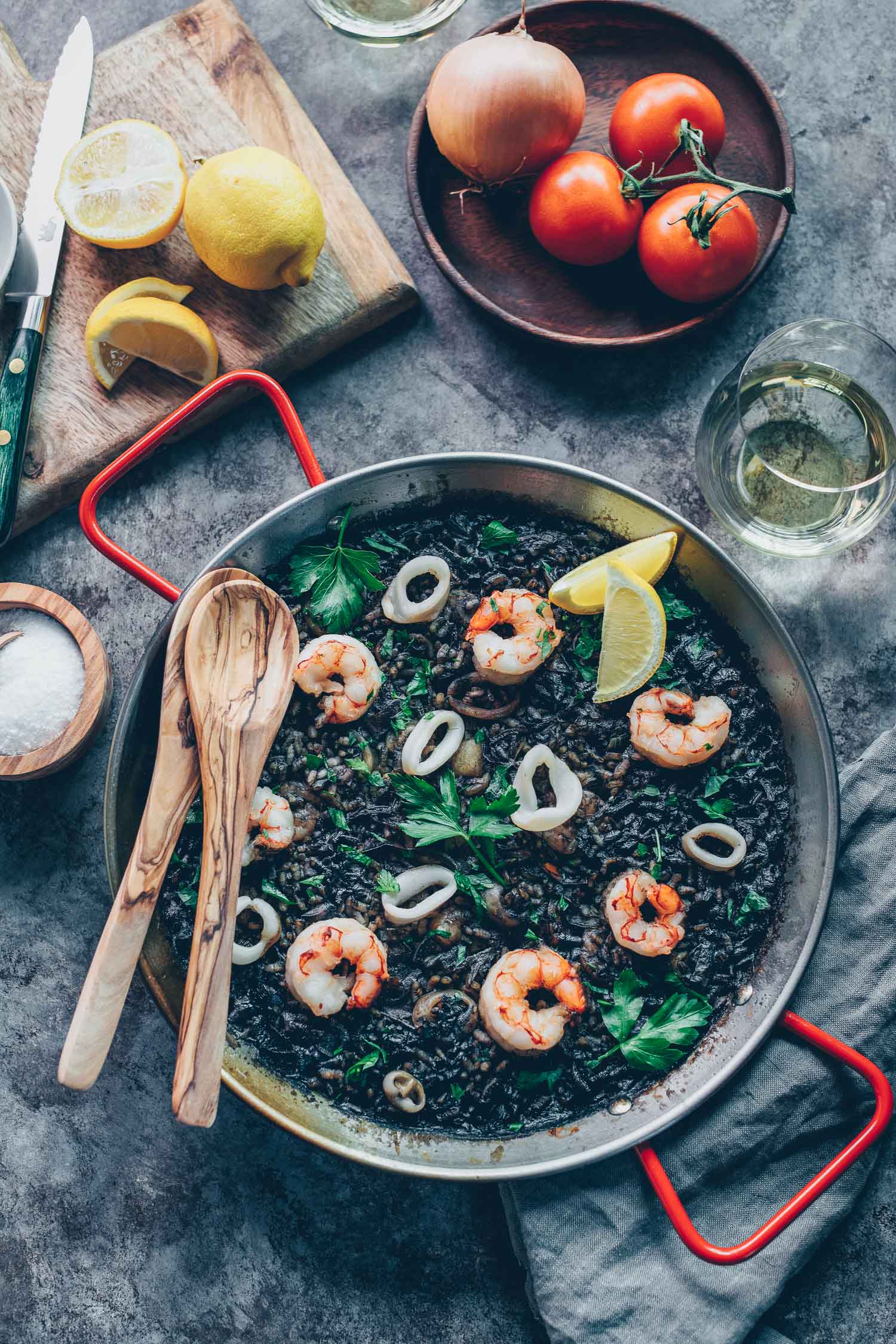
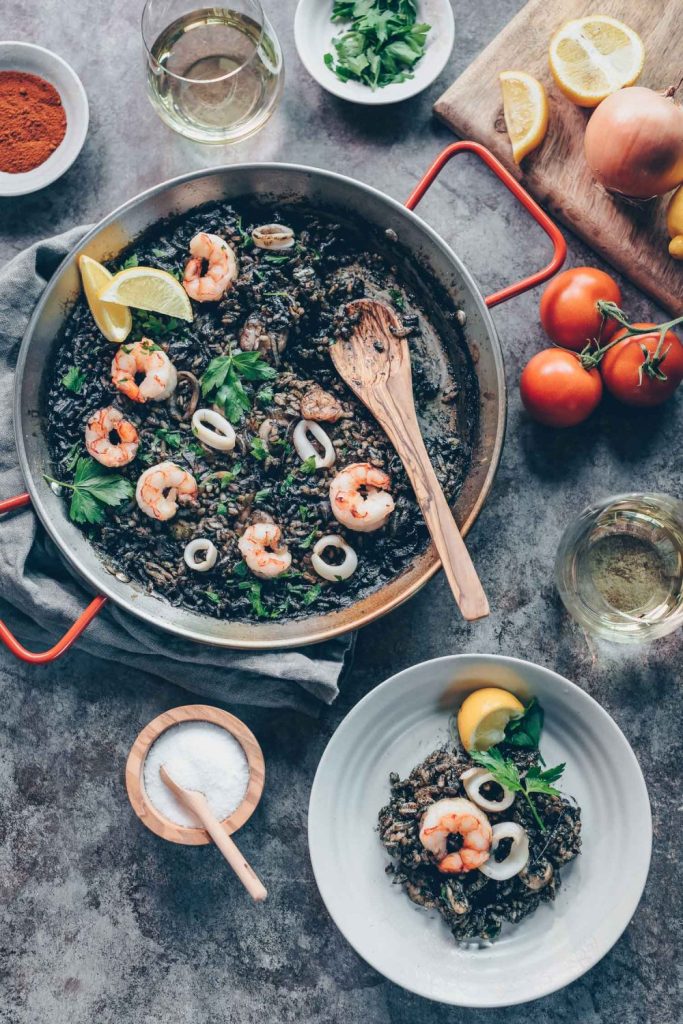

The allure of Paella Negra extends far beyond its striking visual presentation. The squid ink, the star ingredient responsible for its distinctive color, imbues the rice with a subtle yet profound brininess and a complex umami profile that enhances the fresh seafood. This isn’t just about appearance; it’s about a complete sensory journey where sight, smell, and taste converge to create something truly special. For those seeking to explore beyond the traditional golden paella, Paella Negra offers an exciting and rewarding challenge.
Understanding the roots of paella helps appreciate its diverse forms. Traditionally, paella originated in the fields of Valencia, cooked over an open fire by farm laborers using rice, vegetables, and whatever proteins were readily available, often rabbit, chicken, or snails. As the dish evolved and spread to coastal areas, seafood naturally became a prominent addition. Paella Negra, with its distinct use of squid ink, represents a sophisticated adaptation, showcasing the rich maritime heritage of Spain.
What truly sets Paella Negra apart is its commitment to flavor integration. Unlike other paellas where ingredients are distinct, here, the squid ink permeates every grain of rice, creating a harmonious and unified taste. The interplay between the sweet notes of bell peppers, the aromatic garlic, the fresh seafood, and the savory depth of the ink makes each spoonful a revelation. It’s a testament to how a single ingredient can redefine an entire dish, elevating it from good to extraordinary.
Before embarking on the cooking process, the importance of mise en place – everything in its place – cannot be overstated. Spanish cooking, especially paella, thrives on precision and timing. Having all your ingredients prepped, measured, and ready to go will ensure a smooth and enjoyable cooking experience, allowing you to focus on the nuances of each step rather than scrambling for forgotten items. This meticulous preparation is the first secret to a successful Paella Negra.
Key Ingredients: The Foundation of Flavor. The success of any paella, particularly Paella Negra, hinges entirely on the quality and freshness of its components. Each ingredient plays a vital role in building the layered flavors that define this iconic dish. Investing in the best possible produce and seafood will undoubtedly yield the most authentic and delicious results.
The choice of rice is paramount. For an authentic paella, a short-grain Spanish rice like Bomba or Calasparra is highly recommended. These varieties are known for their ability to absorb a tremendous amount of liquid and flavor while remaining firm and separate, without becoming mushy. If Spanish rice is unavailable, a good quality short-grain Arborio rice (commonly used for risotto) can be an acceptable substitute, though it will yield a slightly creamier texture.
For the seafood component, freshness is non-negotiable. A classic Paella Negra often features
- Squid: Fresh, cleaned squid (calamari), cut into rings or bite-sized pieces, is essential as it is the source of the ink and contributes significantly to the dish’s flavor.
- Shrimp: Medium to large shrimp, peeled and deveined, with tails on or off according to preference.
- Mussels and/or Clams: Thoroughly scrubbed and de-bearded (for mussels), they add a wonderful briny sweetness as they open during cooking.
- Optional additions: Scallops, firm white fish (like cod or snapper) cut into chunks, or even small pieces of octopus can elevate the seafood medley further.
The sofrito is the aromatic heart of Spanish cuisine and forms the flavor base for Paella Negra. This slow-cooked mixture typically includes finely diced onions, garlic, and bell peppers (often red, for a touch of sweetness and color contrast before the ink is added). Some recipes also incorporate ripe, grated tomatoes, which add acidity and depth. The sofrito is built slowly, allowing the vegetables to caramelize and release their full spectrum of flavors.
The broth is the liquid foundation that cooks the rice and infuses it with flavor. A high-quality fish or seafood stock is crucial. Ideally, make your own by simmering fish bones, shrimp shells, and aromatic vegetables. If using store-bought, opt for a low-sodium, good-quality brand to control the salt content. The broth should be warm or hot when added to the paella pan to maintain a consistent cooking temperature.
Beyond the core ingredients, good quality extra virgin olive oil is essential for sautéing and building the sofrito. While not traditionally found in Paella Negra (which relies on the ink for color), a pinch of saffron threads can be bloomed in a little warm broth and added to enhance overall depth, though its golden hue will be masked by the squid ink. It’s an optional but luxurious addition.
Seasonings are kept relatively simple to allow the natural flavors to shine. Sweet paprika (pimentón dulce) adds a smoky warmth, while salt and freshly ground black pepper are adjusted to taste. A bay leaf can also be added to the sofrito for an extra layer of aroma.
Finally, the garnishes elevate the presentation and provide a fresh counterpoint to the rich paella. Fresh lemon wedges are indispensable, offering a bright, acidic squeeze that cuts through the richness. Chopped fresh parsley adds a pop of color and herbaceous freshness. Many also serve Paella Negra with a dollop of homemade aioli (garlic mayonnaise), which provides a creamy, pungent contrast.
Essential Equipment for Paella Negra. Having the right tools makes a significant difference in preparing an authentic paella. While some can be substituted, certain items are designed specifically for this dish and will yield the best results.
The most critical piece of equipment is the paella pan itself. These wide, shallow, and typically carbon steel pans are designed for even heat distribution and maximum surface area for the rice to cook in a thin layer, crucial for developing the coveted socarrat. Choose a pan size appropriate for your serving needs; a 15-inch (38 cm) pan is suitable for 4-6 servings. Avoid deep pots, as they will steam the rice rather than allow it to develop the desired texture.
Other useful tools include a sturdy wooden spoon for stirring the sofrito and rice initially (but not the paella once the broth is added), a sharp knife and cutting board for preparing ingredients, and a ladle for adding broth. A large, flat spatula can be helpful for serving and scraping up the socarrat.
Step-by-Step Cooking Guide: Crafting Your Paella Negra. Follow these detailed steps to create a truly authentic and delicious Paella Negra. Precision and patience are your best allies in this culinary endeavor.
Begin with thorough preparation. Clean and cut your squid into rings or bite-sized pieces. Peel and devein the shrimp. Scrub mussels and clams, discarding any that are open and don’t close when tapped. Finely dice your onions, garlic, and bell peppers. Grate your tomatoes if using. Measure out your rice, broth, and squid ink. Have all ingredients within easy reach of your cooking station.
Heat a generous amount of olive oil in your paella pan over medium-high heat. Add the squid and shrimp (and any other quick-cooking seafood like scallops). Sauté briefly until just cooked through and lightly browned, about 1-2 minutes per side. Remove the seafood from the pan and set aside. This step lightly cooks the seafood and infuses the oil with its flavor.
Reduce the heat to medium. Add the diced onions and bell peppers to the same pan, using the flavored oil. Cook slowly, stirring occasionally, until they soften and become translucent, about 8-10 minutes. Add the minced garlic and cook for another minute until fragrant. If using, add the grated tomatoes and cook down until the liquid has evaporated and the mixture is thick, about 5-7 minutes. This is your rich sofrito base.
Add the paella rice to the sofrito in the pan. Stir well to coat every grain of rice with the oil and sofrito. Toast the rice for 2-3 minutes, stirring constantly. This step, known as ‘nacarado,’ helps the rice absorb flavors and prevents it from becoming sticky, ensuring individual grains later.
Pour the warm seafood broth into the pan. Immediately add the squid ink, stirring gently but thoroughly to dissolve it and distribute the black color evenly throughout the broth and rice. Add the paprika and season with salt and pepper to taste. Bring the liquid to a gentle boil.
Once boiling, arrange the reserved cooked seafood (squid, shrimp, scallops) and the fresh mussels and clams evenly over the rice. Gently nestle them into the liquid. Reduce the heat to medium-low, so the paella maintains a steady, gentle simmer. Crucially, do not stir the rice from this point forward. Stirring releases starch, which can make the paella gummy and prevent the formation of the socarrat.
Allow the paella to simmer undisturbed for approximately 15-20 minutes, or until most of the liquid has been absorbed by the rice. The mussels and clams should open during this time; discard any that remain closed. The key is to let the rice cook evenly and form a crust at the bottom.
The socarrat is the prized, crispy, caramelized layer of rice that forms at the bottom of the paella pan. To achieve it, once most of the liquid is absorbed and the rice looks almost done, increase the heat to medium-high for the last 2-5 minutes of cooking. Listen for a gentle sizzling sound and smell a toasted aroma. Be careful not to burn it. You can gently peek with a spoon to check for a golden-brown crust. If the rice seems too dry before the socarrat forms, you can add a tiny splash of hot broth around the edges.
Once the paella is cooked and the socarrat has formed, remove the pan from the heat. Cover the paella loosely with aluminum foil or a clean kitchen towel and let it rest for 5-10 minutes. This resting period allows the flavors to meld, and the rice to finish cooking and firm up, ensuring perfect texture.
Tips and Tricks for Paella Negra Perfection. Achieving an authentic Paella Negra requires attention to detail and a few insider tips. Master these, and your paella will be truly exceptional.
Always prioritize ingredient quality. Fresh, high-quality seafood and a good Spanish paella rice will make a world of difference. The better your ingredients, the richer and more authentic your paella will taste. Don’t skimp on the squid ink; pure ink is key.
Ensure your broth is warm or hot when added to the paella. Adding cold broth will shock the rice, interrupting the cooking process and potentially leading to unevenly cooked grains. Keep it simmering on a separate burner.
Heat distribution is vital. If cooking on a stovetop, rotate the pan occasionally to ensure even cooking, especially if your burner is smaller than your paella pan. If using an outdoor grill or paella burner, ensure the flame covers the entire base of the pan evenly.
The art of the socarrat takes practice. Don’t be afraid to experiment with the heat at the end. The goal is a crispy, slightly chewy crust, not burnt rice. Listen to the sounds the paella makes – the gentle crackle tells you it’s forming.
Variations and Customizations. While classic Paella Negra is a seafood affair, you can adapt the dish to suit your preferences or what’s available.
Feel free to experiment with different seafood combinations. While squid is essential for the ink, you can add crab, lobster, or even firm white fish. Just be mindful of cooking times; add delicate seafood later in the process.
For an added layer of flavor and texture, consider incorporating vegetables beyond the sofrito. Green peas, fava beans, or asparagus tips can be added during the last 5-7 minutes of cooking for a fresh counterpoint. While not traditional for Paella Negra, some enjoy a touch of spice with a pinch of red pepper flakes.
Serving Your Paella Negra. The presentation of Paella Negra is as important as its preparation. Serve it directly from the pan, allowing guests to appreciate its rustic beauty and the communal spirit it embodies.
A generous squeeze of fresh lemon juice over each serving is essential. The acidity brightens the flavors and cuts through the richness of the squid ink and seafood. A dollop of creamy, pungent homemade aioli (garlic mayonnaise) is also a traditional and highly recommended accompaniment, adding a luxurious touch.
For wine pairings, a crisp, dry white wine like Albariño, Verdejo, or a dry rosé from Spain would complement the seafood and the paella’s robust flavors beautifully. A light-bodied red, such as a young Garnacha, could also work if you prefer red wine.
Common Pitfalls to Avoid:
- Over-stirring: This is the most common mistake, leading to gummy rice and no socarrat.
- Adding too much liquid: Stick to the recommended broth ratio; too much liquid results in boiled, rather than perfectly cooked, rice.
- Using the wrong rice: Long-grain rice will not give you the desired texture.
- Cooking on too high heat: This can burn the bottom before the top cooks, or evaporate liquid too quickly.
- Not resting the paella: Skipping this step can result in unevenly cooked rice.
In conclusion, Paella Negra is more than just a dish; it’s an experience, a celebration of Spanish culinary heritage, and a testament to the transformative power of simple, fresh ingredients. By following this comprehensive guide, from understanding the nuances of each component to mastering the cooking techniques, you can confidently recreate this dramatic and delicious squid ink seafood paella in your own kitchen. Gather your ingredients, invite your loved ones, and prepare to embark on a truly unforgettable gastronomic adventure. Buen provecho!