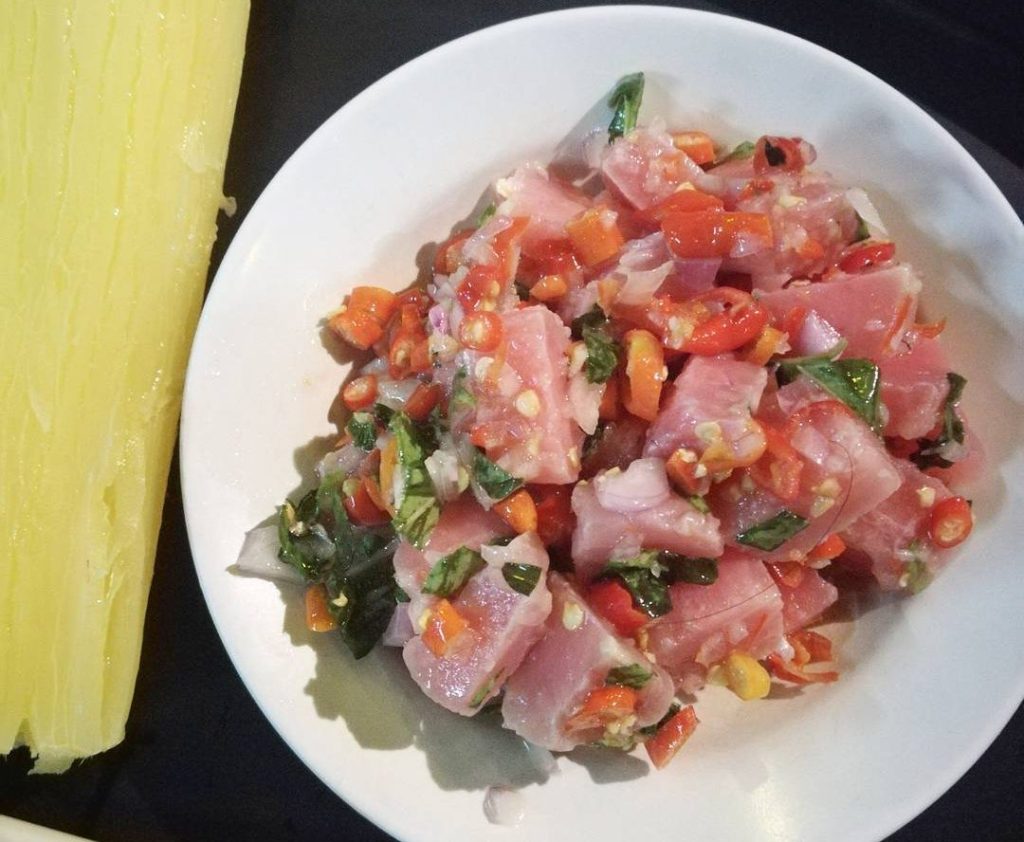

Often referred to as ‘Ternate Sashimi’ by travelers and food enthusiasts, Gohu Ikan is a raw fish salad that originates from Ternate, a historic spice island. Unlike its Japanese counterpart which relies heavily on soy sauce and wasabi, Gohu Ikan utilizes the vibrant, tropical ingredients abundant in the region: calamansi, bird’s eye chilies, shallots, and the distinctively crunchy Kenari nuts.
The dish is a testament to the local philosophy of food: fresh ingredients need little manipulation to taste extraordinary. The term ‘Gohu’ translates to a raw salad or mixture, and when prepared with tuna (‘Ikan Tuna’), it becomes a dish that is simultaneously spicy, sour, savory, and incredibly refreshing. It is a staple for local fishermen and a celebratory dish served at gatherings.
The Importance of the Star Ingredient: Fresh Tuna
The success of Gohu Ikan relies entirely on the quality of the fish. Because the fish is not cooked with heat in the traditional sense, but rather cured with acid and hot oil, starting with the freshest possible catch is non-negotiable. In Ternate, locals often use Yellowfin tuna (Madidihang) or Skipjack tuna (Cakalang).
When selecting tuna for Gohu Ikan, look for flesh that is a deep, translucent red or pink, depending on the species. The meat should look moist and shiny, not dull or matte. Avoid any fish that has a rainbow sheen or looks dried out, as these are signs of oxidation and age.
Texture and Smell: The flesh should be firm to the touch and spring back when pressed. If your finger leaves an indentation, the fish is likely past its prime. Furthermore, fresh tuna should smell like the clean ocean breeze. A strong ‘fishy’ odor or an ammonia-like scent indicates decomposition, and such fish should never be consumed raw.
Essential Ingredients for Authentic Flavor
To recreate the authentic taste of Ternate in your kitchen, you will need to gather specific aromatics. While the tuna provides the body, the dressing provides the soul of the dish. The primary acid source is Lemon Cui (Calamansi). This small citrus fruit offers a unique floral aroma and a sharp acidity that ‘cooks’ the surface of the fish.
Shallots and Chilies: You will need a generous amount of fresh red shallots (bawang merah) and spicy bird’s eye chilies (cabe rawit). The shallots provide a pungent sweetness and crunch, while the chilies deliver the signature heat that makes this dish addictive.
Kenari Nuts: Perhaps the most distinctive ingredient in North Maluku cuisine is the Kenari nut. These nuts are native to the region and offer a buttery, creamy texture similar to macadamias but with a more pronounced crunch. If you cannot find Kenari nuts, toasted macadamia nuts or almonds can serve as acceptable substitutes.
Coconut Oil: The final touch involves hot coconut oil. Traditionally, high-quality, fragrant coconut oil is used. This oil is heated and poured over the mixture, slightly searing the aromatics and coating the fish in a glossy, savory sheen.
Step-by-Step Preparation: Handling the Fish
Begin by ensuring your workspace and tools are impeccably clean to prevent cross-contamination. Using a sharp knife, remove the skin and any dark bloodlines from the tuna fillet. The bloodline has a strong metallic taste that can overpower the delicate flavor of the meat.
Cut the tuna into small, uniform cubes, approximately 1 cm by 1 cm. The size is important; if the cubes are too large, the flavors won’t penetrate effectively, and if they are too small, the fish may lose its texture and become mushy. Place the diced tuna in a clean, non-reactive bowl (glass or ceramic is best).
The Curing Process
Once the tuna is diced, it is time to apply the first layer of flavor and cure the protein. Squeeze the juice of several Calamansi limes (Lemon Cui) over the fish. Add a pinch of sea salt at this stage. Toss the fish gently to ensure every cube is coated in the lime juice and salt.
Let the fish sit for a few minutes. You will notice the exterior of the tuna cubes turning slightly opaque or white. This is the acid denaturation process, similar to the South American ceviche. However, unlike ceviche which might sit for a long time, Gohu Ikan is usually prepared quickly to maintain the raw texture of the interior.
Preparing the Aromatics
While the fish is briefly marinating, prepare your aromatics. Slice the red shallots thinly. For the bird’s eye chilies, you can either slice them thinly for a burst of heat or roughly chop them if you prefer a more distributed spice. Coarsely chop the roasted Kenari nuts; you want them to remain chunky to provide a textural contrast to the soft fish.
Add the sliced shallots, chilies, and chopped nuts to the bowl with the tuna. Do not mix them yet; simply layer them on top of the curing fish. This setup prepares the dish for the most dramatic step of the process: the oil flash.
The Hot Oil Technique
Heat a few tablespoons of coconut oil in a small pan. You want the oil to be very hot, almost to the smoking point. The goal is to flash-sear the aromatics without cooking the fish through.
Carefully pour the sizzling hot oil directly over the pile of shallots, chilies, and nuts sitting on top of the tuna. You should hear a satisfying sizzle as the hot oil hits the moisture in the aromatics. This step releases the volatile oils in the shallots and chilies, making them more fragrant and slightly mellowing their raw bite.
Mixing and Balancing
Immediately after pouring the oil, add a handful of fresh lemon basil leaves (kemangi). The heat from the oil will wilt the basil slightly, releasing a burst of herbal freshness. Now, using a spoon, gently fold all the ingredients together.
Taste the mixture. This is the critical moment for adjustment. The flavor profile should be a perfect triangle of salt, acid, and heat. If it feels too flat, add more salt. If it lacks ‘zing,’ a extra squeeze of lime is needed. The coconut oil should provide a savory mouthfeel that ties everything together.
Serving Suggestions
Gohu Ikan is best served immediately. It is not a dish that benefits from sitting in the refrigerator for hours, as the acid will eventually overcure the fish, making it tough and dry. Serve it on a chilled platter to maintain freshness.
In Ternate and the surrounding North Maluku islands, Gohu Ikan is rarely eaten alone. It is traditionally accompanied by carbohydrates that balance its intensity. Pisang Goreng (fried bananas) or Pisang Rebus (boiled bananas) are classic pairings. The starchy, slightly sweet bananas provide a perfect foil to the spicy, acidic fish.
Another popular accompaniment is Kasbi (cassava) or Papeda (sago porridge), though fried or boiled bananas remain the most iconic partner for Gohu. The combination of warm, starchy bananas and cold, spicy raw fish creates a delightful temperature and texture contrast.
Health Benefits
Beyond its incredible taste, Gohu Ikan is a nutritional powerhouse. Tuna is an excellent source of lean protein and is rich in Omega-3 fatty acids, which are essential for heart health. The dish is low in carbohydrates and free from heavy creams or processed sugars.
The ingredients used—chilies, lime, and garlic/shallots—are rich in antioxidants and vitamins. The use of coconut oil provides medium-chain triglycerides (MCTs), which are a good source of energy. It is a meal that fits well within paleo, keto, and pescatarian diets.
Variations of the Dish
While the Ternate version is the most famous, variations exist across the Maluku islands and Sulawesi. Some versions might include a paste of chili and roasted shrimp paste (terasi) for a deeper umami flavor, though the Ternate style tends to keep it cleaner and fresher.
For those who are hesitant about raw fish, you can modify the recipe by searing the tuna block on the outside before dicing it (creating a ‘tataki’ style), or by letting the fish sit in the lime juice for a longer period to ‘cook’ it more thoroughly through acid denaturation.
Safety Precautions
When preparing raw seafood at home, safety is paramount. Always purchase ‘sashimi-grade’ fish from a reputable fishmonger. This usually means the fish has been flash-frozen at extremely low temperatures to kill any potential parasites.
Keep the fish cold at all times until you are ready to serve. If you are preparing this for a dinner party, keep the bowl over a larger bowl filled with ice while you work. Do not leave the finished dish out at room temperature for more than an hour.
Conclusion
Gohu Ikan Tuna khas Ternate is more than just a recipe; it is an experience of the North Maluku lifestyle. It captures the essence of the islands: the heat of the sun, the bounty of the sea, and the richness of the spice trade history. It is a dish that commands respect for its ingredients and rewards the eater with an explosion of pristine flavors.
By following these steps and respecting the quality of your ingredients, you can bring a taste of the Indonesian tropics to your dining table. Whether you are a seasoned sashimi lover or a curious culinary explorer, Gohu Ikan offers a unique and unforgettable gastronomic adventure.