
This article provides a comprehensive guide to creating the perfect Ifumie Seafood Kuah Kental at home. We will walk you through each step, from preparing the crispy noodles to crafting the luscious sauce, ensuring a delightful dining experience.
Before diving into the recipe, let’s gather the necessary ingredients. The key to a successful Ifumie Seafood Kuah Kental lies in the freshness and quality of the ingredients.
- 250g dried egg noodles (or fresh noodles, if available)
- Vegetable oil, for deep frying
- 200g shrimp, peeled and deveined
- 150g squid, cleaned and sliced into rings
- 100g fish balls, halved
- 100g crab sticks, sliced
- 100g bok choy, chopped
- 1 medium carrot, sliced thinly
- 100g cauliflower florets
- 50g snow peas
- 2 cloves garlic, minced
- 1 small onion, chopped
- 1 red chili, sliced (optional, for spice)
- 2 tablespoons vegetable oil, for stir-frying
- 4 cups chicken broth (or vegetable broth)
- 3 tablespoons cornstarch, mixed with 4 tablespoons water
- 2 tablespoons soy sauce
- 1 tablespoon oyster sauce
- 1 teaspoon sesame oil
- 1/2 teaspoon white pepper
- 1/4 teaspoon sugar (or to taste)
- Salt, to taste
Now that we have all our ingredients, let’s move on to the preparation. This involves several steps, but don’t worry, we’ll break it down into manageable sections.
-
Cook the noodles according to package instructions until al dente. Drain well.
-
Spread the cooked noodles on a tray and let them air dry for about 30 minutes to remove excess moisture. This will help them crisp up better during frying.
-
Heat vegetable oil in a wok or deep fryer to around 350°F (175°C).
-
Carefully add the noodles to the hot oil in batches. Fry until golden brown and crispy, about 2-3 minutes per batch.
-
Remove the crispy noodles with a slotted spoon and place them on a paper towel-lined plate to drain excess oil.
-
In a bowl, marinate the shrimp and squid with a pinch of salt and white pepper for about 15 minutes.
-
Heat vegetable oil in a wok or large skillet over medium-high heat.
-
Add the minced garlic and chopped onion. Sauté until fragrant and lightly golden, about 1-2 minutes.
-
If using, add the sliced red chili and sauté for a few seconds.
-
Add the marinated shrimp and squid. Stir-fry until they turn pink and opaque, about 2-3 minutes.
-
Add the fish balls and crab sticks. Stir-fry for another minute.
-
Add the bok choy, carrot, cauliflower, and snow peas. Stir-fry until the vegetables are slightly tender-crisp, about 3-4 minutes.
-
Pour the chicken broth into the wok with the seafood and vegetables.
-
Bring the mixture to a simmer.
-
In a small bowl, whisk together the cornstarch and water until smooth. This is your cornstarch slurry.
-
Slowly pour the cornstarch slurry into the simmering broth, stirring constantly to prevent lumps from forming.
-
Add the soy sauce, oyster sauce, sesame oil, white pepper, and sugar. Stir well to combine.
-
Taste the sauce and adjust the seasoning with salt, if needed. The sauce should be thick, savory, and well-balanced.
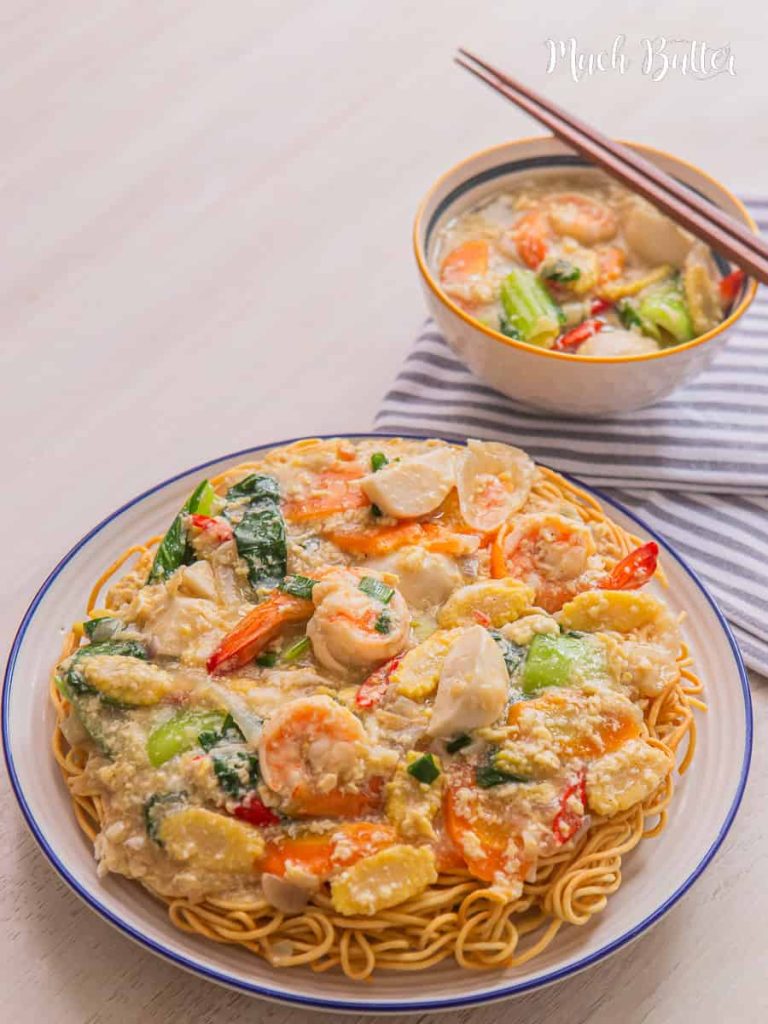
Now that all components are ready, it’s time to assemble the Ifumie Seafood Kuah Kental.
-
Place the crispy noodles on a serving plate.
-
Ladle the hot seafood and vegetable mixture with the thick savory sauce over the crispy noodles.
-
Garnish with additional sliced red chili or chopped green onions, if desired.
-
Serve immediately and enjoy!
- Use Fresh Seafood: Fresh seafood always tastes better. If possible, use fresh shrimp, squid, and fish for the best flavor.
- Adjust the Sauce Thickness: If you prefer a thicker sauce, add more cornstarch slurry. For a thinner sauce, use less cornstarch.
- Add More Vegetables: Feel free to add other vegetables like mushrooms, bean sprouts, or broccoli.
- Spice It Up: Increase the amount of red chili or add a dash of chili oil for extra heat.
- Protein Variations: Substitute or add other proteins like chicken, tofu, or beef.
- Noodle Variations: While egg noodles are traditional, you can experiment with other types of noodles like rice noodles or udon.
- Garnish Creatively: Garnish with fried shallots, cilantro, or a squeeze of lime juice for added flavor and visual appeal.
The key to a truly exceptional Ifumie Seafood Kuah Kental lies in the quality of the ingredients and the attention to detail in each step of the preparation process. Don’t be afraid to experiment with different flavors and textures to create a dish that perfectly suits your taste.
Ifumie Seafood Kuah Kental is more than just a dish; it’s an experience. The combination of crispy noodles, succulent seafood, and a rich, savory sauce is a treat for the senses. Whether you’re cooking for a special occasion or simply craving a delicious and satisfying meal, this recipe is sure to impress.
With a little practice and patience, you can master the art of making Ifumie Seafood Kuah Kental. So gather your ingredients, put on your apron, and get ready to embark on a culinary adventure. Your taste buds will thank you!
Enjoy your homemade Ifumie Seafood Kuah Kental, and share this delicious recipe with your friends and family. Happy cooking!
This dish can be stored in the refrigerator for up to 24 hours. However, the noodles will lose their crispiness. It is best to consume immediately after cooking. The sauce can be reheated and poured over freshly fried noodles if needed.
Creating a visually appealing presentation can enhance the dining experience. Arrange the noodles neatly on the plate and generously ladle the seafood and vegetable mixture over them. Garnish with fresh herbs or a sprinkle of sesame seeds to add a touch of elegance.
Mastering the art of making Ifumie Seafood Kuah Kental opens the door to a world of culinary possibilities. Experiment with different ingredients, flavors, and techniques to create your own signature version of this beloved dish. Embrace the creativity and passion that comes with cooking, and you’ll be amazed at what you can achieve in the kitchen.
Ultimately, the most important ingredient in any recipe is love. Cook with passion and dedication, and your Ifumie Seafood Kuah Kental will be a culinary masterpiece that delights everyone who tastes it.