
Before diving into the cooking process, it’s crucial to understand the foundation of successful scallop sautéing: the selection of high-quality scallops. The quality of your ingredients directly impacts the final dish. Look for dry-packed scallops, which haven’t been treated with phosphates. These scallops are naturally sweeter and will sear beautifully. Wet-packed scallops, on the other hand, are often treated with preservatives and may release excess water during cooking, hindering the browning process. Dry-packed scallops are typically a pale, creamy color and should have a fresh, slightly briny aroma. Avoid scallops that smell overly fishy or ammonia-like, as this indicates they are not fresh.
Once you’ve selected your dry-packed scallops, the next step is proper preparation. Pat the scallops thoroughly dry with paper towels. This is perhaps the most critical step in achieving a good sear. Excess moisture is the enemy of browning. The drier the surface of the scallop, the better the Maillard reaction will occur, resulting in a beautiful crust. Don’t be shy; really press the paper towels into the scallops to remove as much moisture as possible. This step alone can make a huge difference in the final texture and appearance of your dish.
Next, decide if you want to remove the small, tough muscle (the ‘foot’) from the side of the scallop. This is a matter of personal preference. Some people find it adds a slightly chewy texture, while others prefer to remove it for a more uniform and tender bite. If you choose to remove it, simply pinch it off with your fingers or use a small paring knife.
Now, it’s time to prepare your cooking station. You’ll need a heavy-bottomed skillet, preferably stainless steel or cast iron, as these materials distribute heat evenly and provide excellent browning. Choose a skillet large enough to cook your scallops in a single layer, as overcrowding will lower the pan’s temperature and prevent proper searing. Gather your ingredients and have them ready to go, as the cooking process is relatively quick.
The choice of cooking oil is also important. Opt for an oil with a high smoke point, such as avocado oil, canola oil, or clarified butter (ghee). Olive oil can be used, but be mindful of its smoke point; extra virgin olive oil has a lower smoke point and may burn before the scallops are properly seared. Heat the oil over medium-high heat until it shimmers and is almost smoking. The pan should be hot before you add the scallops.
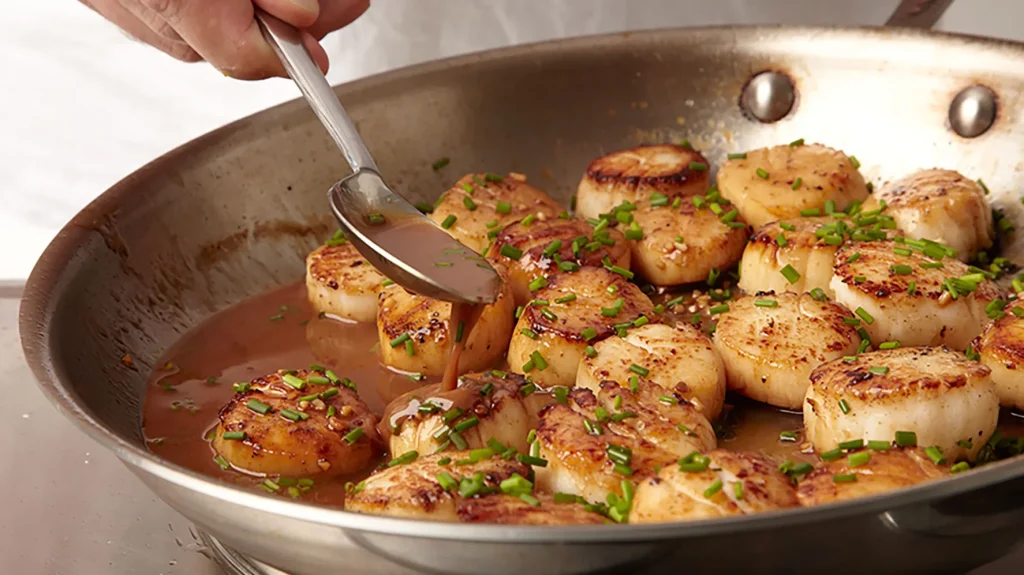
Once the oil is hot, carefully place the scallops in the skillet, ensuring they are not touching each other. This allows for even browning and prevents steaming. If you overcrowd the pan, the scallops will release moisture and steam instead of searing. Cook the scallops undisturbed for approximately 2-3 minutes per side, depending on their size and the heat of your pan. Resist the urge to move them around; let them develop a beautiful golden-brown crust.
The key to perfectly cooked scallops is to watch for visual cues. The scallops will naturally release from the pan when they are properly seared. You should be able to gently lift them with a spatula without resistance. The edges of the scallops will begin to turn opaque, and the underside will be a beautiful golden brown. Flip the scallops and cook for another 2-3 minutes, or until they are cooked through and slightly translucent in the center. Avoid overcooking, as this is the primary cause of tough scallops.
The cooking time will vary depending on the size of your scallops and the intensity of your heat. Smaller scallops will cook faster than larger ones. The internal temperature of the scallop should be around 120-130°F (49-54°C) for medium-rare, and 130-140°F (54-60°C) for medium. However, relying solely on temperature can be tricky, as the scallops continue to cook slightly after being removed from the heat. The visual cues – the golden-brown crust, the opaque edges, and the slightly translucent center – are the most reliable indicators of doneness.
Once the scallops are cooked to your liking, remove them from the skillet immediately. Overcooked scallops will continue to dry out and become tough, even after being removed from the heat. Transfer them to a plate and let them rest for a minute or two before serving. This allows the internal temperature to equalize, and the juices to redistribute, resulting in a more tender and flavorful scallop.
Now, let’s address some common pitfalls and how to avoid them. One of the most common mistakes is not drying the scallops thoroughly enough. As mentioned earlier, moisture is the enemy of a good sear. Make sure to pat the scallops dry with paper towels right before cooking. Another mistake is overcrowding the pan. Cook the scallops in batches if necessary, ensuring each scallop has enough space to sear properly.
Using a pan that’s not hot enough is another common error. The pan should be almost smoking before you add the scallops. If the pan isn’t hot enough, the scallops will steam instead of sear, resulting in a rubbery texture. Don’t be afraid to crank up the heat. Finally, overcooking is the ultimate culprit behind tough scallops. Watch the visual cues and remove the scallops from the heat as soon as they are cooked through.
Beyond the basic sautéing technique, there are many ways to elevate your scallop dish. Consider adding flavor to the cooking oil. Infuse the oil with garlic, shallots, or herbs like thyme or rosemary before adding the scallops. This will impart a subtle but delicious flavor to the scallops. A knob of butter added towards the end of cooking can also add richness and a beautiful glaze.
Another way to enhance the flavor is to create a pan sauce. After removing the scallops from the skillet, deglaze the pan with a splash of white wine, dry sherry, or even a squeeze of lemon juice. Scrape up any browned bits from the bottom of the pan, which are packed with flavor. Reduce the liquid slightly, then swirl in a knob of cold butter for a rich and flavorful sauce. Season the sauce to taste and drizzle it over the scallops.
- Citrus: Lemon, lime, or orange zest and juice add brightness and acidity.
- Garlic and Herbs: Fresh herbs like parsley, chives, thyme, and rosemary enhance the flavor.
- Butter: Butter adds richness and a luxurious mouthfeel.
- White Wine: White wine provides acidity and complexity.
- Bacon or Pancetta: The smoky flavor of bacon or pancetta complements the sweetness of scallops.
- Vegetables: Asparagus, mushrooms, spinach, and other vegetables add texture and flavor.
Seared Scallops with Lemon-Butter Sauce
Ingredients:
- 1 pound dry-packed sea scallops, patted dry
- 2 tablespoons avocado oil
- 2 tablespoons butter
- 2 cloves garlic, minced
- 1/4 cup dry white wine
- 1 tablespoon lemon juice
- Salt and freshly ground black pepper to taste
- Fresh parsley, chopped, for garnish
Instructions:
- Heat the avocado oil in a heavy-bottomed skillet over medium-high heat until shimmering.
- Season the scallops with salt and pepper.
- Place the scallops in the skillet, ensuring they are not touching. Cook for 2-3 minutes per side, or until golden brown and cooked through.
- Remove the scallops from the skillet and set aside.
- Add the butter to the skillet. Once melted, add the garlic and cook for 30 seconds, or until fragrant.
- Pour in the white wine and lemon juice. Bring to a simmer, scraping up any browned bits from the bottom of the pan.
- Season with salt and pepper to taste.
- Return the scallops to the skillet to warm through.
- Garnish with fresh parsley and serve immediately.
Experiment with different flavor combinations and techniques to find your favorite ways to prepare scallops. Try adding a touch of heat with a pinch of red pepper flakes, or a touch of sweetness with a drizzle of honey. The possibilities are endless. Don’t be afraid to experiment and have fun in the kitchen!
- As an appetizer: Serve them on a bed of greens with a drizzle of your favorite sauce.
- As a main course: Serve them with a side of risotto, pasta, or roasted vegetables.
- In salads: Add them to a salad with mixed greens, avocado, and a vinaigrette dressing.
- With creamy polenta: The creamy texture of polenta complements the delicate scallops.
To ensure the best possible results, it’s essential to understand the science behind the Maillard reaction, the chemical reaction that creates the brown crust and complex flavors in seared scallops. This reaction occurs when amino acids and reducing sugars are heated in the presence of each other. The higher the heat, the faster the reaction, which is why a hot pan is crucial. The drying process removes the surface moisture, allowing the heat to directly interact with the scallop’s proteins and sugars, leading to the desired browning and flavor development.
The quality of the scallops themselves also plays a critical role. Dry-packed scallops are preferred because they haven’t been treated with water or chemicals, which can inhibit the Maillard reaction. Freshness is also key; the fresher the scallops, the better they will cook and taste. Be mindful of the source of your scallops, and purchase them from a reputable seafood supplier. Knowing the origin of your seafood can help guarantee its quality.
Storage is an important aspect of preserving the quality of your scallops. Fresh scallops should be stored in the coldest part of your refrigerator, ideally in a tightly sealed container. They are best consumed within one to two days of purchase. Avoid storing them in water, as this can affect their texture and flavor. If you plan to freeze scallops, it’s best to do so before they are cooked. Wrap them tightly in plastic wrap or place them in a freezer-safe bag to prevent freezer burn.
Another factor that can affect the outcome of your scallop dish is the type of cookware you use. As mentioned, a heavy-bottomed skillet, such as stainless steel or cast iron, is ideal for even heat distribution and excellent searing. Non-stick pans can be used, but they may not sear as effectively, and the cooking time may need to be adjusted. Avoid using pans that are too thin, as they may not maintain a consistent temperature.
The right tools can also make a difference. A good quality spatula is essential for flipping the scallops without damaging them. Tongs can also be useful for handling the scallops. A meat thermometer is a helpful tool for ensuring the scallops are cooked to the desired internal temperature, although the visual cues are generally more reliable.
Mastering the art of sautéing scallops is a rewarding culinary skill. With the right ingredients, techniques, and a little practice, you can consistently produce tender, flavorful scallops that will impress your family and friends. Remember to focus on the key elements: dry scallops, a hot pan, and careful timing. By understanding the science behind the Maillard reaction and the importance of quality ingredients, you can elevate your cooking to a new level.
Don’t be discouraged if your first attempt isn’t perfect. Cooking scallops takes practice, and it’s a process of learning and refinement. Each time you cook scallops, you’ll gain a better understanding of the nuances of the cooking process and the subtle cues that indicate perfect doneness. Embrace the learning curve and enjoy the journey.
- Creamy risotto: The creamy texture provides a beautiful contrast to the scallops.
- Roasted vegetables: Roasted asparagus, Brussels sprouts, or bell peppers offer a healthy and flavorful side.
- Pasta: Angel hair pasta or linguine tossed with a light sauce complements the scallops well.
- Salads: A simple green salad with a light vinaigrette can provide a refreshing counterpoint.
- Garlic-herb butter: Infuse butter with garlic, thyme, and rosemary.
- Spicy chili-lime: Add a kick with chili flakes and lime juice.
- Brown butter and capers: A classic combination that adds a nutty flavor.
- White wine reduction with shallots: A sophisticated sauce with a rich flavor.
The final key to success is patience. Resist the urge to move the scallops around the pan while they are searing. Let them develop a beautiful crust before flipping them. And, most importantly, don’t overcook them! With a little patience and attention to detail, you’ll be well on your way to creating perfectly seared scallops every time.
In conclusion, mastering the art of sautéing scallops involves understanding the importance of ingredient selection, proper preparation, and precise cooking techniques. From choosing dry-packed scallops to achieving a perfect sear and avoiding overcooking, each step contributes to the final outcome: tender, flavorful, and incredibly delicious scallops. By following these guidelines and embracing the learning process, you can transform your kitchen into a seafood haven and enjoy this exquisite delicacy with confidence.
Embrace the opportunity to experiment with different flavors and techniques. The beauty of cooking scallops lies in its versatility. Whether you’re a seasoned chef or a home cook, the journey of perfecting this dish is both enjoyable and rewarding. So, gather your ingredients, heat your pan, and get ready to create a culinary masterpiece. Happy cooking!
Remember that the quality of your ingredients is paramount. Always choose fresh, dry-packed scallops from a reputable source. These scallops are naturally sweeter and will sear beautifully. Avoid wet-packed scallops, which often contain preservatives and can hinder the browning process. The fresher the scallops, the better the flavor and texture will be.
Consider the thickness of your scallops. Thicker scallops will require a slightly longer cooking time than thinner ones. Adjust the cooking time accordingly, paying close attention to the visual cues – the golden-brown crust, the opaque edges, and the slightly translucent center – to determine when they are cooked through.
If you’re unsure about the doneness of your scallops, use a meat thermometer. The internal temperature should be around 120-130°F (49-54°C) for medium-rare, and 130-140°F (54-60°C) for medium. However, the visual cues are often more reliable, as the scallops can continue to cook slightly after being removed from the heat.
Don’t be afraid to season your scallops generously. Salt and pepper are essential, but you can also experiment with other seasonings, such as garlic powder, onion powder, or paprika. Seasoning the scallops before cooking helps to enhance their natural flavor and create a more complex taste profile.
Practice makes perfect. The more you cook scallops, the better you’ll become at judging the heat of your pan, the cooking time, and the overall doneness. Don’t be discouraged if your first few attempts aren’t perfect. Keep practicing, and you’ll eventually master the art of sautéing scallops.