
This comprehensive guide will walk you through every step of the process, from selecting the freshest scallops to employing foolproof cooking techniques. Whether you’re a seasoned chef or a novice cook, you’ll find valuable insights and practical tips to help you consistently achieve scallop perfection.
Choosing the Right Scallops: The Foundation of Flavor
Dry vs. Wet Scallops: Understand the difference. Dry scallops are naturally harvested and contain only their own natural moisture. Wet scallops, on the other hand, are soaked in a phosphate solution to plump them up and extend their shelf life. While wet scallops may appear larger and more appealing, they tend to be less flavorful and more prone to shrinking and releasing excess water during cooking. Always opt for dry scallops whenever possible.
Appearance: Fresh scallops should have a creamy white or light tan color. Avoid scallops that appear dull, gray, or slimy. These are signs of age and potential spoilage.
Smell: Fresh scallops should have a mild, slightly sweet, sea-like aroma. A strong, fishy, or ammonia-like odor is a clear indication that the scallops are not fresh and should be avoided.
Texture: The scallops should be firm and plump to the touch. They should not feel mushy or watery.
Source: If possible, inquire about the origin of the scallops. Knowing where they were harvested can provide valuable insights into their quality and sustainability.
Preparing Your Scallops for Success
Rinsing and Drying: Gently rinse the scallops under cold running water to remove any sand or debris. Then, pat them completely dry with paper towels. This is a crucial step, as excess moisture will prevent the scallops from browning properly and achieving that desirable caramelized crust. Use multiple paper towels and be thorough.
Removing the Side Muscle (Optional): Some scallops have a small, tough side muscle attached to the main body. While it’s perfectly safe to eat, it can be slightly chewy. To remove it, simply pinch it off with your fingers. Not all scallops have a prominent side muscle, so don’t worry if you don’t find one.
Seasoning: Season the scallops generously with salt and freshly ground black pepper just before cooking. You can also add other spices or herbs to complement the flavor profile of your dish. Paprika, garlic powder, and dried thyme are all excellent choices.
The Art of the Sear: Achieving Perfect Caramelization
Choosing the Right Pan: A heavy-bottomed stainless steel or cast-iron skillet is ideal for searing scallops. These pans distribute heat evenly and retain it well, ensuring consistent browning. Avoid non-stick pans, as they don’t get hot enough to create a good sear.
Heating the Pan: Place the skillet over medium-high heat and let it heat up completely. This is crucial. The pan needs to be hot enough to create a Maillard reaction, which is the chemical process that produces the browning and flavor development.
Adding the Fat: Once the pan is hot, add a high-smoke-point oil such as grapeseed oil, avocado oil, or clarified butter. Use enough oil to coat the bottom of the pan evenly, but avoid using too much, as it will prevent the scallops from browning properly. Swirl the oil around to ensure it’s evenly distributed.
Placing the Scallops: Carefully place the scallops in the hot pan, making sure not to overcrowd it. Overcrowding will lower the temperature of the pan and cause the scallops to steam instead of sear. If necessary, cook the scallops in batches.
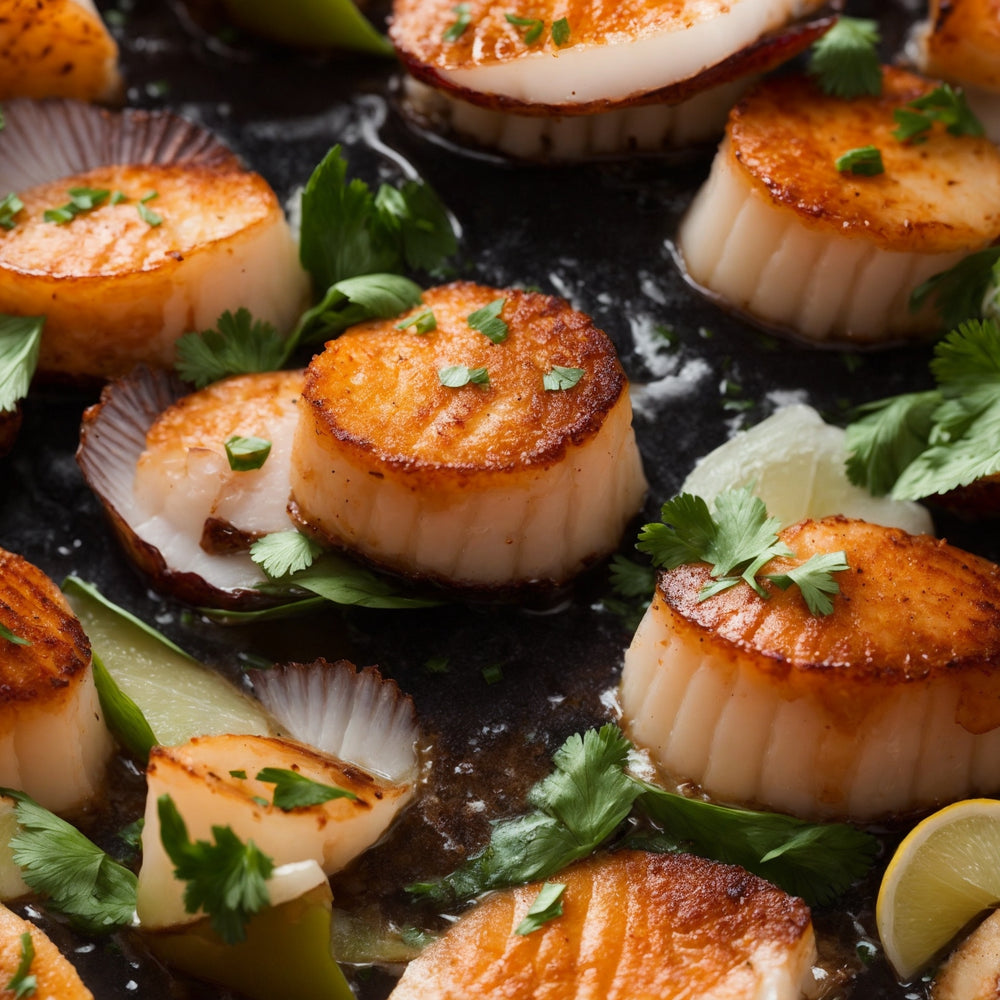
Searing Without Moving: Once the scallops are in the pan, resist the urge to move them around. Let them sear undisturbed for 2-3 minutes per side, or until they develop a deep golden-brown crust. This is the key to achieving that perfect sear. Use a thin, flexible spatula to carefully flip the scallops when they’re ready.
Checking for Doneness: The scallops are done when they are opaque throughout and slightly firm to the touch. Avoid overcooking them, as they will become rubbery. A good rule of thumb is to cook them for about 4-5 minutes total, depending on their size.
Cooking Methods Beyond the Sear
Baking: Baking scallops is a gentle and even cooking method that’s ideal for delicate preparations. Preheat your oven to 375°F (190°C). Place the scallops in a baking dish, drizzle with olive oil or butter, and season with salt, pepper, and your favorite herbs. Bake for 8-12 minutes, or until the scallops are opaque and cooked through.
Poaching: Poaching scallops in a flavorful broth or wine is a great way to keep them moist and tender. Bring the poaching liquid to a simmer in a saucepan. Gently add the scallops and cook for 3-5 minutes, or until they are opaque and cooked through.
Grilling: Grilling scallops imparts a smoky flavor that’s perfect for summer barbecues. Preheat your grill to medium-high heat. Thread the scallops onto skewers or place them directly on the grill grates. Grill for 2-3 minutes per side, or until they are opaque and cooked through.
Sous Vide: Sous vide is a precise cooking method that allows you to control the temperature of the scallops perfectly. Seal the scallops in a vacuum-sealed bag with butter, herbs, and seasonings. Cook in a water bath at 120-130°F (49-54°C) for 30-45 minutes, or until they are cooked through.
Flavor Pairings: Complements to Scallop’s Sweetness
Citrus: Lemon, lime, and grapefruit brighten the flavor of scallops and add a refreshing acidity.
Butter: Brown butter, garlic butter, and herb butter are all decadent and delicious accompaniments to scallops.
Herbs: Parsley, thyme, chives, and dill add freshness and aromatic complexity.
Spices: Paprika, cumin, and coriander add warmth and depth of flavor.
Vegetables: Asparagus, spinach, mushrooms, and corn are all excellent complements to scallops.
Sauces: Cream sauces, wine sauces, and pesto sauces add richness and complexity.
Grains: Risotto, pasta, and couscous are all great bases for scallop dishes.
Troubleshooting Common Scallop Cooking Problems
Rubbery Scallops: The most common cause of rubbery scallops is overcooking. To avoid this, cook the scallops just until they are opaque and slightly firm to the touch. Remove them from the heat immediately when they are done.
Scallops Not Searing: If your scallops aren’t searing properly, it’s likely because the pan isn’t hot enough or the scallops are too wet. Make sure the pan is fully heated before adding the scallops, and pat them completely dry with paper towels.
Scallops Sticking to the Pan: Scallops can stick to the pan if it’s not properly heated or if there’s not enough oil. Make sure the pan is hot and well-oiled before adding the scallops. You can also try using a non-stick skillet, but keep in mind that it won’t produce as good of a sear.
Scallops Shrinking: Wet scallops are more prone to shrinking during cooking. To minimize shrinkage, opt for dry scallops whenever possible. Also, avoid overcrowding the pan, as this will cause the scallops to steam instead of sear.
Serving Suggestions: Plating Your Culinary Masterpiece
Simple and Elegant: Serve seared scallops over a bed of creamy risotto or pasta, garnished with fresh herbs and a drizzle of olive oil.
Appetizer Delight: Create a scallop ceviche with lime juice, cilantro, and diced vegetables, served in small glasses or on crispy tortilla chips.
Surf and Turf: Pair grilled scallops with a perfectly cooked steak for a luxurious surf and turf experience.
Salad Sensation: Add seared scallops to a mixed green salad with citrus vinaigrette and toasted nuts.
Tapas Style: Serve small plates of seared scallops with various dipping sauces and toppings, such as pesto, romesco, and caramelized onions.
A Recipe for Success: Seared Scallops with Lemon-Garlic Butter Sauce
1 pound dry sea scallops
2 tablespoons olive oil
4 tablespoons butter
2 cloves garlic, minced
2 tablespoons lemon juice
2 tablespoons chopped fresh parsley
Salt and pepper to taste
Pat the scallops completely dry with paper towels and season with salt and pepper.
Heat the olive oil in a heavy-bottomed skillet over medium-high heat.
Add the scallops to the hot pan, making sure not to overcrowd it. Sear for 2-3 minutes per side, or until they are golden brown and cooked through.
Remove the scallops from the pan and set aside.
In the same pan, melt the butter over medium heat. Add the garlic and cook for 1 minute, or until fragrant.
Stir in the lemon juice and parsley and season with salt and pepper.
Return the scallops to the pan and toss to coat with the sauce.
Serve immediately and enjoy!
Conclusion: Elevate Your Scallop Game
Cooking scallops quickly and evenly is an art that can be mastered with practice and attention to detail. By following the tips and techniques outlined in this guide, you’ll be well on your way to creating restaurant-quality scallop dishes that will impress your family and friends. So, go ahead, embrace the challenge, and elevate your scallop game to new heights!