
The journey begins with selecting the right tuna. Not all tuna is created equal when it comes to steaks. For searing or grilling, you’ll want sushi-grade or sashimi-grade tuna. This designation indicates that the fish is fresh enough to be eaten raw, meaning it’s also ideal for a quick sear where the inside remains largely uncooked. Look for tuna steaks that are a vibrant, deep red color. Avoid any steaks that appear dull, brownish, or have excessive bruising. The thickness of the steak is also important; aim for steaks that are at least 1 to 1.5 inches thick. Thinner steaks are much harder to control and are more prone to overcooking.
Commonly available tuna varieties for steaks include Ahi (Yellowfin) and Bigeye. Both have a firm texture and a rich, meaty flavor that stands up well to searing. Albacore tuna is also an option, though it tends to be a bit leaner and might require slightly more careful cooking to prevent drying out.
Before you even think about heating your pan or grill, proper preparation of the tuna steak is crucial. Pat the steaks completely dry with paper towels. Moisture is the enemy of a good sear; it steams the fish rather than searing it, preventing that desirable crust from forming. This step is non-negotiable for achieving optimal results.
Next, consider the seasoning. Tuna has a naturally delicious flavor that doesn’t need much embellishment. A simple yet effective approach is to season generously with sea salt and freshly cracked black pepper just before cooking. For a bit more complexity, you can experiment with other spices like garlic powder, onion powder, paprika, or even a touch of cayenne for a hint of heat. However, err on the side of simplicity, especially for your first few attempts, to truly appreciate the quality of the fish.
Marinating tuna can add a wonderful layer of flavor, but it requires careful consideration. If you choose to marinate, keep it brief – no more than 30 minutes. Tuna is porous and can absorb flavors quickly, but prolonged marination, especially with acidic ingredients like soy sauce or lemon juice, can start to ‘cook’ the fish (like ceviche) and alter its texture. A simple marinade might include soy sauce, ginger, garlic, and a touch of sesame oil. Always pat the steak dry after marinating before searing.
Now, let’s talk about the cooking method. Pan-searing is an excellent technique for achieving a beautiful crust indoors. Use a heavy-bottomed skillet, preferably cast iron or stainless steel, that can achieve and maintain high heat. Add a high smoke point oil, such as avocado oil, grapeseed oil, or canola oil. You want the oil to be shimmering and almost smoking before you add the tuna.
Get your pan smoking hot. This is critical for creating that perfect sear. Once the oil is hot, carefully place the seasoned tuna steaks into the skillet. Don’t overcrowd the pan; cook in batches if necessary. Overcrowding will lower the pan temperature and lead to steaming rather than searing.
Sear the tuna steak for approximately 1 to 2 minutes per side for a 1-inch thick steak. The exact time will depend on the thickness of your steak and the heat of your pan. The goal is to develop a deep, golden-brown crust while leaving the interior warm and red. You should see the color change gradually up the sides of the steak as it cooks.
For an even more flavorful sear, consider adding aromatics to the pan during the last minute of cooking. A tablespoon of butter, a crushed garlic clove, and a sprig of fresh rosemary or thyme can be added to the skillet. Tilt the pan and use a spoon to baste the tuna steak with the melted butter and infused oils. This adds a wonderful richness and aroma.
Grilling is another fantastic method for cooking tuna steaks, imparting a smoky flavor and attractive grill marks. Ensure your grill grates are clean and well-oiled to prevent sticking. Preheat your grill to high heat.
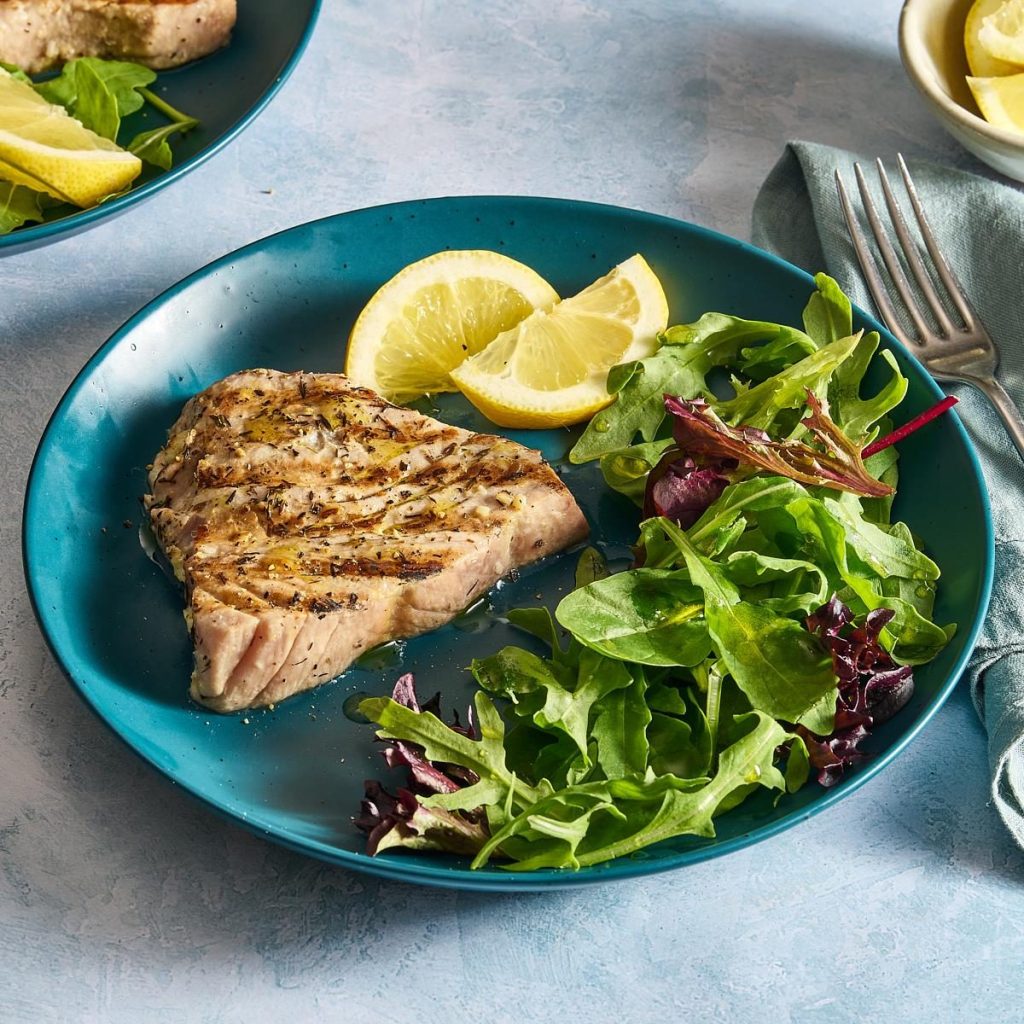
Place the seasoned tuna steaks directly on the hot grill grates. Similar to pan-searing, you’re looking for a quick sear. Grill for approximately 1 to 2 minutes per side for a 1-inch thick steak. Watch closely to avoid overcooking. The high heat will quickly create char marks and cook the exterior.
Resist the urge to constantly flip or move the tuna steak. Let it sear undisturbed on each side to develop those beautiful grill marks and a solid crust. Use tongs to carefully turn the steak only once.
Regardless of whether you pan-sear or grill, resting the tuna steak after cooking is paramount. Transfer the cooked steaks to a clean plate or cutting board. Tent loosely with foil and let them rest for about 5 minutes. This allows the juices to redistribute throughout the steak, ensuring maximum moisture and tenderness. Skipping this step can result in a dry steak as the juices will run out when you cut into it.
How do you know if it’s medium-rare? The most reliable method is using an instant-read thermometer. For medium-rare tuna, you’re looking for an internal temperature of around 115-120°F (46-49°C). Remember that the temperature will continue to rise a few degrees as the steak rests (carryover cooking). For medium, aim for 125-130°F (52-54°C). Anything higher will likely be overcooked.
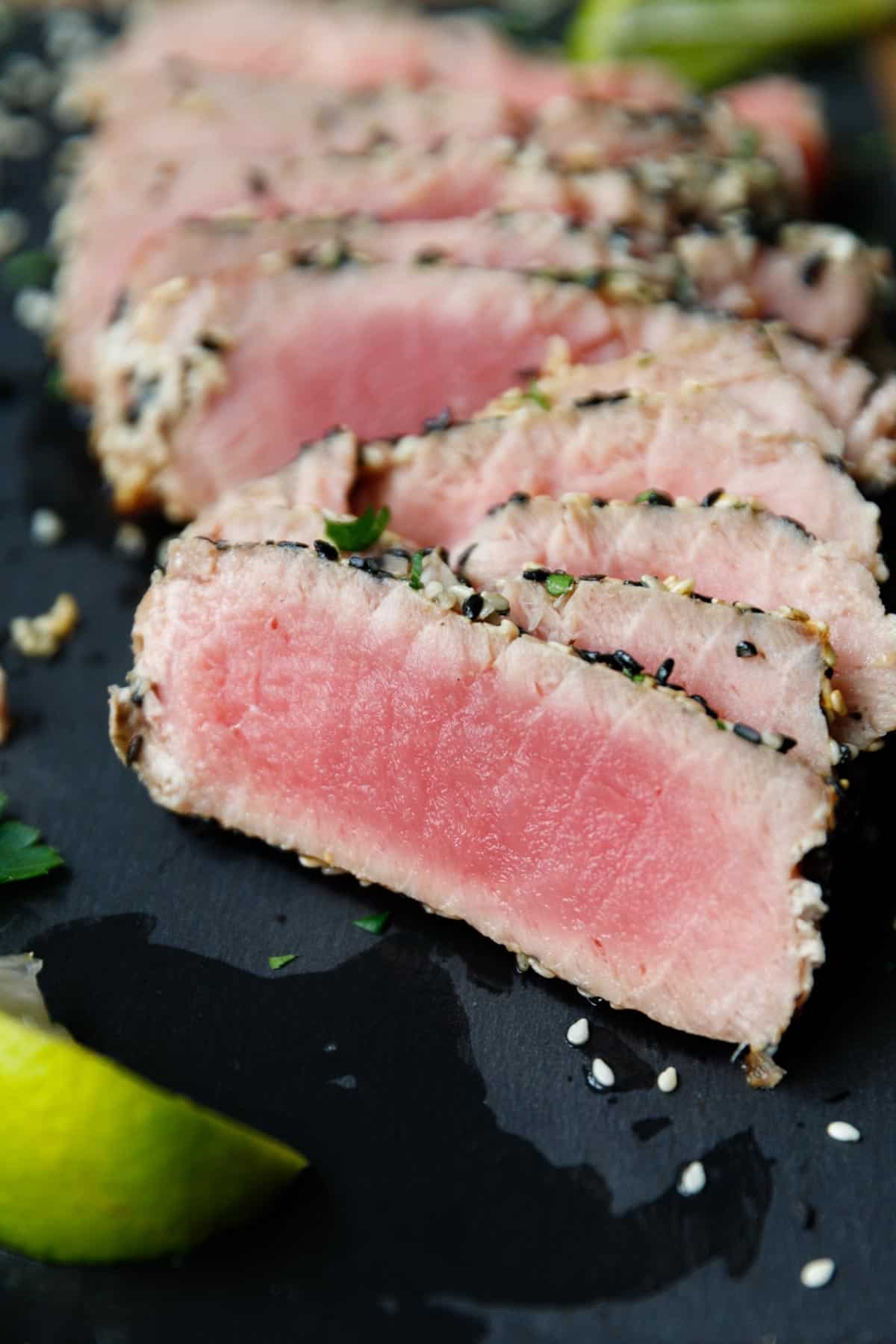
Visually, a medium-rare tuna steak will have a dark sear on the outside, with a distinctly red, slightly firm but still yielding center. The color transition should be gradual. If the entire steak is uniformly pink or brown, it’s likely overcooked.
Serving your perfectly cooked tuna steak is the final act. Slice the steak against the grain for maximum tenderness. The grain is usually visible as fine lines running through the flesh. Slicing against these lines shortens the muscle fibers, making each bite more tender.
Classic accompaniments for tuna steak include a drizzle of good quality olive oil, a squeeze of fresh lemon or lime juice, or a sprinkle of flaky sea salt. For a more elaborate presentation, consider serving with a soy-ginger dipping sauce, a wasabi-avocado mash, or a fresh salsa.
Side dishes that complement tuna steak beautifully are often light and fresh. Think about a simple green salad with a vinaigrette, steamed asparagus, roasted vegetables like broccoli or bell peppers, or a flavorful quinoa or rice pilaf. Avoid heavy, overpowering sides that might mask the delicate flavor of the fish.
Leftover tuna steak, if any, should be stored in an airtight container in the refrigerator and consumed within a day or two. It’s best enjoyed cold or gently reheated, though reheating can risk overcooking. Cold tuna steak is delicious in salads or sandwiches.
Troubleshooting common issues: If your tuna steak is sticking to the pan or grill, it’s usually because the surface wasn’t hot enough, or the grates/pan weren’t properly oiled. If it’s dry and crumbly, you likely overcooked it – reduce the cooking time next time. If there’s no crust, ensure the steak was thoroughly dried before cooking and the pan was sufficiently hot.
Experimentation is key to finding your perfect cooking time. Factors like the exact thickness of the steak, the intensity of your heat source, and your personal preference for doneness all play a role. Keep notes on cooking times and temperatures to refine your technique.
Consider the quality of your tuna. Using a high-quality, fresh, sushi-grade tuna will make a world of difference. It’s the star of the dish, so investing in good fish is the first step towards success.
Don’t be afraid of the raw center. This is precisely what you’re aiming for with medium-rare. The heat from the searing process gently warms the center without cooking it through, preserving its delicate texture and moisture.
For those who prefer their tuna cooked a bit more, adjust the cooking time accordingly. However, always aim to stop cooking before the entire steak turns opaque. A slightly pink center is still desirable for optimal flavor and texture.
The visual cue of the color change is important. You want to see a clear demarcation between the seared exterior and the red, uncooked interior. This is your visual guide to hitting that perfect medium-rare.
A cast iron skillet offers superior heat retention and distribution, making it ideal for achieving a fantastic crust on your tuna steaks. Ensure it’s well-seasoned and preheated.
When searing, don’t be tempted to press down on the steak with your spatula. This action squeezes out the flavorful juices and can lead to uneven cooking.
If you’re new to cooking fish, start with a slightly longer cooking time and check the internal temperature frequently. It’s easier to add a minute of cooking than to fix an overcooked steak.
The aroma of perfectly seared tuna is distinct – a clean, slightly briny scent combined with the Maillard reaction’s savory notes. This is your cue that you’re on the right track.
Embrace the simplicity. The beauty of a high-quality tuna steak lies in its natural flavor. Let the fish shine by keeping the seasonings and accompaniments complementary rather than overpowering.