
Whether you are a professional chef looking to refresh your restaurant’s seasonal offerings or a home cook planning an impressive dinner party, incorporating Asian-inspired elements can elevate this fish from a standard dish to an unforgettable experience. The interplay of salty, sweet, sour, and spicy notes characteristic of Asian cooking complements the natural richness of the fish without overpowering it.
In this guide, we will explore several distinct styles of preparing sea bass, drawing inspiration from Japan, China, Thailand, and Southeast Asia. We will dive into the techniques that ensure moist flesh and crispy skin, and discuss the essential pantry staples you need to bring these dishes to life.
Why Sea Bass is Perfect for Asian Flavors
Sea bass—whether you are using European sea bass (Branzino), Barramundi, or the rich and oily Chilean sea bass (Patagonian Toothfish)—possesses a unique structural integrity. It flakes beautifully when cooked but holds up well to various cooking methods, including steaming, pan-searing, and broiling. This resilience makes it ideal for handling the robust sauces and marinades often found in Asian recipes.
Furthermore, the high fat content, particularly in Chilean sea bass, provides a lush mouthfeel that balances the acidity of lime juice or the saltiness of soy sauce and miso. It acts as a buffer, allowing you to use punchy ingredients like fresh chili, ginger, and lemongrass while maintaining a harmonious final dish.
The Essential Asian Pantry for Seafood
Before diving into specific recipes, it is crucial to understand the building blocks of flavor. To successfully execute these dishes, your station should be stocked with a few key ingredients. Soy sauce (both light and dark) is non-negotiable for savory depth. Fresh ginger and scallions form the aromatic base of countless Chinese and Japanese dishes.
For heat and fragrance, fresh chilies (such as Bird’s Eye) and lemongrass are essential, particularly for Thai-inspired preparations. Miso paste adds umami richness, while mirin and sake are vital for glazes and marinades. Finally, never underestimate the power of sesame oil; a few drops at the end of cooking can completely transform the aroma of a dish.
1. Classic Cantonese Steamed Sea Bass with Ginger and Scallions
The Technique: The fish is steamed whole or in fillets until just cooked through. The magic happens immediately after steaming. You discard the steaming liquid (which can be fishy) and top the fish with copious amounts of julienned ginger and scallions.
The Sizzle: The defining step of this recipe is heating a neutral oil (like canola or peanut oil) until it is smoking hot. You pour this hot oil directly over the raw aromatics sitting on top of the cooked fish. The oil sizzles loudly, flash-cooking the ginger and scallions and releasing their oils into the fish. Finally, a splash of seasoned soy sauce is poured around the fish—never directly on the skin, to preserve the visual appeal.
2. Japanese Miso-Glazed Chilean Sea Bass
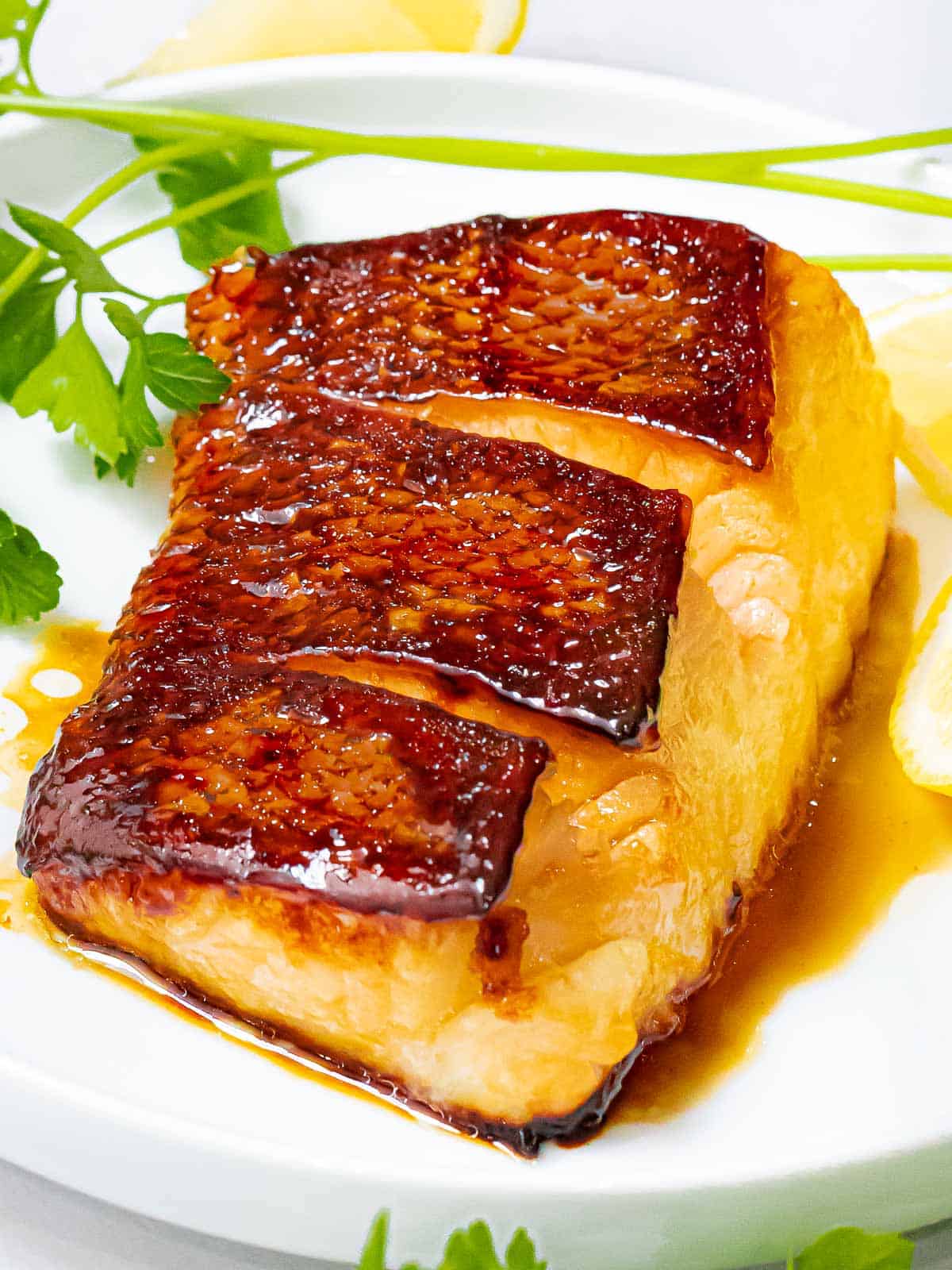
Popularized by high-end dining establishments like Nobu, this recipe is a crowd-pleaser that feels incredibly luxurious. It works best with Chilean sea bass due to its high oil content, which prevents the fish from drying out during the curing process.
The Marinade: The secret lies in the marinade, typically a mixture of white miso (Shiro miso), mirin, sake, and sugar. The fish needs to marinate for a significant amount of time—often 24 to 48 hours. This draws out excess moisture, firms up the flesh, and allows the sweet and savory flavors to penetrate deep into the fillet.
Cooking Method: Because the marinade is high in sugar, this fish burns easily. The best approach is to wipe off the excess marinade, sear the fish quickly in a pan to caramelize the edges, and then finish it in a hot oven. The result is a buttery, melt-in-your-mouth texture with a caramelized, golden crust that is sweet, savory, and deeply satisfying.
3. Thai Steamed Sea Bass with Lime and Garlic (Pla Kapong Neung Manao)
If the miso glaze is about richness, this Thai masterpiece is about vibrancy and punch. It is a soup-like dish served in a fish-shaped metal pan with a flame underneath to keep it bubbling at the table. It is the ultimate palate cleanser and appetite stimulant.
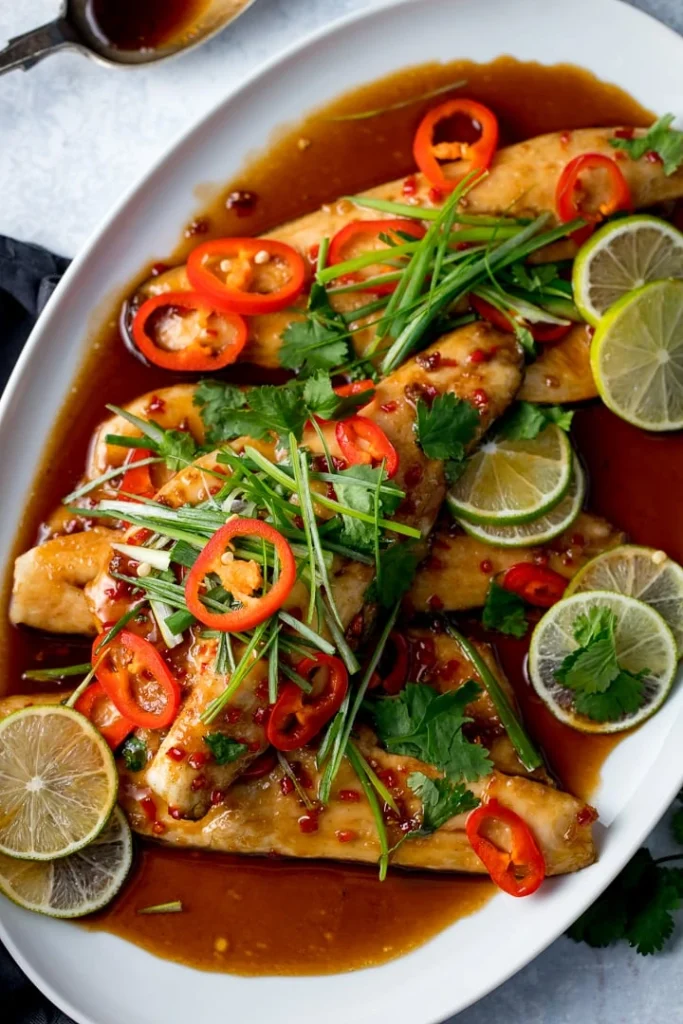
The Flavor Profile: The sauce is a potent mixture of fish sauce, sugar, tons of chopped garlic, crushed bird’s eye chilies, and an aggressive amount of fresh lime juice. The goal is to hit the sour, spicy, and salty notes simultaneously.
Serving Tip: This dish is best served with the sauce ladled generously over the fish, garnished with fresh cilantro and slices of lime. It pairs exceptionally well with steamed jasmine rice, which soaks up the tangy broth. It is a lighter option that is perfect for summer menus or diners looking for healthy, low-fat options that don’t sacrifice flavor.
4. Pan-Seared Sea Bass with Coconut Curry Sauce
For a fusion approach that bridges Indian and Southeast Asian influences, a coconut curry sea bass is a fantastic addition to any menu. This dish focuses on texture contrast: the crispy skin of the fish against a creamy, velvety sauce.
Getting the Skin Crispy: To achieve that glass-like crispy skin, ensure the fish is completely dry before cooking. Score the skin lightly to prevent curling. Place it skin-side down in a medium-hot pan and apply gentle pressure. Do not flip it until the skin releases naturally from the pan. 90% of the cooking should be done on the skin side.
The Sauce: While the fish cooks, prepare a sauce using red or yellow curry paste, coconut milk, kaffir lime leaves, and a touch of turmeric for color. Simmer until thickened. To plate, pour the sauce into a shallow bowl and place the fish on top, keeping the crispy skin above the liquid line to maintain its texture.
5. Chinese Five-Spice Crispy Sea Bass
For a texture-heavy dish, consider a deep-fried or shallow-fried preparation using Chinese five-spice powder. This spice blend—typically star anise, cloves, cinnamon, Sichuan pepper, and fennel seeds—adds a warm, aromatic complexity that pairs wonderfully with white fish.
Preparation: Lightly dust chunks or fillets of sea bass in cornstarch seasoned with salt and five-spice powder. Fry until golden and crispy. The cornstarch provides a light, airy crunch rather than a heavy batter.
Accompaniments: This crispy fish works beautifully when tossed with a sweet and sour glaze or served alongside stir-fried bok choy and shiitake mushrooms. The earthiness of the mushrooms complements the aromatic spices, creating a well-rounded umami experience.
Expert Tips for Sourcing and Preparation
Tempering the Fish: Never cook sea bass straight from the fridge. Let it sit at room temperature for 15-20 minutes before cooking. This ensures even cooking and prevents the muscle fibers from seizing up, which can squeeze out moisture.
Scaling Properly: If you plan to serve the skin crispy, ensure the scales are removed thoroughly. Nothing ruins a dining experience faster than a mouthful of scales. Use a dedicated fish scaler or the back of a knife, and rinse the fish well under cold water.
Plating and Presentation
Asian cuisine places a high value on aesthetics. The visual appeal of the dish sets the expectation for the flavor. Use contrasting colors to make the white flesh of the sea bass pop. The bright green of scallions, the deep red of fresh chilies, and the vibrant yellow of a curry sauce create a visual feast.
Consider using rectangular plates for fillets or oval platters for whole fish. Garnish with intention—micro-cilantro, edible flowers, or finely shredded chili threads (ito togarashi) add sophistication without cluttering the plate.
Beverage Pairings
To round out the dining experience, suggest appropriate beverage pairings. For the Steamed Ginger Sea Bass, a crisp, dry Riesling or a floral Gin and Tonic works wonders. The acidity cuts through the sesame oil.
For the rich Miso-Glazed Sea Bass, a premium Junmai Daiginjo sake or a buttery Chardonnay mirrors the texture of the fish. And for the spicy Thai Lime Fish, an ice-cold Asian lager or a Gewürztraminer with a hint of sweetness can help tame the heat of the chilies.
Conclusion
Incorporating Asian-inspired sea bass recipes into your menu is more than just a culinary trend; it is a way to offer your guests a journey of flavors. From the comforting warmth of ginger and scallions to the bold excitement of Thai chilies and lime, these dishes showcase the incredible versatility of sea bass.
By mastering these techniques—steaming, glazing, searing, and frying—and respecting the balance of the Asian pantry, you can create seafood dishes that are sophisticated, memorable, and deeply delicious. So, sharpen your knives, stock up on soy sauce and miso, and get ready to elevate your seafood game to the next level.