

This comprehensive guide is designed to demystify the world of oysters for the home cook. We’ll walk you through everything from selecting the freshest oysters to the simple art of shucking, and then dive into a variety of easy-to-follow recipes that showcase their versatility, from the pristine simplicity of raw oysters to the comforting warmth of cooked preparations. Get ready to embark on a delightful culinary journey that will elevate your home dining experience.
Why choose to prepare oysters at home? Beyond the obvious cost savings compared to dining out, there’s an immense satisfaction in knowing exactly where your food comes from and preparing it with your own hands. You control the freshness, the ingredients, and the flavors, allowing for a truly personalized gourmet experience. Plus, it’s a fantastic way to expand your culinary repertoire and gain confidence with a seemingly intimidating ingredient.
The first step to any great oyster dish is starting with quality ingredients. Oysters are living creatures, and their freshness is paramount. When purchasing, always look for oysters that are:
- Tightly closed: This indicates they are alive and fresh. Any open oysters that don’t close when tapped should be discarded.
- Heavy for their size: A good sign of a plump, healthy oyster.
- Have a fresh, clean scent: They should smell like the ocean, not fishy or off.
- Properly stored: They should be kept on ice or in a refrigerated case.
You can source fresh oysters from reputable fishmongers, specialty seafood markets, or even through online purveyors who ship directly to your door. Don’t hesitate to ask your fishmonger about the oyster’s origin, harvest date, and specific flavor profiles – they are usually a wealth of information.
Once home, store oysters in the coldest part of your refrigerator, preferably covered with a damp cloth or paper towel, and placed in a bowl or on a tray to catch any drips. They should never be stored in airtight containers or in standing water, as they need to breathe. Consume them within 2-3 days of purchase for optimal freshness.
The thought of shucking an oyster can be daunting for novices, but with the right tools and a little practice, it’s a skill easily mastered. You’ll need:
- An oyster knife: This is crucial. It has a short, sturdy blade designed to pry open the shell without breaking it or your hand.
- A thick towel or glove: Essential for protecting your hand from the sharp edges of the oyster shell.
Here’s a simple step-by-step guide to shucking: First, hold the oyster cup-side down in the palm of your gloved hand, with the hinge (the pointed end where the two shells meet) facing you. Locate the hinge and carefully insert the tip of your oyster knife into it, wiggling it gently to find the natural seam. Apply steady, firm pressure and twist the knife to pop the hinge open. You’ll hear a distinct ‘pop’.
Once the hinge is open, slide the knife along the top shell to detach the adductor muscle, which holds the oyster to the top shell. Remove the top shell. Then, carefully slide the knife under the oyster meat to detach it from the bottom shell, ensuring you don’t lose any of the precious briny liquid (the ‘liquor’). Flip the oyster over for a prettier presentation, if desired, and place it on a bed of ice.
Expert Tip: If you’re struggling with the hinge, try inserting the knife into the ‘lip’ of the oyster (the flatter, wider edge) and wiggling it until you find an opening. Also, ensure your knife is always pointed away from your hand and body to prevent accidents.
A classic accompaniment is the Mignonette. It’s incredibly easy to make: simply combine
- 2 tablespoons finely minced shallots
- 1/4 cup red wine vinegar
- 1/2 teaspoon freshly cracked black pepper
Stir and let it sit for at least 15 minutes for the flavors to meld. A dash of hot sauce or a squeeze of fresh lemon are also timeless additions.
Feeling a bit more adventurous? Try a cucumber and ginger mignonette for a refreshing twist, or a dash of finely grated fresh horseradish for a spicy kick. The beauty of raw oysters is their versatility; let your palate guide you!
While raw oysters are a delight, cooked oysters open up a whole new world of flavors and textures. They’re also a great entry point for those who might be hesitant about consuming them raw. Let’s explore some easy and delicious cooked oyster recipes.
Grilled Oysters with Garlic Herb Butter
Grilled oysters are a revelation – smoky, briny, and incredibly flavorful. The heat of the grill gently cooks the oyster, making it plump and tender. This method is surprisingly simple and requires minimal effort.
To prepare, simply place shucked oysters (or unshucked oysters directly on the grill, hinge-side down, until they pop open) on a hot grill. While they’re cooking, melt 1/2 cup unsalted butter with 2 cloves minced garlic, 2 tablespoons chopped fresh parsley, and a pinch of red pepper flakes. Once the oysters are heated through and bubbling (about 5-7 minutes), spoon a generous amount of the garlic herb butter over each one. Grill for another minute or two until the butter is sizzling. Serve immediately with lemon wedges.
Variation: For a cheesy twist, sprinkle a little grated Parmesan cheese over the oysters after adding the garlic butter. The cheese will melt and create a delicious crust. You can also experiment with other herbs like chives or thyme.
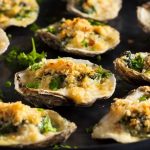
Baked Oysters Rockefeller (Simplified)
Oysters Rockefeller is a classic for a reason, but the traditional recipe can be quite involved. Here’s a simplified version that captures the essence of this beloved dish without all the fuss. This is perfect for a special appetizer.
Preheat your oven to 400°F (200°C). Arrange shucked oysters in their half shells on a baking sheet lined with rock salt or crumpled aluminum foil to keep them steady. In a bowl, combine 1/2 cup finely chopped spinach (thawed and squeezed dry if frozen), 1/4 cup panko breadcrumbs, 2 tablespoons grated Parmesan cheese, 1 tablespoon melted butter, 1 tablespoon Pernod or other anise-flavored liqueur (optional), and a pinch of salt and pepper. Mix well.
Spoon a small amount of the spinach mixture over each oyster. Bake for 10-12 minutes, or until the oysters are plump and the topping is golden brown and bubbly. A quick run under the broiler for the last minute can help achieve a beautiful crust. Serve immediately.
Crispy Fried Oysters
There’s something undeniably comforting and indulgent about crispy fried oysters. They offer a delightful contrast of a crunchy exterior and a tender, briny interior. These are fantastic on their own, as a topping for salads, or tucked into a po’boy sandwich.
To make them, drain 1 pint of shucked oysters very well and pat them dry with paper towels. Set up a breading station with three shallow dishes: one with 1/2 cup all-purpose flour seasoned with salt and pepper, one with 2 beaten eggs, and one with 1 cup cornmeal mixed with 1/4 cup all-purpose flour, 1 teaspoon Old Bay seasoning, and a pinch of cayenne pepper.
Dredge each oyster first in the seasoned flour, then dip it in the egg wash, and finally coat it thoroughly in the cornmeal mixture, pressing gently to ensure adherence. Heat about 2 inches of vegetable oil in a heavy-bottomed pot or deep fryer to 350°F (175°C). Fry the oysters in batches, being careful not to overcrowd the pan, for 2-3 minutes per side, or until golden brown and crispy. Remove with a slotted spoon and drain on a wire rack set over paper towels. Season with a little extra salt immediately after frying. Serve with homemade tartar sauce and lemon wedges.
Steamed Oysters with Garlic Butter
Steaming is one of the simplest and healthiest ways to cook oysters, allowing their natural flavor to shine through. It’s quick, easy, and results in tender, succulent oysters.
Place a steamer basket in a large pot with about an inch of water, white wine, or beer at the bottom. Bring the liquid to a boil. Arrange unshucked oysters in the steamer basket, close the lid, and steam for 5-10 minutes, or until the shells just begin to open. Discard any oysters that do not open. Carefully remove the oysters, shuck them (they will be easier to open now), and serve with melted garlic butter, hot sauce, or a squeeze of lemon.
Quick Creamy Oyster Stew
For a hearty and comforting meal, a quick oyster stew is hard to beat, especially on a chilly evening. This recipe comes together in under 30 minutes and is incredibly satisfying.
In a medium saucepan, melt 2 tablespoons butter over medium heat. Add 1/4 cup finely chopped celery and 1/4 cup finely chopped onion, and sauté until softened, about 5 minutes. Pour in 2 cups whole milk and 1 cup heavy cream, and bring to a gentle simmer. Do not boil. Add 1 pint of shucked oysters and their liquor, and cook for just 2-3 minutes, or until the edges of the oysters begin to curl. Season generously with salt, freshly ground black pepper, and a pinch of cayenne or Old Bay seasoning. Garnish with fresh parsley or chives. Serve with crusty bread for dipping.
Beyond the cooking methods, pairing oysters with the right beverage can elevate the experience even further. The classic pairing for raw oysters is a crisp, dry white wine like Muscadet, Sauvignon Blanc, or a dry Champagne or sparkling wine. Their acidity and minerality perfectly complement the oyster’s brininess.
For beer lovers, lighter lagers or pilsners work well with raw oysters, while heartier stouts or porters can create an interesting contrast with cooked, richer oyster dishes. If you prefer spirits, a clean gin or vodka with a splash of tonic can also be a refreshing choice.
When cooking with oysters, always prioritize food safety. Ensure your oysters are fresh when purchased and stored correctly. If you’re shucking, consume them promptly. If cooking, make sure they reach an internal temperature that makes them safe to eat, typically when they plump up and their edges curl.
Beyond personal enjoyment, consider the source of your oysters. Sustainable aquaculture practices are vital for healthy marine ecosystems. Look for oysters certified by organizations like the Monterey Bay Aquarium Seafood Watch program, which can guide you towards responsibly harvested options.
As you become more comfortable with these easy recipes, don’t hesitate to experiment. Oysters are incredibly versatile and can be incorporated into pastas, stews, stuffings, and even served raw with exotic fruit salsas or spicy vinaigrettes. Your imagination is the only limit.
Embracing oysters at home is about more than just cooking a meal; it’s about creating an experience. It’s about bringing a touch of coastal elegance and the pure taste of the ocean to your kitchen, all while enjoying the process of crafting something truly special. So, grab your oyster knife, pick up some fresh bivalves, and get ready to impress yourself and your guests with these simple, yet sophisticated, oyster dishes.
From the first satisfying ‘pop’ of the shucking knife to the last delicious bite, preparing oysters at home is a culinary adventure waiting to be explored. With the tips and recipes provided, you’re now well-equipped to transform this once-intimidating delicacy into an accessible and regular treat. Enjoy the journey, and bon appétit!