
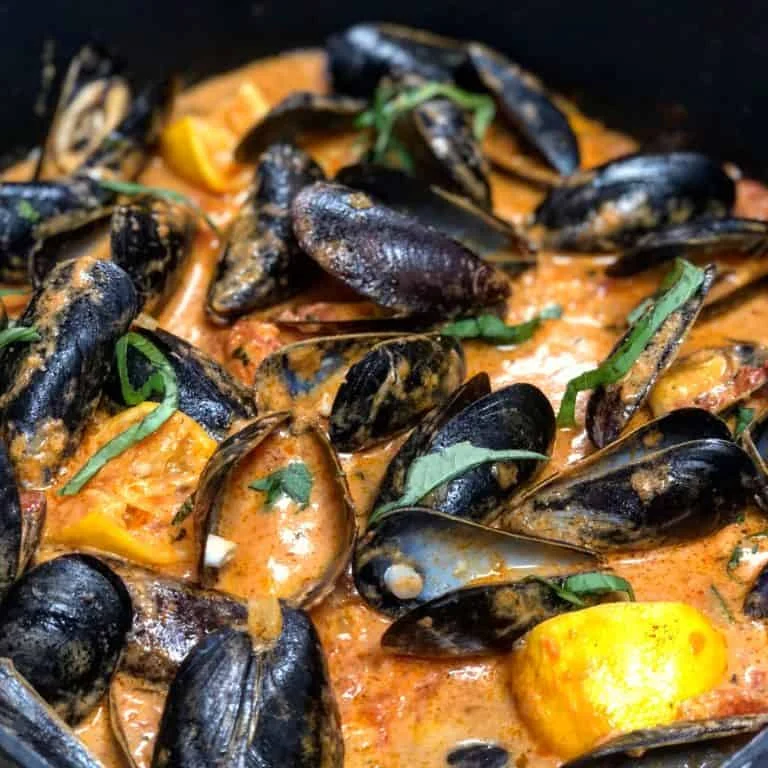

Why Mussels? A Nutritional Powerhouse
Protein: Essential for building and repairing tissues.
Iron: Crucial for oxygen transport in the blood.
Vitamin B12: Important for nerve function and DNA synthesis.
Omega-3 Fatty Acids: Beneficial for heart health and brain function.
Minerals: Rich in zinc, manganese, and selenium, which support immune function and overall health.
Plus, mussels are a sustainable seafood choice, making them an environmentally responsible option.
Sourcing the Freshest Mussels: A Buyer’s Guide
Appearance: The shells should be clean, shiny, and free from cracks. Avoid mussels with broken or heavily damaged shells.
Smell: Fresh mussels should have a mild, sea-like aroma. A strong, fishy, or ammonia-like odor is a sign of spoilage.
Liveness: Live mussels should be tightly closed. If the shells are slightly open, tap them gently. They should close quickly. Discard any mussels that remain open and don’t respond to tapping.
Source: Purchase mussels from a reputable fishmonger or grocery store that practices proper handling and storage. Ask about the origin of the mussels and when they were harvested.
Storage: Keeping Mussels Fresh
Refrigeration: Store mussels in a breathable container (like a bowl covered with a damp cloth) in the coldest part of your refrigerator. Do not store them in an airtight container or submerged in water, as this can suffocate them.
Use Promptly: Cook mussels as soon as possible after purchase, ideally within 1-2 days. The longer they sit, the greater the risk of spoilage.
Preparing Mussels: Cleaning and Debearding
Rinse the mussels thoroughly under cold running water.
Scrub the shells with a stiff brush to remove any barnacles, seaweed, or debris.
Some mussels have a “beard,” a cluster of stringy fibers used to attach to surfaces. To remove it, grasp the beard firmly and pull it towards the hinge of the shell. Use pliers if needed.
Not all mussels have beards, so don’t worry if you don’t find one.
Essential Cooking Techniques: Steaming, Sautéing, and More
Steaming: The most common and straightforward method. Steam mussels in a flavorful broth until they open.
Sautéing: Sauté mussels in a pan with aromatics like garlic, onions, and herbs, then add liquid to create a sauce.
Grilling: Grill mussels in their shells for a smoky flavor. Be sure to keep them moist to prevent them from drying out.
Baking: Bake mussels in the oven with breadcrumbs, herbs, and cheese for a hearty dish.
The Steaming Method: A Step-by-Step Guide
2 pounds fresh mussels, cleaned and debearded
1 tablespoon olive oil
2 cloves garlic, minced
1 small onion, chopped
1/2 cup dry white wine (or broth)
1/4 cup chopped fresh parsley
Salt and pepper to taste
Heat olive oil in a large pot or Dutch oven over medium heat.
Add garlic and onion and cook until softened, about 3-5 minutes.
Pour in the white wine (or broth) and bring to a simmer.
Add the mussels to the pot, cover, and steam for 5-7 minutes, or until all the mussels have opened.
Remove from heat and stir in the fresh parsley.
Season with salt and pepper to taste.
Discard any mussels that do not open during cooking.
Serve immediately with crusty bread for soaking up the flavorful broth.
Flavor Variations: Unleash Your Culinary Creativity
Classic White Wine and Garlic: A timeless combination that highlights the natural sweetness of the mussels.
Spicy Tomato Sauce: Add diced tomatoes, chili flakes, and oregano for a fiery Mediterranean twist.
Coconut Curry: Combine coconut milk, curry paste, ginger, and lemongrass for an exotic Asian-inspired dish.
Creamy Garlic and Herb: Stir in heavy cream, garlic, and your favorite herbs (like thyme or rosemary) for a rich and decadent sauce.
Lemon and Butter: A simple yet elegant sauce that complements the delicate flavor of the mussels.
Serving Suggestions: From Casual to Elegant
Classic Presentation: Serve mussels in a large bowl with plenty of broth and crusty bread for dipping.
Pasta Pairing: Toss cooked mussels with pasta, garlic, olive oil, and a sprinkle of Parmesan cheese.
Seafood Stew: Add mussels to a hearty seafood stew with other shellfish, fish, and vegetables.
Grilled Mussels: Serve grilled mussels as part of a seafood platter or as a flavorful appetizer.
Mussel Paella: Incorporate mussels into a traditional paella for a taste of Spain.
Expert Tips for Mussel Mastery
Don’t Overcook: Overcooked mussels become rubbery and lose their flavor. Cook them just until they open.
Use a Large Pot: Ensure the mussels have enough room to steam evenly.
Deglaze the Pot: After sautéing the aromatics, deglaze the pot with wine or broth to release any flavorful bits stuck to the bottom.
Garnish Generously: Fresh herbs, lemon wedges, and a drizzle of olive oil add visual appeal and enhance the flavor.
Pair with Wine: A crisp white wine like Sauvignon Blanc or Pinot Grigio complements the briny flavor of mussels.
Troubleshooting Common Issues
Why didn’t all the mussels open? Mussels that don’t open during cooking should be discarded, as they may be dead or of poor quality.
My mussels are rubbery. What went wrong? You likely overcooked them. Reduce the cooking time and check for doneness frequently.
The broth is too salty. How can I fix it? Add a squeeze of lemon juice or a splash of cream to balance the saltiness.
Mussels Around the World: Regional Variations
Moules Frites (Belgium): Mussels steamed in white wine, garlic, and herbs, served with crispy fries.
Cozze alla Tarantina (Italy): Mussels cooked in tomato sauce with garlic, parsley, and black pepper.
Escabeche de Mejillones (Spain): Pickled mussels marinated in vinegar, olive oil, and spices.
Mussel Curry (India): Mussels cooked in a flavorful curry sauce with coconut milk and spices.
Beyond the Shell: Creative Mussel Recipes
Mussel and Chorizo Paella: A Spanish-inspired dish with mussels, chorizo, rice, and saffron.
Mussel and Shrimp Scampi: A seafood twist on the classic scampi, with mussels, shrimp, garlic, and white wine.
Mussel and Vegetable Tagine: A Moroccan-inspired stew with mussels, vegetables, and aromatic spices.
Mussel and Potato Chowder: A creamy and comforting chowder with mussels, potatoes, bacon, and cream.
The Sustainable Choice: Eating Mussels Responsibly
As mentioned earlier, mussels are a sustainable seafood choice. However, it’s essential to be mindful of where your mussels come from. Look for mussels that are certified by organizations like the Marine Stewardship Council (MSC) or the Aquaculture Stewardship Council (ASC). These certifications ensure that the mussels are harvested or farmed in an environmentally responsible manner.
Mussels: A Culinary Adventure Awaits
Cooking mussels is a rewarding culinary experience that opens up a world of flavor possibilities. With this comprehensive guide, you have the knowledge and confidence to create delicious mussel dishes that will impress your family and friends. So, go ahead, embrace the adventure, and enjoy the delightful taste of the sea!
Final Thoughts
From selecting the freshest mussels to experimenting with diverse flavor profiles, the journey of cooking mussels is both enjoyable and rewarding. Embrace the tips, techniques, and recipes shared in this guide, and you’ll be well on your way to creating memorable seafood experiences. Happy cooking!