
Why You Should Be Eating More Mussels
Before we dive into the recipes, let’s appreciate why mussels deserve a regular spot in your meal rotation. First, they are a nutritional powerhouse. High in protein, low in fat, and packed with vitamins like B12, zinc, and iron, they offer immense health benefits without the heaviness of red meat. They are also one of the most sustainable seafood choices available. Most mussels sold in supermarkets are rope-grown, meaning they actually clean the water they live in and require no feed or chemicals to thrive.
Furthermore, they are budget-friendly. Compared to shrimp, scallops, or fresh fish fillets, a bag of live mussels is a steal. A two-pound bag, which feeds two people generously, often costs less than a fast-food meal. This combination of affordability, sustainability, and nutrition makes them a trifecta of home cooking excellence.
How to Buy and Store Mussels
Success starts at the seafood counter. When buying mussels, you are buying live animals, so freshness is paramount. Look for shells that are tightly closed or that snap shut when you tap them. If a mussel remains open after you tap it, it is dead and should be discarded immediately. The shells should look wet and shiny, and they should smell like the ocean—fresh and salty, never fishy or ammonia-like.
Most commercially available mussels are farmed, which means they are generally cleaner and less gritty than wild ones. However, you should still check the harvest date on the tag if available. Once you get them home, do not store them in water or a sealed plastic bag; they need to breathe. Place them in a bowl, cover them with a damp cloth or paper towel, and keep them in the coldest part of your refrigerator. They are best cooked the day you buy them, but they can last up to 24 hours if stored correctly.
The Essential Prep: Cleaning and Debearding
Preparing mussels is often the part that intimidates people, but it is a straightforward process. First, place your mussels in a colander and run cold water over them. Scrub off any mud or barnacles with a stiff brush. As you rinse, check for the ‘beard.’ This is a fibrous clump of hair-like threads the mussel uses to anchor itself to rocks or ropes.
To remove the beard, simply grip it firmly with your thumb and forefinger and give it a sharp tug toward the hinge of the shell. It should pull right out. Not every mussel will have a beard, especially farm-raised ones, but it is good to check. During this process, do a final safety check: discard any mussels with broken shells or those that refuse to close.
The Golden Rule of Cooking Mussels: Steam, Don’t Boil
The fundamental technique for cooking mussels is steaming. You do not need to submerge them in liquid like you would a lobster. Instead, you create a flavorful base in the bottom of a pot, add the mussels, cover tightly, and let the steam do the work. As the mussels open, they release their own briny liquor, which mixes with your base to create a rich, delicious sauce.
Cooking Time: Mussels cook incredibly fast. Depending on the strength of your heat and the number of mussels, they usually take between 5 to 7 minutes. You know they are done when the shells pop open wide. If you cook them too long, the meat shrivels and turns rubbery. The moment they open, they are ready to eat.
Recipe 1: Classic Moules Marinières (French Style)
This is the grandfather of all mussel recipes—the classic French sailor’s style. It relies on the holy trinity of mussel cookery: white wine, aromatics, and butter. It is elegant, timeless, and impossible to mess up.
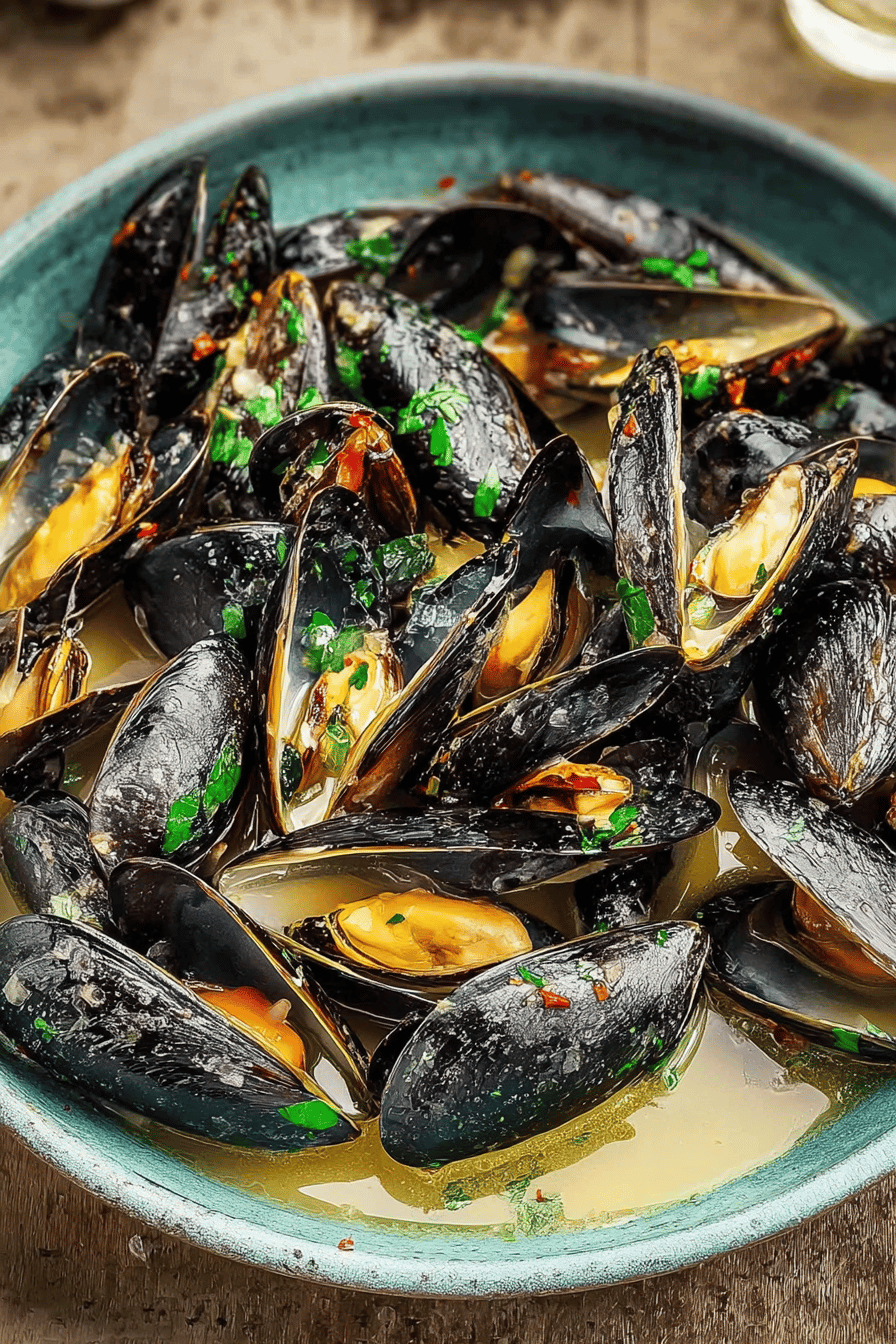
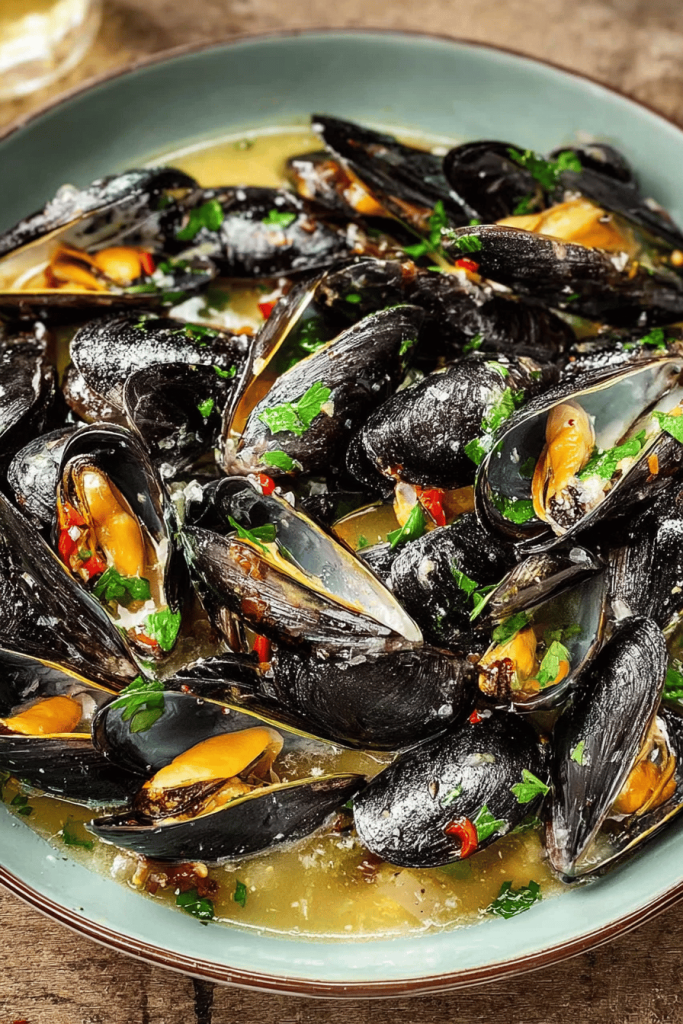
To make this, start by sautéing chopped shallots and garlic in butter in a large pot until they are soft but not browned. Pour in a generous cup of dry white wine (Sauvignon Blanc or Pinot Grigio work best) and bring it to a rolling boil. Add your cleaned mussels, cover the pot with a tight-fitting lid, and steam for about 5 minutes. Shake the pot occasionally to distribute the heat.
Once the mussels have opened, remove the pot from the heat. Stir in a handful of chopped fresh parsley and another tablespoon of cold butter to thicken the sauce slightly. Serve immediately with crusty baguette to soak up that white wine and garlic broth.
Recipe 2: Spicy Thai Coconut Mussels
If you want to deviate from the European tradition, mussels pair beautifully with the bold, aromatic flavors of Southeast Asia. The sweetness of the mussels complements the heat of chilies and the richness of coconut milk perfectly.
Start by sautéing garlic, ginger, and a tablespoon of red curry paste in a little vegetable oil. Once the paste is fragrant (about a minute), pour in a can of coconut milk. You can also add a splash of fish sauce and a teaspoon of brown sugar to balance the salt and spice. Bring the mixture to a simmer.
Add the mussels and cover. Because the coconut broth is thicker than wine, you might want to stir the mussels halfway through the steaming process. Once they open, finish the dish with a generous squeeze of fresh lime juice and plenty of chopped cilantro. This version is fantastic served over rice or rice noodles to catch all that creamy, spicy sauce.
Recipe 3: Fra Diavolo (Tomato and Garlic)
For those who love Italian flavors, mussels in a spicy red sauce are a must-try. This dish, often called Cozze alla Fra Diavolo, is hearty enough to be a main course, especially when paired with linguine.
Begin with plenty of olive oil and sliced garlic in your pot. Add a pinch (or more) of red pepper flakes to infuse the oil with heat. Add a can of crushed tomatoes or diced fresh tomatoes and let them simmer until they break down into a sauce. Add a splash of white wine if the sauce gets too thick.
Toss in the mussels and cover. The steam from the tomatoes and the mussels’ own juices will cook them to perfection. When serving, sprinkle with fresh basil. The acidity of the tomatoes cuts through the richness of the seafood, making every bite refreshing and savory. Serve with garlic bread for dipping.
Recipe 4: Beer-Steamed Mussels with Bacon and Blue Cheese
This is a pub-style favorite that feels comforting and robust. The earthiness of the beer and the smokiness of the bacon create a completely different vibe from the delicate white wine version.
First, fry chopped bacon or pancetta in your large pot until it is crispy. You can drain some of the fat, but leave a tablespoon or two for flavor. Add chopped onions or leeks and cook until soft. Instead of wine, pour in a bottle of lager or wheat beer (avoid heavy stouts as they can be too bitter).
Bring the beer to a boil and add the mussels. Cover and steam. Just before serving, you can crumble in some blue cheese, which melts into the broth to create a creamy, tangy finish. If blue cheese is too strong for your taste, heavy cream or crème fraîche works wonderfully as a substitute.
Recipe 5: Creamy Garlic and Herb Mussels
Sometimes you just want pure comfort. This recipe focuses on a velvety, rich broth that feels incredibly indulgent. It is essentially an upgrade to the classic white wine recipe but with a luxurious finish.
Follow the steps for the classic white wine mussels (shallots, garlic, wine). However, once the mussels open, use a slotted spoon to remove the mussels and place them in a serving bowl, keeping the liquid in the pot. Turn the heat down to low and whisk in half a cup of heavy cream.
Let the sauce reduce slightly, but do not let it boil vigorously or the cream might split. Stir in fresh thyme, chives, and a squeeze of lemon juice. Pour this rich, creamy sauce over the reserved mussels. This recipe is particularly popular with children or those who are new to eating shellfish, as the cream mellows the brininess.
What to Serve with Mussels
No matter which recipe you choose, the accompaniment is just as important as the main event. The broth is often the best part of the meal, so you need a vehicle to get it from the bowl to your mouth. Crusty bread—baguette, sourdough, or ciabatta—is non-negotiable. Toasting the bread and rubbing it with a raw clove of garlic adds an extra layer of flavor.
If you want to go full Belgian, serve your mussels with fries. Moules Frites is a national dish in Belgium for a reason. The crisp, salty fries are the perfect contrast to the soft mussels. Don’t forget a side of mayonnaise for dipping the fries!
Troubleshooting and Safety Tips
Also, be mindful of salt. Mussels release salt water when they open. Therefore, you rarely need to add salt to the dish during the cooking process. Always taste the broth after the mussels have opened before deciding if it needs extra seasoning.
Conclusion: Dive In!
Cooking mussels at home is one of the highest-reward activities in the kitchen. For a minimal investment of time and money, you get a dish that feels celebratory, sophisticated, and deeply satisfying. Whether you stick to the classic French marinières or experiment with Thai curries and craft beers, the technique remains the same.
So, the next time you are at the grocery store and see that mesh bag of shiny black shells on ice, don’t walk past it. Grab a baguette and a bottle of wine, and get ready for a feast that takes less than fifteen minutes to prepare. Your dinner guests—and your wallet—will thank you.