
Why Mussels Should Be Your New Weeknight Staple
Before we dive into the recipes, it is worth highlighting why mussels deserve a regular spot in your meal rotation. First, consider the speed. A pot of mussels takes about 5 to 7 minutes to cook. Even with prep time included, you can have a sophisticated, elegant dinner on the table in under 20 minutes. This makes them perfect for busy weeknights when you want something special but don’t have the energy for a complex roast.
Secondly, let’s talk about sustainability. Unlike some farmed fish that require massive amounts of feed and can pollute local waters, mussels are filter feeders. They actually clean the water they live in by filtering out plankton. They require zero feed, zero chemicals, and zero antibiotics. If you are looking to eat more eco-friendly meals, farmed mussels are at the very top of the list.
Finally, they are a nutritional powerhouse. Mussels are packed with protein, low in calories, and rich in omega-3 fatty acids. They are also an incredible source of Vitamin B12, selenium, and manganese. It is rare to find a food that feels this indulgent—especially when dipped in butter and garlic—that is actually good for you.
Buying Mussels: What to Look For
Success starts at the market. When buying mussels, freshness is paramount. You will typically find them sold in mesh bags ranging from two to five pounds. A good rule of thumb for portioning is one pound per person for a main course, or half a pound per person for an appetizer. If you are serving them with a lot of crusty bread and fries, you might stretch them further, but they are so delicious that people tend to eat more than they expect.
The Smell Test: Fresh mussels should smell like the ocean—salty, fresh, and clean. They should never smell ‘fishy,’ sour, or like ammonia. If you catch a whiff of anything unpleasant, move along.
The Shell Check: Look for shells that are tightly closed. If you see mussels with broken or cracked shells, they need to be discarded. We will discuss how to handle open shells during the prep phase, but generally, the bag should look intact and the mussels should feel heavy for their size, indicating they are full of water and meat, not dried out.
Storage: If you aren’t cooking them immediately, do not store them in water and do not seal them in an airtight plastic bag or container; they are alive and need to breathe. The best way to store them is in a bowl covered with a damp cloth or paper towel in the coldest part of your refrigerator. They should be cooked within a day or two of purchase.
The Essential Prep: Cleaning and Debearding
This is the step that scares beginners the most, but it is actually quite therapeutic once you get into the rhythm. Farm-raised mussels (which are what you will likely find in stores) are generally quite clean, but they still need a once-over.
Place your mussels in a colander and run them under cold tap water. Never use warm or hot water, as this will kill them before you cook them. While rinsing, you are looking for the ‘beard.’ The beard is a fibrous clump of hair-like threads that the mussel uses to anchor itself to rocks or ropes. Not every mussel will have one, but many will.
To remove the beard, hold the mussel firmly in one hand. Grasp the beard with your other hand (using a dry paper towel can help you get a grip) and give it a sharp, firm tug toward the hinge of the mussel. It should pull right out. If a little bit remains, don’t worry; it is not harmful, just a bit chewy.
The Tap Test: This is a crucial safety step. If you find a mussel that is slightly open, tap it gently against the counter or squeeze it lightly. If the mussel is alive, it will slowly close its shell in reaction to the disturbance. If it stays open and unresponsive, it is dead. Throw it away. We only cook live mussels.
The Basic Technique: How to Steam
Cooking mussels is not like cooking pasta where you boil water first. Mussels are steamed. This means you only need a small amount of liquid in the bottom of a wide pot. As the liquid boils, it creates intense steam that cooks the mussels in their own juices. This is why the resulting broth (often called ‘liquor’) is so flavorful—it is a mix of your wine/stock and the salty ocean water released by the mussels.
Use a pot that is wide rather than tall if possible. This allows more mussels to be in contact with the heat source and creates an even steam distribution. You absolutely need a tight-fitting lid. Without a lid, the steam escapes, and the mussels won’t cook properly.
Recipe 1: Classic Moules Marinières
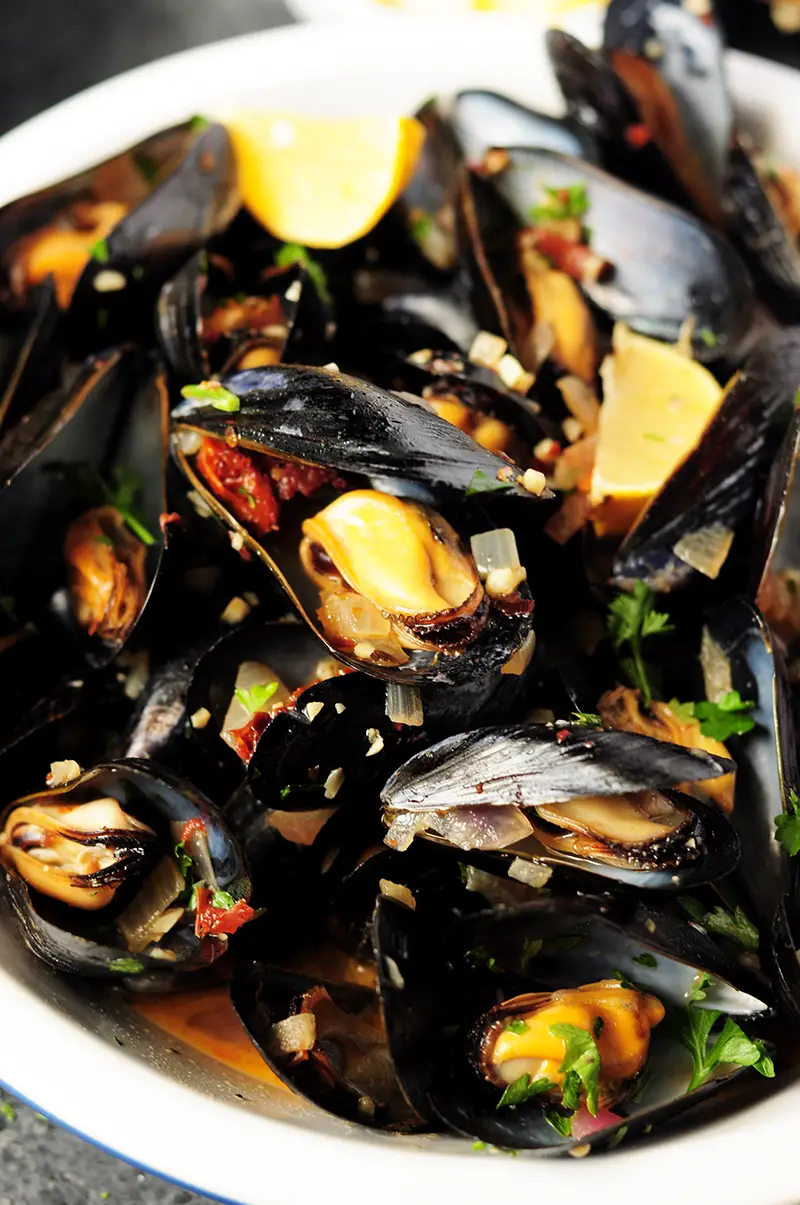
This is the grandfather of all mussel recipes. Originating from France, this dish relies on the holy trinity of mussel cookery: white wine, garlic, and shallots. It is elegant, simple, and the best place to start your journey.
Ingredients:
- 2 lbs fresh mussels, cleaned and debearded
- 2 tablespoons unsalted butter
- 2 shallots, finely chopped
- 3 cloves garlic, minced
- 1 cup dry white wine (Sauvignon Blanc or Pinot Grigio work best)
- 1/2 cup chopped fresh parsley
- Crusty baguette for serving
Instructions: Start by melting the butter in your pot over medium heat. Add the shallots and sauté them for about 3-4 minutes until they are soft and translucent but not browned. Add the garlic and cook for another minute until fragrant. You want to release the oils, not burn the garlic.
Increase the heat to high and pour in the white wine. Let it bubble furiously for about 30 seconds to cook off the harsh alcohol bite. Dump in all the mussels at once and immediately slap the lid on the pot. Give the pot a good shake.
Let them steam for about 4 to 5 minutes. Halfway through, grab the pot (using oven mitts) and give it another shake to rotate the mussels from bottom to top. After 5 minutes, check them. They should all be popped open wide. If most are open, they are done. Remove from heat immediately. Discard any mussels that refused to open. Stir in the fresh parsley and ladle the mussels and that glorious broth into bowls. Serve with bread to soak up the liquid.
Recipe 2: Spicy Tomato and Chorizo Mussels
If you prefer something heartier with a bit of a kick, this Spanish-inspired version is fantastic. The smoky paprika from the chorizo bleeds into the broth, creating a rich, reddish-orange sauce that is deeply savory.
Ingredients:
- 2 lbs mussels
- 1 tablespoon olive oil
- 4 oz cured Spanish chorizo, diced
- 1 small onion, diced
- 1 can (14 oz) crushed tomatoes or diced tomatoes
- 1/2 cup chicken stock or dry white wine
- 1 teaspoon smoked paprika
- Red pepper flakes (optional, for heat)
Instructions: Heat the oil in your pot over medium-high heat. Add the diced chorizo and cook until the fat renders out and the sausage becomes crispy. Remove the chorizo with a slotted spoon and set aside, leaving the flavorful red oil in the pot.
Add the onion to the chorizo oil and cook until soft. Stir in the smoked paprika and red pepper flakes. Pour in the tomatoes and the stock (or wine). Bring this mixture to a simmer and let it bubble for 5 minutes to thicken slightly and meld the flavors.
Turn the heat to high, add the mussels, and cover. Steam for 5-7 minutes until opened. Once cooked, stir the crispy chorizo back in. This dish pairs exceptionally well with garlic toast or even served over linguine.
Recipe 3: Thai Red Curry Mussels with Coconut Milk
Mussels have a natural sweetness that pairs beautifully with the aromatics of Southeast Asian cuisine. This recipe uses coconut milk to create a creamy, luxurious broth that balances the heat of curry paste.
Ingredients:
- 2 lbs mussels
- 1 tablespoon vegetable oil
- 2 tablespoons Thai red curry paste
- 1 can (13.5 oz) unsweetened coconut milk
- 1 tablespoon fish sauce
- 1 tablespoon brown sugar
- Juice of 1 lime
- Fresh cilantro and sliced red chilies for garnish
Instructions: Heat the oil in your pot over medium heat. Add the curry paste and ‘fry’ it for about a minute. This step is crucial—it activates the spices in the paste. You will smell the difference immediately.
Pour in the coconut milk, fish sauce, and sugar. Stir well to dissolve the paste into the milk. Bring to a gentle simmer. Do not let it boil vigorously before adding the mussels, as coconut milk can sometimes split.
Add the mussels, cover, and steam for 5-6 minutes. Once they are open, turn off the heat and squeeze the lime juice over the top. The acid cuts through the richness of the coconut milk. Garnish generously with cilantro. This recipe is incredible served with jasmine rice to catch the sauce.
Recipe 4: Belgian Beer and Bacon Mussels
In Belgium, mussels (moules) are a national obsession, often served with fries (frites). While wine is traditional, beer creates a more earthy, malty broth that is perfect for a cold evening.
Ingredients:
- 2 lbs mussels
- 3 strips of thick-cut bacon, chopped
- 1 leek, white and light green parts only, sliced and washed thoroughly
- 1 tablespoon grainy mustard
- 1 cup Belgian wheat beer (Witbier) or a light lager
- 2 tablespoons heavy cream (optional)
Instructions: Fry the bacon in your pot until crisp. You likely won’t need extra oil. Add the sliced leeks to the bacon fat and cook until they are soft and wilted. Leeks have a milder, sweeter flavor than onions which works well with beer.
Stir in the mustard, then pour in the beer. Bring to a boil. Add the mussels and steam as usual for about 5 minutes. If you want a richer sauce, stir in the heavy cream right at the end after the mussels have opened. Serve this with thick-cut fries and mayonnaise.
Expert Tips for Success
Don’t Overcook: This is the most common mistake. Mussels are delicate. If you cook them for 10 or 15 minutes, the meat will shrivel up into tiny, rubbery nuggets. As soon as the shells are wide open, they are done. Trust your eyes.
The ‘Closed Shell’ Debate: Old culinary wisdom stated that if a mussel doesn’t open after cooking, it was dead to begin with and should be tossed. Modern food science suggests that sometimes the muscle just holds on tight. However, for a beginner, it is always ‘better safe than sorry.’ If a shell is stubbornly shut tight while all its neighbors are open, discard it. It is not worth the risk or the effort to pry it open.
Seasoning Caution: Mussels contain a pocket of sea water. When they open, they release this salty brine into your sauce. Because of this, be very careful about adding salt to your recipe before the mussels are cooked. Taste your sauce after the steaming is finished. You will often find it needs no extra salt at all.
Serving Suggestions
Mussels are a communal food. The best way to serve them is to place the large pot in the center of the table with a ladle and let everyone dig in. You will need a large empty bowl on the table for the discarded shells—this is essential!
For utensils, you can use a fork, but the traditional way to eat a mussel is to use an empty shell as a set of tongs. Take an empty shell, hold it in your fingers, and use it to pinch the meat out of the next mussel. It is fun, tactile, and efficient.
As for sides, bread is non-negotiable. You need something to sop up the ‘liquid gold’ at the bottom of the pot. A baguette, sourdough, or ciabatta works best. If you want to go full Belgian, serve with double-fried French fries and a side of mayonnaise for dipping.
Storing Leftovers
Mussels are best eaten immediately. However, if you have leftovers, remove the meat from the shells and store the meat and the broth in an airtight container in the fridge for up to one day. Do not reheat them in the microwave, as they will explode or become rubbery. Instead, gently warm the broth and meat in a saucepan just until heated through, or toss the cold mussel meat into a pasta salad the next day.
Conclusion
Cooking mussels at home is a culinary cheat code. It requires minimal effort, minimal cost, and minimal time, yet it yields a dish that feels luxurious and celebratory. By mastering the simple art of cleaning and steaming, you unlock a world of flavor possibilities.
Start with the classic white wine recipe to understand the baseline flavor of the mussel. Once you are comfortable, the variations are endless—curry, blue cheese, cider, tomato, pesto—the mussel is a blank canvas waiting for your creativity. So, next time you see that mesh bag at the seafood counter, grab it with confidence. Tonight, you are feasting.