
At its heart, a great ramen is defined by its broth. For spicy seafood ramen, this means building a foundation that is both deeply savory and vibrantly spicy. We’re not just talking about adding chili flakes; we’re talking about a carefully constructed flavor profile that balances heat with umami, spice with sweetness, and richness with clarity.
The base of our broth will likely start with a dashi, the quintessential Japanese soup stock. Traditionally made with kombu (dried kelp) and katsuobushi (dried bonito flakes), dashi provides a delicate yet profound umami foundation. For a seafood ramen, we can enhance this by incorporating dried shiitake mushrooms, which add another layer of earthy depth, and even some dried small shrimp or fish for an extra oceanic punch.
To achieve the ‘spicy’ element, we’ll introduce a blend of chili components. Gochujang, a Korean fermented chili paste, offers a complex sweet and savory heat. Japanese togarashi, a seven-spice blend, brings a nuanced warmth with hints of citrus and seaweed. Fresh chilies, like Thai bird’s eye or serrano, can be added for a more direct and pungent heat. The key is to layer these elements, allowing each to contribute its unique character without overpowering the others.
Beyond the dashi and chili elements, the broth’s richness often comes from a tare, a concentrated seasoning sauce that is added to the individual ramen bowls before the broth is poured in. For a seafood ramen, a soy sauce-based tare, perhaps infused with mirin and sake, works beautifully. Some recipes also incorporate a touch of miso paste, which adds a fermented, savory depth that complements the seafood wonderfully.
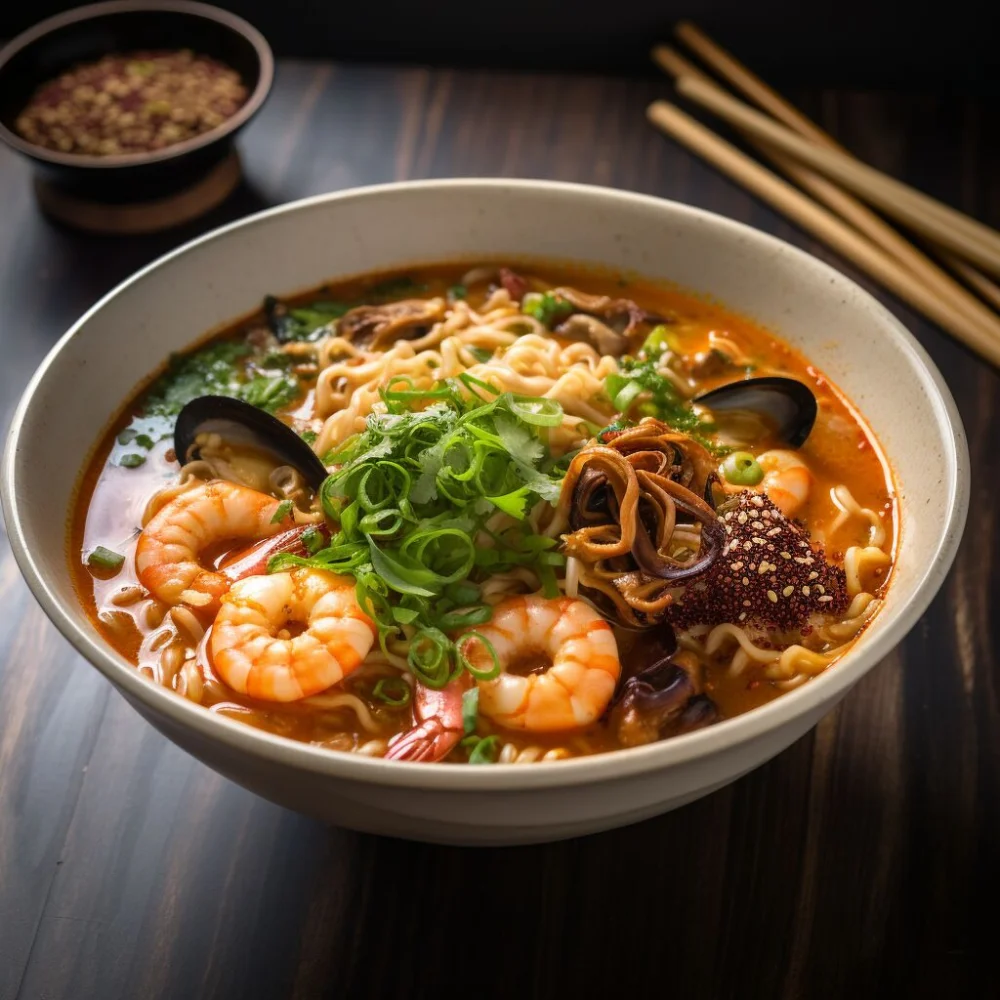
The ‘seafood’ in spicy seafood ramen is where you can truly personalize your creation. A classic combination often includes shrimp, squid, and mussels. However, the possibilities are vast. Consider adding scallops for their delicate sweetness, clams for their briny liquor, or even pieces of firm white fish like cod or snapper. The key is to use fresh, high-quality seafood that will cook quickly and retain its natural flavors.
Preparing the seafood is crucial. Overcooked seafood can become tough and rubbery. It’s best to add most of the seafood towards the end of the cooking process, allowing it to gently poach in the hot broth just until it’s cooked through. Some items, like squid, cook incredibly fast, while others, like mussels, will open when they are ready.
Now, let’s talk about the noodles. Ramen noodles are distinct for their alkaline nature, which gives them their characteristic springy texture and yellow hue. You can find fresh or dried ramen noodles at most Asian grocery stores. The cooking time is usually quite short, so be sure to follow the package instructions carefully. Undercooked noodles will be too hard, while overcooked noodles will become mushy.
The art of assembling the ramen bowl is as important as the preparation of its components. Start by warming your ramen bowls. This is a simple yet effective step that keeps your ramen hot for longer. Add your tare to the bottom of each bowl.
Next, ladle in the hot, fragrant broth. Stir it gently to combine with the tare, ensuring the flavors are evenly distributed.
Carefully arrange your cooked noodles in the broth. Use chopsticks to gently swirl them, preventing them from clumping together.
This is where the visual appeal and deliciousness come into play: the toppings. For spicy seafood ramen, a thoughtful selection of toppings elevates the dish. Soft-boiled eggs, with their luscious, jammy yolks, are a classic ramen topping that adds richness and a beautiful contrast.
Thinly sliced green onions provide a fresh, sharp bite and a pop of color. Menma, fermented bamboo shoots, offer a satisfying crunch and a slightly sweet, savory flavor.
Nori (dried seaweed sheets) add another layer of oceanic umami and a pleasing textural element. Some people also enjoy adding a swirl of chili oil or a dollop of spicy mayonnaise for an extra kick.
For our seafood, arrange the cooked shrimp, squid, mussels, and any other chosen ingredients artfully on top of the noodles. Ensure they are visible and appealing.
Let’s delve deeper into creating that perfect spicy broth. For a richer, more complex base, consider simmering chicken or pork bones for several hours before adding your dashi ingredients. This creates a ‘tonkotsu-style’ base, though for seafood ramen, a lighter, cleaner broth is often preferred. A blend of seafood shells (like shrimp or crab) simmered with aromatics can also significantly boost the oceanic flavor of your broth.
When it comes to spice, experimentation is key. If you find gochujang too sweet, you can reduce the amount or omit it entirely, relying more on fresh chilies and togarashi. For those who love extreme heat, consider incorporating dried ghost peppers or habaneros into your chili paste blend, but do so with caution!
The aromatics play a vital role in building flavor. Sautéing minced garlic, ginger, and perhaps some finely chopped onion or leek in a neutral oil before adding your liquids can create a more profound aromatic base for your broth. This step awakens the volatile compounds in these ingredients, releasing their full fragrance and flavor.
For the tare, consider variations beyond soy sauce. A white miso tare can offer a milder, sweeter umami, while a red miso tare provides a bolder, saltier depth. Tamari, a gluten-free soy sauce alternative, is also an excellent option for those with dietary restrictions.
The choice of noodles is also more nuanced than it might seem. Different ramen shops use different noodle thicknesses and textures. Thicker noodles can stand up to a richer broth, while thinner noodles are perfect for lighter, clearer broths. Experiment to find your personal preference.
Vegetables can add color, texture, and nutrients. Besides green onions and menma, consider adding blanched spinach, bok choy, or even some thinly sliced carrots for sweetness and crunch. Corn kernels can add a touch of sweetness and visual appeal.
The cooking process for the seafood requires attention. Shrimp and squid cook in mere minutes. Mussels and clams should be added to the simmering broth, and their shells will open when they are fully cooked. Discard any that remain closed.
Let’s refine the dashi. While kombu and katsuobushi are standard, you can also use iriko (dried anchovies) for a more robust fish flavor, or dried sardines. The quality of your kombu matters; look for kombu with a powdery white substance on its surface, which indicates high glutamic acid content, the source of umami.
For the spicy element, consider making your own chili oil. Infusing neutral oil with dried chilies, garlic, and ginger over low heat creates a potent and flavorful condiment that can be drizzled over the finished ramen.
The Japanese concept of ‘umami’ is central to ramen. It’s that savory, satisfying fifth taste that makes food so addictive. Ensuring your broth and tare are rich in umami, through ingredients like kombu, shiitake mushrooms, soy sauce, and miso, is paramount.
Texture contrast is also vital. The chewiness of the noodles, the tenderness of the seafood, the crunch of menma, the creaminess of the egg yolk – these elements work together to create a multi-sensory experience. Think about how each component contributes to the overall mouthfeel.
The presentation of your ramen is the final flourish. A visually appealing bowl whets the appetite. Arrange your toppings thoughtfully, ensuring a balance of colors and textures. A sprinkle of sesame seeds or a drizzle of spicy oil can add a professional touch.
Consider the balance of flavors: salty, sweet, sour, bitter, and umami. A well-made spicy seafood ramen will have a harmonious interplay of these tastes. The spice should complement, not overwhelm, the delicate flavors of the seafood and the depth of the broth.
For those seeking a vegetarian or vegan alternative, the principles remain the same, but the ingredients change. A vegetable-based dashi (using kombu, shiitake, and dried mushrooms) can form the base. Tofu, mushrooms, and various vegetables can replace the seafood, and a spicy miso or soy-based tare can provide the savory kick.
The journey to mastering spicy seafood ramen is one of exploration and refinement. Each batch you make will teach you something new. Don’t be afraid to adjust the spice levels, experiment with different seafood combinations, or tweak the broth’s richness to suit your personal palate.
Ultimately, the goal is to create a bowl of ramen that is not just food, but an experience – a comforting, invigorating, and deeply satisfying culinary journey that transports you to the bustling streets of Japan with every slurp.
Let’s consider the broth’s consistency. Some prefer a lighter, clearer broth, while others enjoy a thicker, more viscous soup. Achieving a thicker broth often involves simmering for longer periods to reduce the liquid, or incorporating ingredients like pork or chicken fat, though for a seafood ramen, this is less common. A touch of cornstarch slurry can also thicken the broth if desired, but this is not traditional.
The importance of good quality ingredients cannot be overstated. Fresh seafood, good kombu, quality soy sauce – these foundational elements will make a significant difference in the final outcome of your spicy seafood ramen.
Finally, remember that ramen is meant to be enjoyed immediately. The noodles will continue to cook in the hot broth, and the toppings are best when fresh. So, gather your ingredients, prepare your workspace, and embark on the delicious adventure of creating your own spicy seafood ramen masterpiece.