
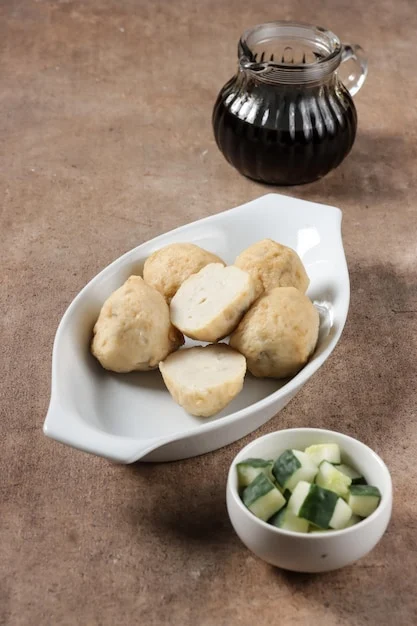

The key to a truly exceptional Pempek Adaan lies in the quality of the fish used and the precise ratio of ingredients. Traditionally, mackerel (ikan tenggiri) is the preferred fish for its firm texture and distinct taste, which holds up well during the cooking process and contributes significantly to the final flavor profile.
Achieving that signature chewy texture is often the most challenging aspect for home cooks. It requires a careful balance of starch to fish, proper kneading techniques, and the right cooking method. Overworking the dough can make it tough, while underworking it can result in a crumbly texture. This guide aims to demystify the process and provide you with the confidence to create perfect Pempek Adaan.
- 1 kg fresh mackerel (ikan tenggiri), filleted and ground into a paste
- 500-600 grams tapioca starch (tepung tapioka/kanji)
- 150 ml cold water
- 3-4 cloves garlic, finely minced
- 2-3 shallots, finely minced
- 1-2 tablespoons salt (adjust to taste)
- 1 teaspoon sugar
- 1/2 teaspoon ground white pepper
- Optional: 1-2 eggs (for added richness and binding, though some purists omit this)
The process starts with preparing the fish paste. Ensure your mackerel is as fresh as possible. If you’re grinding it yourself, a food processor or a sturdy blender can be used. The goal is a smooth, homogenous paste. If you’re buying pre-ground fish, make sure it’s from a reputable source.
In a large mixing bowl, combine the ground mackerel with the minced garlic, shallots, salt, sugar, and white pepper. If you are using eggs, add them now. Mix these ingredients thoroughly until well combined. This initial mixture forms the flavor base of your pempek.
Now comes the crucial step of incorporating the tapioca starch. Gradually add the tapioca starch to the fish mixture, mixing as you go. The amount of starch might vary slightly depending on the moisture content of your fish. Start with 500 grams and add more if the dough feels too wet or sticky.
The texture of the dough is key. It should be firm and pliable, not overly sticky. Knead the mixture gently but thoroughly. Over-kneading can toughen the pempek, while under-kneading can lead to it falling apart. The dough should feel cohesive and hold its shape when rolled.
To help achieve a smoother dough and better binding, gradually add the cold water while mixing. The cold water helps to gelatinize the starch slightly, contributing to the chewy texture. Be careful not to add too much water, as this will make the dough too soft and difficult to handle.
Once the dough has reached the desired consistency – firm, smooth, and slightly elastic – it’s time to shape the pempek. Pempek Adaan are typically shaped into small, round patties or balls. You can also form them into slightly flattened discs.
To shape, take a portion of the dough and roll it between your palms into a ball, then gently flatten it into a disc. Alternatively, you can simply roll small portions into balls. Ensure the surfaces are relatively smooth to prevent them from sticking during the initial cooking phase.
Before frying, many recipes recommend a pre-cooking step. This involves boiling the shaped pempek in simmering water until they float to the surface. This step helps to cook the pempek through and set its shape, ensuring it holds together when fried.
Bring a large pot of water to a gentle simmer. Add a tablespoon of oil to the water to prevent the pempek from sticking. Carefully drop the shaped pempek into the simmering water. Do not overcrowd the pot. Boil them for about 10-15 minutes, or until they float to the surface. This indicates they are cooked through.
Once they float, let them simmer for another 2-3 minutes. Then, carefully remove the boiled pempek from the water using a slotted spoon and drain them thoroughly. You can let them cool completely before frying, or fry them while still warm.
The frying process is where the pempek gains its golden-brown exterior and delightful crispness. Heat a generous amount of cooking oil in a wok or deep frying pan over medium-high heat. The oil should be hot but not smoking.
Carefully place the boiled pempek into the hot oil. Fry them in batches to avoid overcrowding the pan, which can lower the oil temperature and result in greasy pempek. Fry for about 3-5 minutes per side, or until they are golden brown and slightly puffed up.
Once golden brown and crispy, remove the pempek from the oil using a slotted spoon and drain them on paper towels to absorb any excess oil. Allow them to cool slightly before serving. The contrast between the crispy exterior and the chewy interior is what makes Pempek Adaan so irresistible.
Pempek Adaan is traditionally served with a special sauce called ‘cuko’. Cuko is a sweet, sour, and spicy dipping sauce made primarily from palm sugar, vinegar, chili peppers, garlic, and dried shrimp (terasi).
- 1 liter water
- 250 grams palm sugar (gula merah), chopped
- 50 grams dried shrimp (terasi), roasted and pounded
- 10-15 bird’s eye chilies (cabe rawit), or to taste
- 5 cloves garlic
- 2 tablespoons tamarind paste (asam jawa)
- 1 tablespoon salt
- Optional: 1 tablespoon vinegar (for extra tang)
In a saucepan, combine water, palm sugar, roasted dried shrimp paste, chilies, and garlic. Bring to a boil and simmer for about 15-20 minutes to allow the flavors to meld. Strain the mixture to remove solids.
Stir in the tamarind paste and salt. Taste and adjust seasoning as needed. If you prefer a tangier sauce, add a tablespoon of vinegar. Simmer for another 5 minutes. Cuko sauce is best served warm or at room temperature.
Beyond the classic cuko sauce, Pempek Adaan can be enjoyed with other accompaniments. Sliced cucumber provides a refreshing contrast to the richness of the pempek. Yellow noodles (mie kuning) and sometimes a sprinkle of finely chopped cilantro or chopped peanuts are also common additions.
For those who prefer a spicier kick, additional sliced chilies can be served alongside. The versatility of Pempek Adaan means it can be customized to individual taste preferences, making it a universally loved dish.
Storing leftover Pempek Adaan is straightforward. Once cooled, they can be stored in an airtight container in the refrigerator for up to 2-3 days. For longer storage, they can be frozen.
When reheating, you can either pan-fry them again until heated through and crispy, or reheat them in an oven or air fryer. Microwaving is not recommended as it can make the pempek rubbery.
Troubleshooting common issues is part of the learning process. If your pempek is too soft or crumbly, it might be due to insufficient starch or under-kneading. Conversely, if it’s too tough, you may have used too much starch or over-kneaded the dough.
The quality of the tapioca starch also plays a role. Ensure you are using good quality, fresh tapioca starch for the best results. Different brands can have slightly different absorption rates, so it’s important to adjust accordingly.
Experimenting with different types of fish is possible, though mackerel remains the gold standard. If mackerel is unavailable, other firm white fish like kingfish or even a blend of fish can be used, but the flavor and texture might differ.
The technique of pre-boiling before frying is crucial for achieving the desired chewy interior. Skipping this step can result in a pempek that is crispy on the outside but raw or doughy on the inside.
Ensuring the frying oil is at the correct temperature is also vital. Too cool, and the pempek will absorb too much oil. Too hot, and the outside will burn before the inside is cooked.
Pempek Adaan is more than just a dish; it’s a culinary experience that embodies the rich flavors and textures of Indonesian cuisine. The process of making it, from selecting the freshest fish to mastering the dough consistency, is a rewarding journey.
By following these steps and paying attention to the details, you’ll be well on your way to creating authentic, chewy, and incredibly delicious Pempek Adaan that will impress your family and friends. Enjoy the process and the delightful results!
This detailed guide provides a solid foundation for anyone looking to recreate this classic Indonesian dish at home. Remember that practice makes perfect, and with each batch, you’ll gain a better understanding of the nuances of making Pempek Adaan.
The combination of savory fish, starchy binder, and the tangy, spicy, sweet cuko sauce is a symphony of flavors that has captivated taste buds for generations. It’s a testament to the ingenuity and culinary heritage of Indonesian cooking.
So, gather your ingredients, follow these instructions carefully, and prepare to embark on a delicious adventure into the world of Pempek Adaan. Selamat menikmati!