
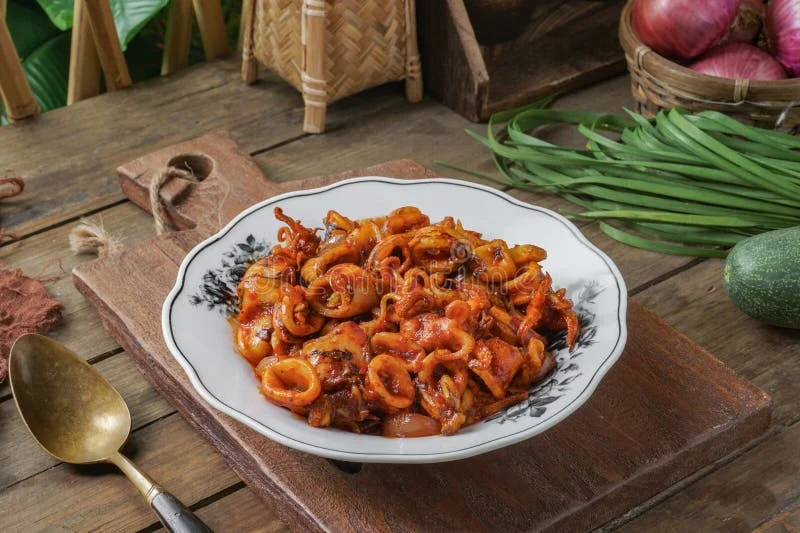

At its heart, tempoyak is fermented durian. This process transforms the notoriously strong-smelling fruit into a paste with a unique sour and umami character. The intensity of the durian’s aroma mellows considerably during fermentation, giving way to a more nuanced flavor that is crucial to the success of this dish. The quality and fermentation stage of your tempoyak will significantly impact the final taste.
Squid ink, on the other hand, provides a dramatic visual appeal and a deep, savory, almost metallic flavor. It’s the ‘black’ in ‘Cumi Hitam,’ lending an oceanic depth that complements the fermented durian beautifully. When paired, these two potent ingredients create a symphony of flavors that are unlike anything else.
Creating an exceptional Tempoyak Cumi Hitam begins with selecting the freshest ingredients. For the squid, opt for fresh, firm squid. Look for a vibrant, translucent body and clean, bright eyes. The ink sacs should be intact and appear dark. Freshness is paramount, as it directly influences the tenderness of the squid and the quality of the ink.
The tempoyak itself can be purchased from specialty Asian markets or made at home if you have access to ripe durian. If making it at home, the process involves fermenting durian flesh for several days, often with a touch of salt, until it develops the desired sourness. For this recipe, a well-fermented, pungent tempoyak will yield the best results.
Beyond the star ingredients, a supporting cast of aromatics is essential. Garlic and shallots form the foundational flavor base. Their pungent sweetness, when sautéed, creates an irresistible aroma that primes the palate for the complex flavors to come.
Other key seasonings include salt, sugar, and sometimes a touch of soy sauce or fish sauce to enhance the umami. A squeeze of lime or tamarind juice can add a much-needed brightness to cut through the richness of the squid ink and the intensity of the tempoyak.
Let’s delve into the preparation process. The first step often involves preparing the squid. Clean the squid thoroughly, removing the quill, innards, and beak. Carefully extract the ink sacs, ensuring they don’t rupture. Reserve these precious sacs for later. Cut the squid bodies into rings or bite-sized pieces.
Marinating the squid, while not always traditional for this specific dish, can enhance its tenderness and flavor. A simple marinade of a little salt, pepper, and perhaps a dash of lime juice can work wonders. However, many recipes opt to cook the squid directly, relying on the sauce to impart flavor.
The heart of the cooking process lies in creating the flavorful sauce. Begin by finely mincing or pounding the garlic, shallots, and chilies. This creates a fragrant paste that will form the aromatic base of your dish.
In a wok or a deep skillet, heat a generous amount of cooking oil over medium heat. Add the minced aromatics and sauté until fragrant and lightly golden. This step is crucial for developing the depth of flavor. Be patient and don’t rush this process.
Once the aromatics are fragrant, add the tempoyak paste to the wok. Stir well and cook for a few minutes, allowing the tempoyak to release its complex aroma and slightly caramelize. This step helps to mellow the raw fermented flavor and integrate it with the aromatics.
Now comes the star ingredient for color and depth: the squid ink. Carefully add the reserved squid ink sacs to the wok. Gently break them open with your spatula, allowing the ink to disperse and coat the other ingredients. Stir continuously to ensure the ink is evenly distributed.
If the ink sacs were difficult to extract or you want a more intense color and flavor, you can add a little more squid ink, which is often available for purchase separately at seafood markets. Be mindful of the saltiness of the ink.
As the ink begins to thicken the sauce, it’s time to add the prepared squid pieces. Stir them into the sauce, ensuring each piece is coated in the rich, black mixture. Cook the squid for just a few minutes until they turn opaque and are cooked through. Overcooking squid will result in a rubbery texture, so timing is key.
Season the dish carefully. Add salt, sugar, and any other desired seasonings like soy sauce or fish sauce. Taste and adjust as you go. The saltiness will depend on the tempoyak, the squid ink, and any added soy/fish sauce. A touch of sugar helps to balance the sourness of the tempoyak and the saltiness of the ink.
A squeeze of fresh lime or a tablespoon of tamarind paste (dissolved in a little water) can be added at the end to provide a bright, acidic counterpoint. This is a critical step to prevent the dish from feeling too heavy or one-dimensional.
Some variations of this dish include adding other seafood, such as shrimp or fish, to the mix. Others might incorporate vegetables like long beans or okra for added texture and nutrients. However, the classic Tempoyak Cumi Hitam focuses on the squid and the unique sauce.
Serving Tempoyak Cumi Hitam is an experience in itself. The dramatic black color makes it a visually striking dish. It is traditionally served hot with steamed white rice. The fluffy rice is the perfect canvas to absorb the intense flavors of the sauce.
Garnishes can elevate the presentation and add a final touch of flavor. Fresh cilantro, thinly sliced red chilies, or a sprinkle of fried shallots can provide a welcome contrast in color and texture.
For those who are new to tempoyak, it’s important to approach this dish with an open mind. The initial aroma and taste can be challenging, but the complex interplay of savory, sour, spicy, and umami notes is what makes it so addictive for those who appreciate it.
The ‘enak’ (delicious) factor in Tempoyak Cumi Hitam comes from the perfect balance of its core components. It’s about coaxing out the best from the pungent tempoyak and the briny squid ink, harmonizing them with aromatics and a touch of heat.
Consider the texture. Properly cooked squid should be tender and slightly chewy, not rubbery. The sauce should be rich and coating, not watery. Achieving this balance requires attention to cooking times and ingredient ratios.
Experimentation is encouraged. If you find the tempoyak too strong, you can start with a smaller amount and gradually increase it in future attempts. Similarly, if you desire more heat, don’t hesitate to add more chilies.
The storage of tempoyak is also key. Properly fermented tempoyak can last for a long time, especially when refrigerated. However, its flavor can continue to develop, so using it within a reasonable timeframe after fermentation is advisable.
When sourcing squid ink, ensure it’s from a reputable source. Freshly extracted ink from your own squid is ideal, but commercially available squid ink is a convenient alternative. Check the expiration dates and storage instructions.
The cooking method is primarily stir-frying. This allows for quick cooking of the squid, preserving its tenderness, and ensures that the sauce ingredients meld together effectively.
A common mistake is overcooking the squid. Remember that squid cooks very quickly. Once it turns opaque, it’s usually done. Continuing to cook it will toughen it considerably.
Another aspect to consider is the saltiness. Both tempoyak and squid ink can be salty. It’s best to season gradually and taste frequently. You can always add more salt, but you can’t easily take it away.
The sourness from the tempoyak is a defining characteristic. If your tempoyak isn’t sour enough, you might consider adding a bit of tamarind paste or a squeeze of lime juice to compensate.
The visual appeal of this dish is undeniable. The deep, glossy black sauce is mesmerizing. It’s a dish that sparks conversation and intrigue at the dinner table.
For those who are adventurous eaters, Tempoyak Cumi Hitam is a must-try. It represents a bold fusion of flavors that is deeply rooted in Indonesian culinary traditions.
To achieve the truly ‘enak’ result, focus on the quality of your durian paste and the freshness of your squid. These two elements are the foundation upon which all other flavors are built.
Mastering this dish is a journey. Each attempt will teach you more about balancing these potent ingredients. Don’t be discouraged if your first try isn’t perfect; the learning process is part of the enjoyment.
Ultimately, Tempoyak Cumi Hitam is more than just a meal; it’s an exploration of unique tastes and textures. It’s a testament to the creativity and resourcefulness of Indonesian cuisine, offering a truly unforgettable dining experience for those willing to embrace its distinctive character.