
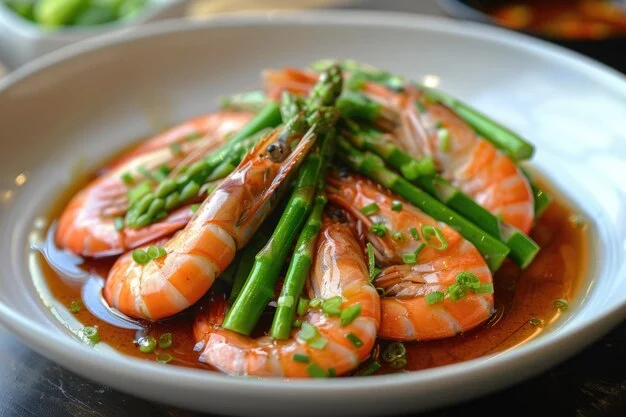

The beauty of this recipe lies in its simplicity. It does not require hours of simmering or complex culinary techniques. Instead, it relies on the freshness of the ingredients and the precise timing of the stir-fry method. When executed correctly, the result is a glossy, aromatic dish that tastes as though it came straight from a professional kitchen.
At the heart of this dish is the asparagus. Often considered a gourmet vegetable, asparagus brings a distinct earthy flavor and a satisfying crunch that pairs exceptionally well with the briny sweetness of seafood. Beyond its taste, asparagus is a nutritional powerhouse, packed with fiber, folate, and vitamins A, C, and K.
Selecting the right asparagus is the first step toward success. Look for stalks that are firm to the touch with tightly closed tips. Avoid spears that appear limp or dry. For stir-frying, medium-thickness stalks are generally preferred as they hold their shape well while cooking through quickly. If you can only find thick stalks, peeling the bottom half ensures they remain tender.
The term ‘seafood’ in this recipe is versatile, but the most popular choice is undoubtedly shrimp (prawns). Shrimp offers a natural sweetness and a firm bite that complements the oyster sauce base perfectly. When selecting shrimp, opt for fresh, firm crustaceans. If using frozen shrimp, ensure they are thawed slowly in the refrigerator to maintain their texture.
For those looking to elevate the dish further, squid (calamari) or scallops can be added. Squid should be scored in a crosshatch pattern to catch the sauce and cooked very briefly to prevent rubberiness. Scallops add a touch of luxury but require a gentle hand to ensure they remain buttery and soft.
The sauce is the unifying element of this dish. Oyster sauce is a thick, dark brown condiment made from sugar, salt, and oyster extracts. It provides a rich, savory flavor with a hint of caramel-like sweetness. It is the backbone of the ‘Saus Tiram’ flavor profile that makes this dish so addictive.
To create a balanced sauce, high-quality oyster sauce is typically combined with soy sauce for saltiness, a splash of sesame oil for aroma, and a pinch of white pepper for a subtle heat. A cornstarch slurry is often used at the very end of the cooking process to thicken the liquids, ensuring the sauce clings to every piece of asparagus and seafood rather than pooling at the bottom of the plate.
Preparation: The Key to Stir-Fry Success
Stir-frying is a fast-paced cooking method, meaning all ingredients must be prepped and ready to go before the stove is turned on. This concept, known as mise en place, is crucial. Start by washing the asparagus thoroughly. Snap off the woody ends—the stalk will naturally break where the tender part ends and the tough part begins.
Cut the asparagus into bite-sized lengths, usually about 2 inches long. If you want to ensure the asparagus retains a vibrant green color and perfect texture, consider blanching them briefly in boiling water for 30 to 60 seconds, then immediately shocking them in an ice bath. This step is optional but highly recommended for a professional presentation.
Next, prepare the seafood. If using shrimp, peel and devein them. Leaving the tails on can add to the visual appeal, but removing them makes the dish easier to eat. Pat the seafood dry with paper towels; excess moisture is the enemy of a good stir-fry, as it causes the ingredients to steam rather than sear.
Aromatics play a vital role in building the flavor foundation. Finely minced garlic is non-negotiable, and a few slices of ginger can help neutralize any strong fishy odors from the seafood. Some variations also include sliced onions or shallots for added sweetness and texture.
The Recipe: Step-by-Step Instructions
Ingredients:
- 300g fresh asparagus, trimmed and cut
- 250g mixed seafood (shrimp, squid, or scallops)
- 3 cloves garlic, minced
- 1 inch ginger, sliced or julienned
- 2 tbsp vegetable oil
- 1 tbsp sesame oil
Sauce Mix:
- 3 tbsp oyster sauce
- 1 tbsp light soy sauce
- 1 tsp sugar (optional, depending on oyster sauce sweetness)
- 1/4 tsp white pepper powder
- 1/2 cup chicken stock or water
- 1 tsp cornstarch dissolved in 1 tbsp water
Cooking Method: Begin by heating your wok or large skillet over high heat. Add the vegetable oil and swirl to coat. When the oil is shimmering, add the ginger and garlic. Stir-fry for just 15-20 seconds until fragrant, being careful not to burn the garlic, which can turn bitter.
Add the seafood to the wok. Spread it out in a single layer to allow it to sear. Let it cook undisturbed for about 30 seconds before tossing. Cook until the shrimp turns pink and opaque or the squid turns white. Do not overcook at this stage, as the seafood will continue to cook in the sauce later.
Add the asparagus pieces to the wok. If you have blanched them previously, you only need to toss them for a minute. If they are raw, stir-fry them for 2-3 minutes until they become tender-crisp. You may need to add a splash of water to help steam them slightly if they are thick.
Pour the sauce mixture (oyster sauce, soy sauce, stock, sugar, and pepper) over the ingredients. Toss everything vigorously to combine. Allow the sauce to come to a bubble. This heating process activates the flavors and melds the seafood juices with the condiments.
Once the sauce is bubbling, give your cornstarch slurry a quick stir (cornstarch settles quickly) and drizzle it into the wok while stirring constantly. The sauce should instantly glossy and thicken, coating the ingredients beautifully. Finish by drizzling the sesame oil over the dish and giving it one final toss.
Serving and Variations
Transfer the Seafood Asparagus immediately to a serving platter. This dish is best enjoyed piping hot. The residual heat will ensure the vegetables are perfectly cooked by the time they reach the table. Serve alongside steamed Jasmine rice, which acts as the perfect canvas for the savory sauce.
For those who enjoy a spicy kick, you can modify this recipe by adding sliced bird’s eye chilies or a teaspoon of chili paste (sambal) along with the garlic and ginger. The heat cuts through the richness of the oyster sauce and adds an exciting dimension to the flavor profile.
If you are cooking for a crowd that includes vegetarians, this dish can be easily adapted. Substitute the seafood with firm tofu, fried tofu puffs, or a variety of mushrooms such as shiitake or button mushrooms. Be sure to use a vegetarian oyster sauce (made from mushrooms) to keep it strictly plant-based.
Another popular variation involves adding other vegetables to bulk up the meal. Baby corn, sliced carrots, and straw mushrooms are traditional additions that pair well with asparagus and oyster sauce without overpowering the main ingredients.
Common Mistakes to Avoid
One of the most common mistakes when cooking Seafood Asparagus is overcrowding the pan. If you put too many ingredients in at once, the temperature of the wok drops, and the food begins to stew in its own juices rather than fry. If you are cooking a large portion, it is better to cook in batches.
Another pitfall is overcooking the seafood. Shrimp and squid cook incredibly fast. Remember that they will continue to cook even after you take the pan off the heat. It is better to slightly undercook them initially than to end up with rubbery proteins.
Finally, be cautious with salt. Oyster sauce and soy sauce are both high in sodium. Taste your sauce mixture before adding any additional salt. In most cases, the condiments provide enough salinity, and adding extra salt can ruin the balance of the dish.
Health Benefits
Beyond its delicious taste, this dish is a healthy option for family dinners. Asparagus is a natural diuretic and is high in antioxidants. Seafood provides high-quality protein with relatively low fat content compared to red meats. The use of stir-frying also requires less oil than deep-frying, preserving the nutrients in the vegetables.
Conclusion
Mastering the Resep Seafood Asparagus Saus Tiram is a rewarding experience for any home cook. It demonstrates how a few high-quality ingredients can come together to create a meal that is greater than the sum of its parts. Whether for a quick weeknight dinner or a special occasion, this dish brings the savory sophistication of Asian cuisine right to your dining table.
By following the tips on ingredient selection, preparation, and heat control outlined in this guide, you can consistently produce a dish that is vibrant, flavorful, and perfectly cooked. So, gather your fresh asparagus and seafood, heat up your wok, and enjoy the savory delight of this classic recipe.