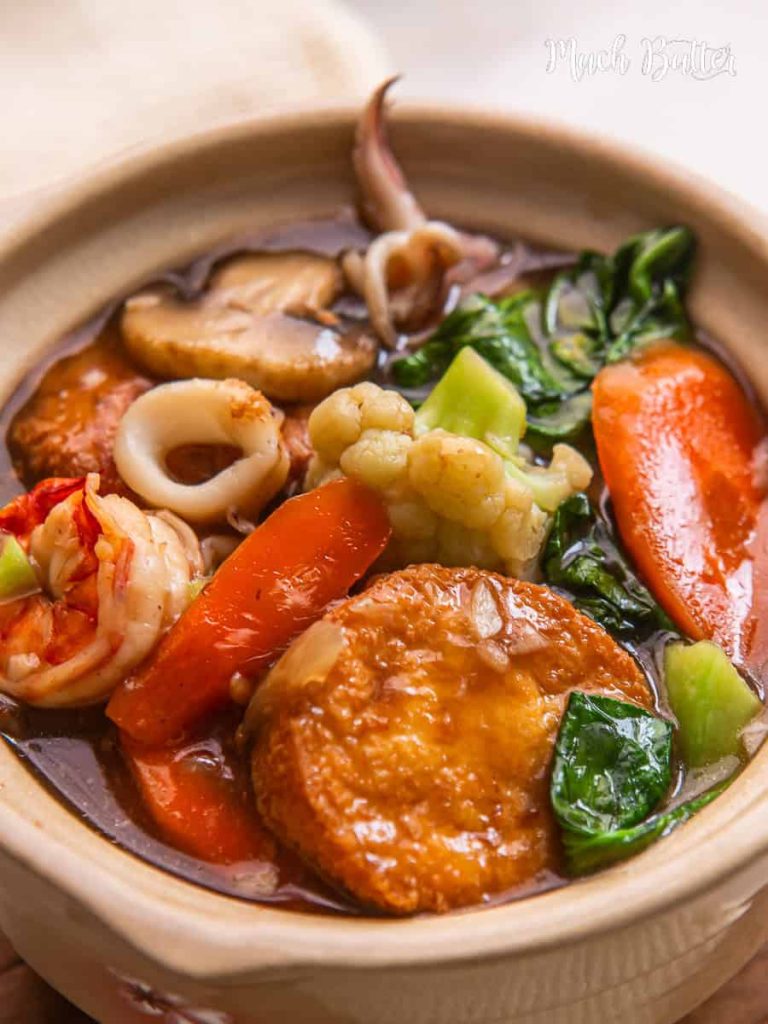

The allure of this dish lies in the contrast of textures. You have the crispy skin of the fried tofu giving way to a custard-like interior, the snap of fresh vegetables, and the tender bite of perfectly cooked seafood, all bound together by a rich, umami-laden gravy. Achieving this harmony requires attention to detail during the preparation and cooking phases.
Understanding the ‘Claypot’ Element
Traditionally, this dish is served in a clay pot or sand pot. The primary function of the clay pot is heat retention. It allows the sauce to continue bubbling even after it has been brought to the table, keeping the food hot throughout the meal. The porous nature of the clay also imparts a subtle, earthy aroma that enhances the overall flavor profile.
However, if you do not own a traditional clay pot, do not be discouraged. You can prepare the base of the dish in a wok or a deep skillet and transfer it to a pre-heated ceramic bowl or simply serve it directly. The ‘claypot’ aspect is as much about the style of braising and the final presentation as it is about the cookware itself.
Selecting the Right Tofu
The star of this dish is undoubtedly the tofu. For authentic Seafood Claypot Tofu, you must use egg tofu (often sold in tubes). Regular firm or soft block tofu lacks the specific custard-like texture and the rich flavor profile required for this recipe. Egg tofu is delicate, smooth, and has a slight savory undertone that pairs perfectly with seafood.
Handling egg tofu requires care. Because it is so soft, it can easily crumble if mishandled. A crucial tip is to slice the tube of tofu while it is still in the packaging. Cut through the plastic wrapper into discs about 1 inch thick, then gently squeeze them out. This maintains the structural integrity of the rounds.
The Secret to Perfect Tofu Texture
One of the most common mistakes home cooks make is adding the raw egg tofu directly into the sauce. This results in the tofu breaking apart and lacking flavor absorption. The secret lies in deep-frying or shallow-frying the tofu discs before they meet the sauce.
To achieve the perfect ‘golden coin’ look, coat the tofu discs lightly in cornstarch before frying. This creates a protective barrier that turns crispy when fried, preventing the tofu from disintegrating during the braising process. The cornstarch coating also helps the savory sauce cling to the tofu later on.
Ensure your oil is hot enough (around 350°F or 175°C) before dropping the tofu in. If the oil is too cold, the tofu will absorb grease and become soggy. Fry until they are golden brown and have formed a distinct ‘skin.’ Remove them and drain on paper towels immediately.
Curating the Seafood Mix
The beauty of this dish is its versatility. Common seafood inclusions are shrimp, squid, and scallops. When selecting shrimp, opt for medium to large sizes. Peel and devein them, but consider leaving the tails on for a more professional presentation.
For the squid, proper preparation is key to avoiding a rubbery texture. Score the inside of the squid in a cross-hatch pattern before cutting it into bite-sized pieces. This scoring not only looks attractive—causing the squid to curl up when cooked—but also increases the surface area for sauce absorption and reduces cooking time.
If you choose to use scallops or fish fillets, ensure they are patted dry before cooking. Excess moisture can dilute the sauce and prevent the seafood from searing properly. A quick blanch in boiling water for 30 seconds before adding them to the stir-fry can remove fishy odors and ensure even cooking.
Vegetable Selection and Prep
Vegetables provide the necessary crunch and freshness to cut through the richness of the sauce. Classic choices include bok choy, carrots, snow peas, and mushrooms. Dried shiitake mushrooms are particularly recommended; when rehydrated, they offer a deep, meaty flavor that infuses the sauce.
Carrots should be sliced thinly or julienned to ensure they cook at the same rate as the seafood. If using bok choy, separate the leaves from the thicker stems. Add the stems first as they take longer to cook, adding the leaves only at the very end to prevent wilting.
Building the Flavor Base: Aromatics
The foundation of a great claypot dish is its aromatics. You will need a generous amount of garlic, ginger, and scallions (green onions). Sliced ginger is particularly important when cooking seafood as it neutralizes any potential fishiness and adds a warming heat to the dish.
Start the cooking process by sautéing these aromatics in oil until they are fragrant but not burnt. This infuses the cooking oil with flavor, which then permeates the rest of the ingredients. Some chefs also add a small amount of minced dried shrimp at this stage for an extra punch of umami.
Mastering the Sauce
The sauce for Seafood Claypot Tofu is a savory brown gravy. The primary ingredients are oyster sauce, light soy sauce, a splash of dark soy sauce (for color), sesame oil, and Shaoxing wine (Chinese cooking wine). Chicken stock or vegetable stock should be used as the liquid base rather than plain water for depth of flavor.
Balance is critical. The oyster sauce provides saltiness and umami, while the soy sauce adds depth. A pinch of sugar or white pepper is often added to round out the flavors. The sauce should be robust, as it needs to flavor the tofu and vegetables which are relatively mild on their own.
The Braising Process
Once your aromatics are fragrant and your seafood and vegetables have been briefly stir-fried, pour in your pre-mixed sauce liquid. Bring this mixture to a boil. This is the moment to return your fried tofu to the pan. Gently nestle the tofu into the liquid so it absorbs the flavors without breaking.
If you are using a traditional clay pot, this is the time to transfer everything into the pre-heated pot. Cover the pot and let it simmer (braise) for a few minutes. This step allows the flavors to meld together and ensures the tofu is heated through to the center.
Thickening the Sauce
A watery sauce is the enemy of a good claypot dish. The sauce should cling to the ingredients. To achieve the glossy, thick consistency seen in restaurants, use a cornstarch slurry (cornstarch mixed with cold water).
Pour the slurry in slowly while stirring gently. Do not dump it all in at once, or you may end up with a gloopy, gelatinous mess. Add a little, stir, and observe the thickness. Remember that the sauce will thicken further as it cools slightly.
Finishing Touches
Right before serving, drizzle a teaspoon of toasted sesame oil over the dish. This should be done at the very end so the aroma of the sesame oil remains distinct and isn’t cooked away. A garnish of fresh cilantro or chopped scallions adds a pop of color and freshness.
Common Mistakes to Avoid
Overcooking the Seafood: Seafood cooks very quickly. Shrimp and squid can become tough and rubbery in a matter of minutes. It is often better to sear the seafood quickly at the beginning, remove it, and add it back in during the final minute of braising.
Crowding the Pan: When frying the tofu, do not crowd the pan. If the tofu pieces touch before the crust forms, they will stick together and tear when you try to separate them. Fry in batches if necessary.
Skipping the Stock: Using water instead of chicken or seafood stock will result in a flat-tasting dish. If you don’t have homemade stock, a high-quality bouillon cube or stock paste is an acceptable substitute.
Serving Suggestions
Seafood Claypot Tofu is best served immediately while piping hot. The visual appeal of the bubbling sauce is part of the experience. It is traditionally accompanied by steamed jasmine rice, which acts as the perfect vehicle for the rich, savory gravy.
For a complete meal, pair this dish with a light cucumber salad or some pickled vegetables to cleanse the palate between bites of the rich, savory tofu.
Conclusion
Making restaurant-quality Seafood Claypot Tofu at home is a rewarding experience. It teaches the importance of ingredient preparation—from the delicate handling of egg tofu to the precise timing required for seafood. By following these tips and understanding the role of each component, you can create a dish that is not only visually stunning but also deeply satisfying and packed with flavor.