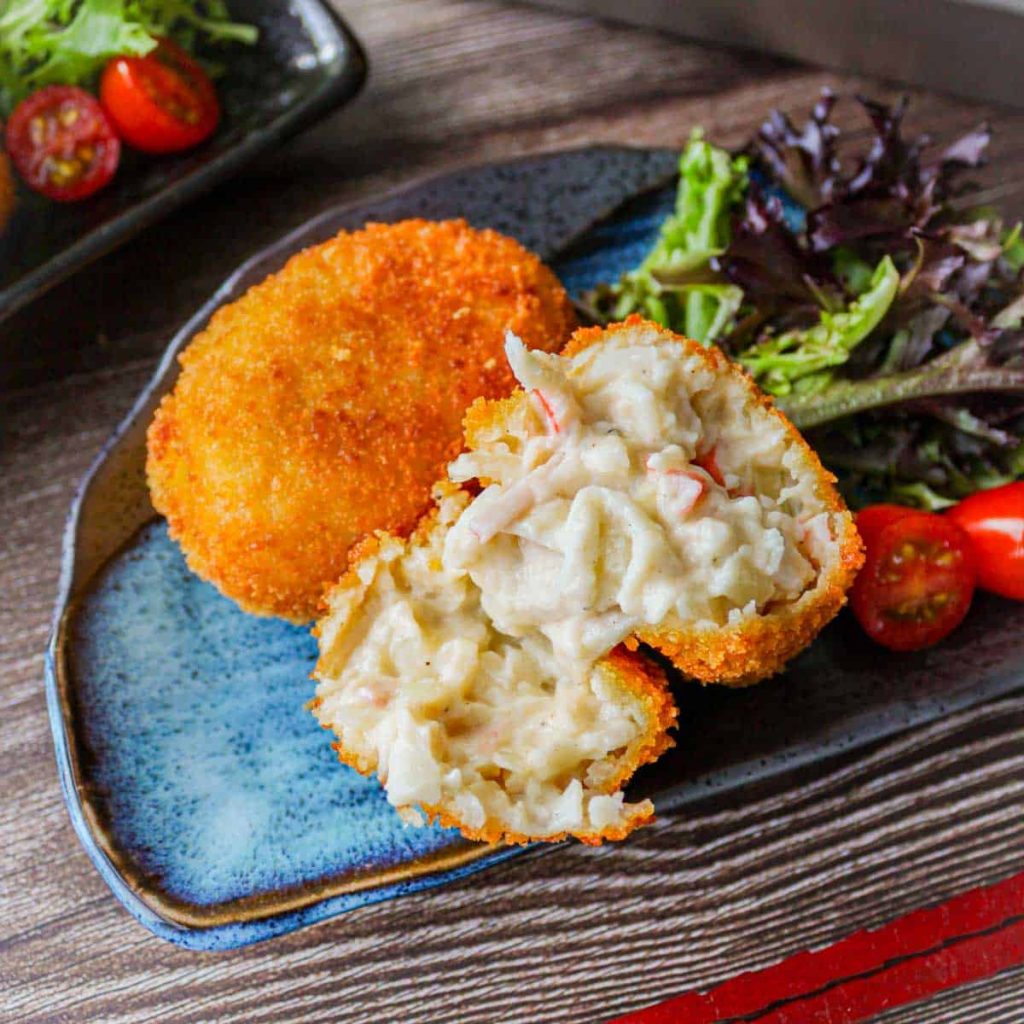

At its heart, a Kani Cream Croquette is a béchamel sauce infused with the delicate flavor of crab meat, often enhanced with other complementary ingredients, then chilled, shaped, breaded, and deep-fried to golden perfection. The challenge and beauty lie in achieving the right consistency of the filling – creamy enough to be luxurious, yet firm enough to hold its shape during frying. This balance is crucial for a successful croquette.
Let’s begin with the star ingredient: the crab. While fresh crab meat offers unparalleled flavor, it can be time-consuming to prepare. For convenience and consistent results, high-quality imitation crab sticks, often referred to as ‘kani kama’ in Japanese cuisine, are an excellent and widely accessible alternative. These sticks are typically made from surimi, a processed fish paste, and flavored to mimic crab. When finely chopped, they integrate beautifully into the creamy filling.
The foundation of our filling is a classic béchamel sauce. This French mother sauce is made by thickening milk with a roux, a mixture of equal parts butter and flour cooked together. The key to a smooth béchamel is to cook the roux gently to remove the raw flour taste without browning it excessively, unless a darker sauce is desired (which is not the case here). We aim for a pale, nutty aroma.
For the béchamel, you’ll need unsalted butter, all-purpose flour, and milk. Whole milk will yield the richest result, but 2% milk is also acceptable. Warming the milk slightly before adding it to the roux helps prevent lumps and speeds up the thickening process. Whisking continuously is paramount to achieving a silky smooth sauce.
Once the béchamel is smooth and thickened to a consistency that coats the back of a spoon, it’s time to introduce the flavor. Finely chopped imitation crab meat is the primary addition. Ensure the crab is chopped very finely, almost shredded, so it distributes evenly throughout the mixture and doesn’t create large, unwieldy chunks.
Beyond the crab, several other ingredients can elevate the flavor profile. A touch of finely minced onion or shallot, sautéed until translucent before being added to the roux, provides a subtle aromatic depth. Garlic, minced and sautéed with the onion, adds another layer of savory complexity. A pinch of nutmeg is a classic béchamel enhancer, bringing a warm, slightly sweet note that complements dairy beautifully.
Seasoning is critical. Salt and freshly ground black pepper are essential. Some recipes also call for a dash of white pepper for a cleaner peppery note that doesn’t introduce dark flecks. A whisper of Worcestershire sauce or a tiny amount of soy sauce can add a subtle umami boost, deepening the overall flavor without being overtly detectable.
The mixture needs to be cooked thoroughly after the crab and seasonings are incorporated. This ensures all the flavors meld together and the filling thickens further, reaching a stage where it’s pliable enough to shape. Some chefs recommend cooking this mixture for a few minutes, stirring constantly, until it pulls away from the sides of the pan.
Cooling the filling is a non-negotiable step. The mixture must be chilled completely, ideally in the refrigerator for at least 2-4 hours, or even overnight. This firming process is essential. A warm or even lukewarm filling will be too soft to shape into croquettes, leading to a messy and potentially disastrous frying experience. Spreading the mixture onto a baking sheet or into a shallow dish can speed up the chilling process.
Once the filling is thoroughly chilled and firm, it’s time for shaping. This is where the croquettes begin to take their iconic form. Traditionally, croquettes are shaped into small cylinders or oval shapes, about 2-3 inches long and 1 inch in diameter. You can use lightly floured hands or a small ice cream scoop to portion the mixture.
The shaping process requires a bit of finesse. Roll the mixture gently between your palms to form smooth, compact shapes. Avoid overworking the mixture, which can make it tough. The goal is to create uniform shapes so they cook evenly. If the mixture is still a bit sticky, a light dusting of flour on your hands can help immensely.
The next crucial step is the triple breading process. This is what gives the croquette its signature crispiness and prevents the creamy filling from leaking out during frying. The standard breading procedure involves three stations: flour, egg wash, and breadcrumbs.
In the first station, lightly coat each shaped croquette in all-purpose flour. Tap off any excess. This dry layer helps the egg wash adhere better. Ensure each croquette is fully covered.
The second station is the egg wash. Whisk together eggs with a tablespoon or two of water or milk until well combined. Dip each floured croquette into the egg wash, ensuring it’s completely submerged. Let any excess drip off.
The third and final station is the breadcrumbs. Panko breadcrumbs are highly recommended for their superior crispiness and light texture. They create a wonderfully crunchy coating that is far superior to regular breadcrumbs. Ensure each egg-washed croquette is thoroughly coated in panko, pressing gently to help them adhere. Some chefs prefer a double coating of breadcrumbs for extra crunch, meaning you would dip the croquette back into the egg wash and then into the breadcrumbs a second time.
After breading, it’s often beneficial to chill the prepared croquettes again. Placing them on a parchment-lined baking sheet in the freezer for about 30 minutes to an hour will help the coating set and further firm up the croquettes. This step significantly reduces the risk of the coating falling off during frying and helps maintain their shape.
Now, for the frying. Deep-frying is the traditional and most effective method for achieving that perfect golden-brown crust. You’ll need a neutral oil with a high smoke point, such as vegetable oil, canola oil, or peanut oil. Heat the oil in a deep pot or Dutch oven to a temperature of around 350°F (175°C). Using a thermometer is highly recommended for temperature control.
Carefully lower a few croquettes at a time into the hot oil. Do not overcrowd the pot, as this will lower the oil temperature and result in greasy croquettes. Fry them in batches, turning occasionally, until they are deeply golden brown and heated through, which typically takes about 3-5 minutes.
Once fried to perfection, remove the croquettes from the oil using a slotted spoon or spider strainer. Place them on a wire rack set over a baking sheet to drain any excess oil. This allows air to circulate, keeping the crust crisp. Avoid placing them directly on paper towels, as this can make the bottom soggy.
For those seeking a healthier alternative to deep-frying, baking is an option, though the texture will differ. Preheat your oven to 400°F (200°C). Arrange the breaded croquettes on a baking sheet lined with parchment paper. Lightly spray or brush them with oil. Bake for 20-25 minutes, flipping halfway through, until golden brown and heated through. They won’t achieve the same level of crispiness as deep-fried versions, but they can still be delicious.
Air frying is another excellent, healthier alternative. Preheat your air fryer to 380°F (190°C). Arrange the croquettes in a single layer in the air fryer basket, ensuring they don’t touch. Lightly spray them with oil. Air fry for 10-15 minutes, flipping halfway through, until golden brown and crispy.
Serving Kani Cream Croquettes is an art in itself. They are best enjoyed immediately while they are hot and crispy. They make a fantastic appetizer, a delightful snack, or even a component of a larger meal. Their rich, creamy interior pairs wonderfully with a variety of dipping sauces.
Classic accompaniments include a simple Kewpie mayonnaise (Japanese mayonnaise), a spicy sriracha mayo, or a tangy tartar sauce. A drizzle of sweet chili sauce can also provide a lovely contrast to the richness of the croquettes. Consider serving them with a small side salad for a balanced presentation.
For those who wish to prepare these croquettes ahead of time, the process is quite manageable. After shaping and breading, but before the final chill, you can freeze the un-fried croquettes on a baking sheet until solid. Once frozen, transfer them to an airtight container or freezer bag. They can be stored in the freezer for up to a month.
When ready to cook frozen croquettes, there’s no need to thaw them. You can either deep-fry them directly from frozen (they may take a minute or two longer to cook) or bake or air fry them, adjusting the cooking time accordingly. Ensure they are heated through completely.
Experimentation is encouraged! While imitation crab is common, you can certainly use real crab meat, though it might require adjusting the amount of liquid in the béchamel if the crab is very moist. Consider adding finely chopped cooked shrimp or a mix of seafood for a more complex flavor.
Herbs can also be incorporated into the filling. Finely chopped chives, parsley, or even a hint of dill can add freshness and another dimension to the creamy mixture. Just ensure they are finely chopped to blend seamlessly.
The texture of the béchamel is paramount. If it’s too thin, the croquettes will be difficult to shape and may leak. If it’s too thick, they can become dense and heavy. Achieving the right consistency through careful cooking of the roux and gradual addition of milk is key. A slightly thicker than usual béchamel is often preferred for croquettes.
The quality of your breadcrumbs matters. Panko offers the best crunch, but if unavailable, regular fine breadcrumbs can be used, though the result might be less airy and crisp. Some chefs even mix a tablespoon of grated Parmesan cheese into the panko for an extra savory note.
Patience is a virtue when making Kani Cream Croquettes. Rushing the cooling process or the breading steps will likely lead to less than ideal results. Allow ample time for chilling and setting, and the reward will be perfectly formed, crispy, and creamy croquettes.
In summary, crafting exceptional Kani Cream Croquettes involves a meticulous approach to each stage: from preparing a rich, flavorful béchamel base, to skillfully incorporating the crab, achieving the correct chilling and shaping consistency, mastering the triple breading technique, and finally, executing a perfect fry (or bake/air fry). With practice and attention to detail, these delightful bites will undoubtedly become a cherished addition to your culinary repertoire, impressing guests and satisfying cravings alike.